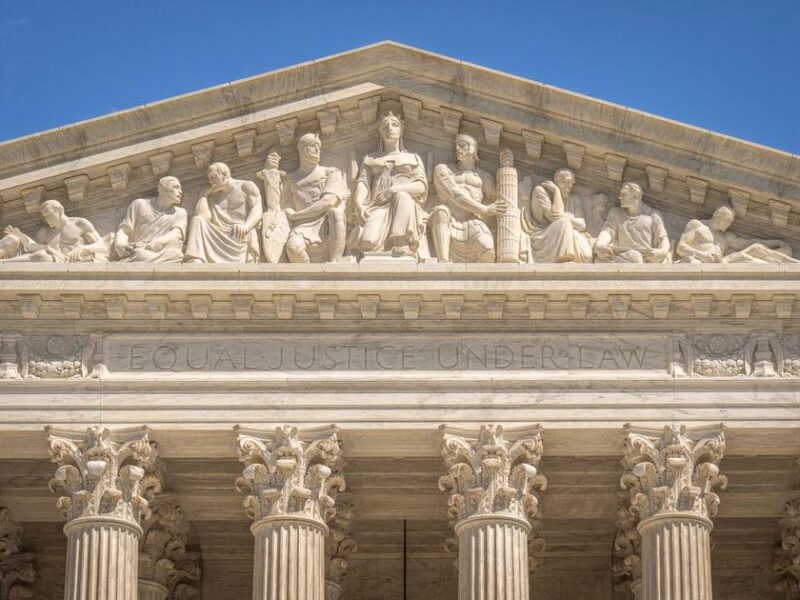
Federal prosecutors filed a motion on June 5, 2026, urging the U.S. District Court to compel Michael Hild, the former CEO of Live Well Financial, to begin serving his 44-month prison sentence within 30 days. The request from the U.S. Attorney’s Office, led by U.S. Attorney Jay Clayton, came approximately one month after the U.S. Supreme Court denied Hild’s final appeal of his 2021 fraud conviction.
In This Article
- U.S. Attorney’s Office Requests Immediate Prison Surrender for Michael Hild
- Supreme Court Denies Michael Hild’s Appeal Against Fraud Conviction
- Michael Hild’s Legal Journey: From Business Success to Criminal Conviction
- Potential Outcomes and Remaining Legal Options for Hild
- Frequently Asked Questions
- Conclusion
The motion would set Hild’s prison report date at approximately July 5, 2026, pending approval by U.S. District Court Judge Ronnie Abrams. Hild has remained free on bond since his initial arrest nearly seven years ago, despite being convicted of orchestrating a bond pricing scheme that defrauded lenders and ultimately caused the collapse of his Chesterfield-based mortgage company.
U.S. Attorney’s Office Requests Immediate Prison Surrender for Michael Hild
The U.S. Attorney’s Office for the Southern District of New York submitted its formal request on June 5, 2026, seeking an order requiring Hild to surrender to federal custody within 30 days to begin his 44-month sentence. The filing marks a significant procedural step following years of appeals that allowed Hild to remain free on bond since his arrest in summer 2019.
As of Monday afternoon, neither Hild nor his attorney, Brian Jacobs of Manhattan law firm Morvillo Abramowitz Grand Iason & Anello, had filed any opposition to the prosecution’s request. Judge Abrams, who presided over Hild’s original trial in 2021 and sentenced him in 2023, had not yet ruled on the matter.
The U.S. Attorney’s filing did not specify which federal facility would house Hild during his sentence. That determination falls under the authority of the Federal Bureau of Prisons, which typically assigns inmates to facilities near their home residence.
White-collar defendants from the Richmond area are frequently assigned to minimum-security federal prisons in Petersburg, Virginia, or Maryland. Hild continues to reside in Richmond while awaiting the court‘s decision on the surrender order.
Supreme Court Denies Michael Hild’s Appeal Against Fraud Conviction
The U.S. Supreme Court issued a two-sentence denial on April 27, 2026, rejecting Hild’s petition for a writ of certiorari. The petition, filed in March 2026, sought to overturn his 2021 conviction on grounds that his trial attorney provided constitutionally ineffective assistance.
Hild’s Supreme Court filing requested reversal of a previous denial from the U.S. Court of Appeals for the Second Circuit and asked the nation’s highest court to force the district court to grant either an acquittal or a new trial. The Supreme Court declined to hear the case without providing detailed explanation, which is standard procedure for certiorari denials.
A certiorari appeal represents the final stage of the criminal appeals process for defendants seeking to avoid prison sentences. The Supreme Court’s refusal to hear Hild’s case effectively exhausted his direct appeal options, leaving him with limited remaining legal remedies.
The denial came after Hild had successfully delayed imprisonment for years through successive appeals at the district and circuit court levels. Judge Abrams had permitted him to remain free on bond throughout the appellate process, an accommodation not always granted to convicted white-collar criminals.
Similar to recent Supreme Court decisions affecting incarceration, the denial signals limited judicial appetite for revisiting trial-level ineffective assistance claims absent extraordinary circumstances.
Michael Hild’s Legal Journey: From Business Success to Criminal Conviction
Hild founded Live Well Financial in Chesterfield, Virginia, in 2005 with a business model centered on originating reverse mortgages for senior homeowners. The company rapidly expanded after developing a securitization strategy that packaged these mortgages into bonds sold to institutional investors and lenders.
Live Well became one of the Richmond region’s fastest-growing companies during its peak years. The securitization model appeared profitable and attracted significant lending commitments from major financial institutions seeking exposure to the reverse mortgage market.
Federal prosecutors arrested Hild in summer 2019, charging him with securities fraud, wire fraud, and bank fraud. The indictment alleged that Hild orchestrated a scheme to fraudulently inflate the value of mortgage-backed bonds to induce lenders to loan Live Well tens of millions of dollars more than they would have advanced based on accurate valuations.
Two other Live Well executives were arrested and charged with the same offenses. Both pleaded guilty and cooperated with prosecutors as key witnesses during Hild’s trial, receiving agreements that spared them from prison time in exchange for their testimony.
Hild pleaded not guilty and maintained at trial that the bond pricing structure represented a good-faith effort to value extraordinarily difficult-to-price securities. His defense argued that the complex nature of reverse mortgage bonds created genuine uncertainty about appropriate valuations.
After a three-week jury trial in 2021, Hild was convicted on five federal counts. Judge Abrams sentenced him in 2023 to 44 months in federal prison and ordered him to pay 45 million dollars in restitution to the defrauded lenders, according to court filings documented by Richmond BizSense.
The bond pricing scheme not only resulted in criminal prosecution but also caused Live Well Financial to cease operations and file for bankruptcy protection. The bankruptcy case continues to proceed in federal bankruptcy court in Delaware, with the bankruptcy trustee pursuing civil claims against Hild and his wife Laura seeking to recover 110 million dollars from the couple.
Potential Outcomes and Remaining Legal Options for Hild
With direct appeals exhausted following the Supreme Court denial, Hild faces limited remaining legal avenues to challenge his conviction or delay imprisonment. The most viable remaining option would be filing a writ of habeas corpus petition, a post-conviction remedy that challenges the legality of imprisonment itself.
Habeas corpus petitions allow defendants to argue that their conviction or incarceration violates constitutional rights. However, such petitions are typically filed while a defendant is actively serving a prison sentence, not before beginning incarceration.
Federal law provides Hild with one year from the date of the Supreme Court’s April 27, 2026 denial to file a habeas corpus petition. This means he has until April 27, 2027 to pursue this remedy if he chooses to do so.
Defendants pursuing habeas corpus relief frequently represent themselves or retain new counsel specifically for the habeas proceedings, as these petitions raise different legal issues than direct appeals. A habeas petition would typically name the warden of the federal prison where Hild serves his sentence as the respondent.
The civil lawsuit filed by Live Well’s bankruptcy trustee remains active in Delaware bankruptcy court. That separate proceeding seeks to recover 110 million dollars from Michael and Laura Hild, alleging the couple improperly benefited from assets that should have been available to creditors during the company’s collapse.
The civil case proceeds independently of the criminal matter and could continue regardless of whether Hild begins serving his prison sentence. Bankruptcy trustees often pursue such recovery actions for years after a company’s failure to maximize distributions to creditors.
The broader implications of Hild’s case extend beyond his personal legal troubles. Federal prosecutors have increasingly prioritized securities fraud prosecutions targeting complex financial instruments, particularly when institutional lenders suffer significant losses. The case demonstrates the substantial enforcement powers available to regulators and prosecutors in addressing financial fraud.
White-collar defense attorneys monitoring the case note that Hild’s unsuccessful appeals raise questions about the standard for proving ineffective assistance of counsel claims on appeal. Courts generally apply a high bar for such claims, requiring defendants to demonstrate both that their attorney’s performance fell below objective standards of reasonableness and that the deficient performance prejudiced the outcome.
Frequently Asked Questions
What was Michael Hild convicted of?
Michael Hild was convicted in 2021 on five federal criminal counts including bank fraud, securities fraud, and wire fraud. The charges stemmed from allegations that he orchestrated a scheme to fraudulently inflate the value of mortgage-backed bonds issued by his company, Live Well Financial, to induce lenders to provide significantly larger loans than they would have granted based on accurate bond valuations. A jury returned guilty verdicts after a three-week trial in U.S. District Court.
How long is Michael Hild’s prison sentence?
U.S. District Court Judge Ronnie Abrams sentenced Michael Hild in 2023 to 44 months in federal prison. The sentence also included an order requiring Hild to pay 45 million dollars in restitution to the financial institutions that were defrauded through the bond pricing scheme. Federal prosecutors are currently requesting that Hild begin serving this sentence within 30 days of their June 5, 2026 filing, which would place his surrender date at approximately July 5, 2026.
What are the implications of the Supreme Court’s decision for Hild?
The U.S. Supreme Court’s April 27, 2026 denial of Hild’s certiorari petition effectively exhausted his direct appeal options and makes it highly likely he will soon begin serving his 44-month prison sentence. The denial leaves Hild with only limited post-conviction remedies such as a habeas corpus petition, which defendants typically file while already serving their sentence. The Supreme Court’s refusal to hear his ineffective assistance of counsel claim signals that appellate courts found no merit in his argument that his trial attorney’s performance was constitutionally deficient.
Conclusion
Michael Hild’s prolonged effort to avoid imprisonment appears to be nearing its conclusion as federal prosecutors push for immediate enforcement of his 44-month sentence. The U.S. Supreme Court’s denial of his final appeal on April 27, 2026, followed by the U.S. Attorney’s Office motion on June 5, 2026, has narrowed his remaining legal options to post-conviction remedies that rarely succeed.
The case serves as a significant example of federal securities fraud prosecution involving complex financial instruments. Hild’s conviction on charges related to inflating bond values to secure excessive lending demonstrates the serious legal consequences that can result from fraudulent financial practices, even when defendants argue they acted in good faith when valuing difficult-to-price securities.
As Judge Abrams considers the prosecution’s request to set a July 5, 2026 surrender date, Hild faces the reality that nearly seven years of freedom on bond since his 2019 arrest are likely ending. His remaining legal options are limited to filing a habeas corpus petition within one year of the Supreme Court denial, a remedy that faces high procedural and substantive hurdles.
The parallel civil litigation in Delaware bankruptcy court seeking 110 million dollars from Hild and his wife will continue regardless of when he begins his prison term. That case represents creditors’ efforts to recover assets they claim the couple improperly retained during Live Well Financial’s collapse, a bankruptcy triggered by the same fraudulent bond pricing scheme that resulted in Hild’s criminal conviction.

Trust Post Desk
A journalist and editor at TrustPost.org covering world and national news, technology updates and human-interest stories. They check every fact, interview sources in person or online, and aim to deliver clear, accurate reporting. Their work ranges from breaking news to in-depth features and daily newsletters. Outside the newsroom, they follow emerging trends and engage with readers on social media.