Quick Summary
- 123Movies was shut down in 2018 following legal pressure over copyright violations. Any site currently using that name is unofficial and potentially unsafe.
- There are dozens of legitimate, legal streaming platforms that give you access to movies and TV shows — many of them free.
- The best free legal alternatives include Tubi, Pluto TV, Peacock (free tier), Crackle, and Kanopy.
- Paid options like Netflix, Prime Video, and Max offer far more content with better quality and zero legal risk.
- This guide covers 15 real alternatives — what each one is best for, what it costs, and who should use it.
If you’ve been searching for sites like 123Movies, you’re probably after one thing: a place to watch movies and TV shows without too much friction. That’s a totally reasonable goal. The frustrating reality is that most 123Movies “alternatives” people recommend are either piracy sites (risky, illegal, and loaded with malware) or long-dead links.
This guide takes a different approach. Every platform listed here is legal, safe, and actually works in 2026. Some are completely free. Some cost less than a single cinema ticket per month. All of them give you what 123Movies promised — without putting your device or your data at risk.
Every Platform Compared
| Platform | Cost | Best For | Ads? | Downloads? |
|---|---|---|---|---|
| Tubi | Free | Movies, older TV | Yes | No |
| Pluto TV | Free | Live TV + on-demand | Yes | No |
| Peacock | Free / $7.99/mo | NBC content, sports | Yes (free) | Paid only |
| Crackle | Free | Sony movies, originals | Yes | No |
| Kanopy | Free (library card) | Documentaries, arthouse | No | No |
| Plex | Free / $4.99/mo | Mixed catalog + your own files | Yes (free) | Paid only |
| Amazon Freevee | Free | Recent movies, Amazon originals | Yes | No |
| The Roku Channel | Free | Mixed catalog | Yes | No |
| Popcornflix | Free | Indie films | Yes | No |
| Netflix | From $6.99/mo | Massive catalog, originals | No | Yes |
| Prime Video | $8.99/mo | Movies + TV + originals | No | Yes |
| Max | $9.99/mo | HBO content, Warner films | No | Yes |
| Disney+ | $7.99/mo | Disney, Marvel, Star Wars, Pixar | No | Yes |
| Apple TV+ | $9.99/mo | Premium originals | No | Yes |
| Paramount+ | $5.99/mo | CBS, MTV, Paramount films | No | Yes |
Free Sites Like 123Movies (Legal and Safe)
These platforms cost nothing. You either watch ads (like regular TV) or access content through your library. No account required on some of them.
1. Tubi — The Closest Free Alternative
If there’s one platform that scratches the same itch as 123Movies without the legal headache, it’s Tubi. Owned by Fox Corporation, Tubi has over 50,000 titles spanning movies and TV — more than Netflix, Prime Video, or Max individually.
The catalog leans toward catalog content rather than brand-new theatrical releases, but there’s genuinely a lot here. Horror fans in particular love Tubi’s depth. You’ll find obscure B-movies, cult classics, international cinema, and solid mainstream titles from the last decade.
The trade-off is ads — expect roughly 4–5 minutes of commercials per hour, similar to watching cable TV. There’s no paid tier to remove them. But for free, unlimited, legal streaming with no account required, Tubi is hard to beat.
Best for: Horror fans, people who browse rather than search for specific titles, anyone who wants maximum content for zero dollars.
Note: Tubi is available in the US, Canada, UK, and Australia. Availability varies by country.
2. Pluto TV — Free Live TV Plus On-Demand
Pluto TV is a different kind of free streaming. Rather than purely on-demand content, it operates hundreds of live linear channels — each one themed around a genre, franchise, or topic. There’s a dedicated James Bond channel. A true crime channel. Several horror channels. It feels closer to channel surfing than traditional streaming.
The on-demand library is smaller than Tubi’s, but the live channel experience is genuinely fun if you miss the feeling of putting something on in the background without choosing a specific title. Owned by Paramount, it has solid catalog content from CBS, MTV, and Paramount Pictures.
Best for: Background watching, people who liked flipping through cable channels, and anyone who doesn’t want decision fatigue picking a title.
3. Peacock — NBC’s Streaming Home With a Strong Free Tier
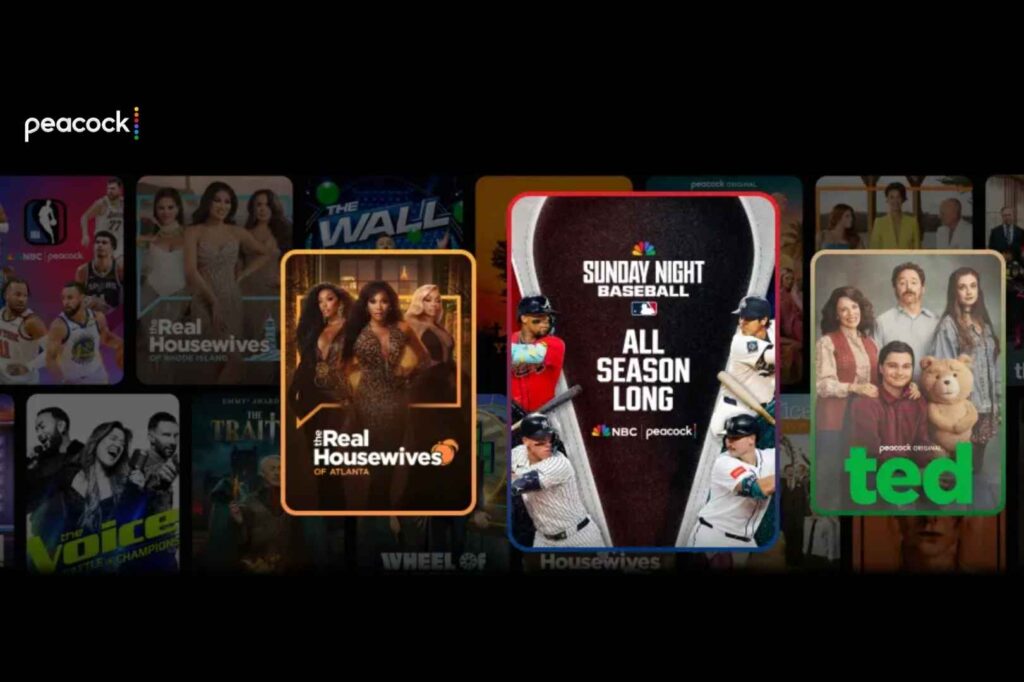
Peacock’s free tier is more generous than most people realize. You get access to a substantial library of NBC content, classic TV series, and a rotating selection of movies — all with ads. The paid tier ($7.99/month) removes most ads and adds current-season NBC shows, Premier League football, and early access to certain films.
What makes Peacock stand out is the breadth of its TV catalog. Full runs of The Office, Parks and Recreation, and Downton Abbey sit alongside recent Universal film releases. If you grew up watching NBC, this will feel like home.
Best for: TV series fans, sports viewers (especially Premier League), and anyone in the NBC ecosystem.
4. Crackle — Sony’s Free Streaming Service
Crackle is one of the original free streaming services, backed by Sony Pictures. The catalog isn’t enormous, but it’s curated — you’ll find Sony films, some originals, and a reasonable selection of classic Hollywood titles.
What Crackle does well is surface content you might have forgotten existed. It’s less overwhelming than Tubi and feels more like a boutique selection. The ad load is reasonable, and the interface is cleaner than many free competitors.
Best for: Sony film fans, people who want a smaller, more curated free catalog, casual viewers.
5. Kanopy — Free Through Your Library Card
Kanopy is the most underrated streaming service most people have never heard of. It’s completely free through participating public libraries and universities — no credit card, no ads, just borrow access using your library card.
The catalog is focused on arthouse cinema, documentaries, classic films, and educational content. Criterion Collection titles sit alongside PBS documentaries and indie films that never made it to mainstream platforms. It’s not the place for blockbusters, but for thoughtful, high-quality film it’s extraordinary.
You typically get a set number of plays per month (often 10–15), which resets with your billing cycle.
Best for: Documentary fans, film students, arthouse cinema lovers, anyone with a library card who hasn’t tried this yet.
Fun fact: Kanopy is funded by your library, not by advertising. It costs the library a small fee per view — which is why most accounts have a monthly limit. Think of it as your library buying the film for you each time.
6. Plex — Free Streaming Plus Your Own Media Library
Plex is a hybrid platform. The free tier gives you access to a solid library of movies and TV shows (with ads), but Plex’s real strength is that it also lets you host and stream your own media files from a home computer or NAS drive to any device.
If you have a collection of legally purchased films, Plex will organize, categorize, and stream them beautifully — with artwork, descriptions, and subtitles pulled automatically. The paid tier ($4.99/month or a one-time $120 lifetime pass) adds offline downloads and removes ads.
Best for: Tech-savvy users, people with personal media collections, home theater enthusiasts.
7. Amazon Freevee — Free With Amazon
If you have an Amazon account (even without Prime), Freevee gives you access to a rotating selection of free movies and TV shows with ads. The catalog overlaps somewhat with Prime Video, but Freevee has its own originals and regularly adds mainstream titles that have cycled off Prime.
It’s available through the Prime Video app, which means it’s already on every device you own that has Prime Video installed. No separate download needed.
Best for: Amazon users who want more content without upgrading to Prime, casual viewers who don’t mind ads.
8. The Roku Channel — Good If You Own a Roku
The Roku Channel comes built into every Roku device and is also available as an app on other platforms. It offers a free, ad-supported catalog of movies and TV shows alongside live streaming channels — similar to Pluto TV’s model.
If you already own a Roku TV or streaming stick, this is a no-brainer free addition. The content quality varies, but there are genuine finds in the catalog regularly.
Best for: Roku device owners, people who want live channels mixed with on-demand.
9. Popcornflix — Indie Film Specialist
Popcornflix is smaller and more focused than Tubi, but it has a niche: independent and low-budget films that don’t often appear on mainstream platforms. If you enjoy discovering films that flew under the radar — thrillers, comedies, horror, international cinema — Popcornflix is worth bookmarking.
The catalog is entirely free with ads, and no account is required to start watching.
Best for: Indie film fans, adventurous viewers who like discovering unknown titles.
Paid Streaming Services Worth the Money
Free options are great, but if you watch regularly, a paid subscription often makes more sense than sitting through ads. These platforms offer more content, better quality, and features like offline downloads.
10. Netflix — Still the Benchmark
Netflix pioneered streaming and still sets the standard for original content. Its library isn’t the deepest for catalog films, but for original series and films — from prestige drama to documentary to international cinema — it remains unmatched.
The ad-supported tier at $6.99/month is a genuine option if cost is the concern. You get nearly everything, with ads, at a price lower than most of the free services’ paid upgrades.
Best for: Original series fans, families, international content (Netflix produces more non-English originals than any competitor).
11. Amazon Prime Video — Best Value If You Already Have Prime
If you subscribe to Amazon Prime for shipping, Prime Video is essentially free. The catalog is extensive, with a strong selection of licensed Hollywood films alongside Amazon originals. Thursday Night Football is included for US subscribers.
Some titles require an additional rental fee even with Prime — a quirk that frustrates users — but the core library is large enough that this rarely becomes a problem.
Best for: Prime subscribers who haven’t fully explored Prime Video, general-purpose viewing.
12. Max — Home of HBO Content
Max combines the prestige of HBO with Warner Bros. theatrical releases and Discovery’s documentary catalog. If you care about quality over quantity — HBO series in particular have a track record that no other network matches for drama — Max is the subscription to prioritize.
Warner Bros. films typically arrive on Max 45 days after theatrical release, meaning you’re watching new blockbusters at home before most other platforms get them.
Best for: HBO fans, drama series viewers, people who want new major studio films quickly after theatrical.
13. Disney+ — Franchises and Family Content
Disney+ is the destination for anything Disney, Pixar, Marvel, Star Wars, and National Geographic. If those categories matter to you — especially if you have children — it’s essential. The catalog is deep within those franchises but narrow outside them.
The Bundle (Disney+, Hulu, and ESPN+) offers significantly better value if you want broader content coverage.
Best for: Families, Marvel and Star Wars fans, anyone who wants to revisit Disney classics.
14. Apple TV+ — Small Catalog, High Quality
Apple TV+ has the smallest library of any major paid streamer, but arguably the highest average quality. Every original series or film is produced with significant budget and care. Slow Horses, Severance, The Morning Show, and Ted Lasso are among the most critically acclaimed series of recent years.
At $9.99/month, it’s best treated as a supplement to a primary streaming service rather than a replacement.
Best for: Quality-over-quantity viewers, anyone who wants a reliable prestige drama rotation.
Why 123Movies Was Shut Down — And Why Copycats Are Risky
Understanding why 123Movies disappeared helps explain why the alternatives matter.
123Movies was shut down in March 2018 following a coordinated international law enforcement effort. The Motion Picture Association identified it as one of the world’s most visited piracy sites at the time. The operators faced criminal charges, and the site was taken offline.
Dozens of copycat sites immediately appeared using the same name or similar branding. These sites are not affiliated with the original and carry real risks:
Legal risk. Streaming copyrighted content without authorization is illegal in many countries, including the US, UK, EU member states, and Australia. Enforcement has intensified in recent years, with ISPs increasingly required to block piracy domains.
Security risk. Piracy sites fund themselves through advertising networks that legitimate companies won’t use. This means your clicks may load scripts that track you, inject cookies, or attempt drive-by malware downloads. Ad blockers help but don’t eliminate the risk entirely.
Quality risk. Pirated streams are often low quality, mislabeled, or interrupted by takedowns mid-season.
The legal alternatives in this guide cost nothing (or less than a coffee) and carry none of these risks.
What’s Next for Free Streaming?
The free ad-supported streaming (FAST) category is growing faster than any other part of the industry. Tubi, Pluto TV, and Peacock’s free tier have seen enormous audience growth as subscription fatigue pushes viewers toward free options.
Several trends are shaping where this goes in 2026 and beyond:
More studios launching free tiers. Every major studio now has or is considering an ad-supported option. As competition intensifies, catalogs will grow and ad loads may decrease to attract viewers.
Better content on free platforms. Studios are increasingly licensing premium titles to FAST platforms rather than letting them sit unused in vaults. The gap between paid and free is narrowing.
Bundling becoming standard. Disney’s bundle, Apple’s partnerships, and Amazon’s Prime ecosystem all point toward bundles replacing individual subscriptions as the default model.
Library content digital access expanding. Kanopy and similar library-based platforms are expanding their reach. As more libraries fund digital access, the argument for piracy weakens further.
The honest takeaway: in 2026, there is more free, legal, high-quality streaming content available than at any previous point in history. The only thing the piracy sites still have is convenience — and the legal alternatives are rapidly closing that gap.
Frequently Asked Questions
The original 123Movies was permanently shut down in 2018. Any website currently using that name is an unauthorized copycat that has no connection to the original. These sites are unregulated, carry significant security risks, and operate illegally.
Tubi is the closest legal equivalent — massive catalog, no account required, free with ads. Pluto TV is a strong second if you prefer a channel-surfing experience. If you have a library card, Kanopy offers curated, ad-free content at zero cost.
Yes. Tubi, Pluto TV, Crackle, Peacock’s free tier, Amazon Freevee, and The Roku Channel are all fully licensed, legal platforms. They pay studios and rights holders for content and generate revenue through advertising — the same model as broadcast television.
It depends on the platform. Tubi and Pluto TV allow browsing and watching without an account. Peacock, Crackle, and Amazon Freevee require a free account to access content. Kanopy requires a library card login.
Tubi claims the largest free catalog with over 50,000 titles. Pluto TV follows, though much of its content is delivered through live channels rather than on-demand. The Roku Channel and Amazon Freevee also have substantial libraries.
Rarely, but it happens. Some studios offer new releases through library platforms or promotional free windows. Peacock occasionally streams theatrical releases on its free tier. For reliable access to new releases, a paid subscription (especially Max for Warner Bros. or Peacock Premium for Universal) is the most straightforward option.
Peacock Premium starts at $7.99/month. Netflix’s ad-supported tier is $6.99/month. Paramount+ starts at $5.99/month. All three offer substantial content libraries at a price point below most other major services.
This is a grey area. Using a VPN itself is legal in most countries. However, accessing content that isn’t licensed in your region likely violates the streaming platform’s terms of service, which could result in your account being suspended. It doesn’t generally carry criminal liability, but it’s not a practice the platforms permit.
Max receives Warner Bros. theatrical releases approximately 45 days after theatrical debut. Peacock Premium gets Universal films on a similar timeline. For other studios, the gap between theatrical and streaming is typically 60–90 days.
Through advertising. Platforms like Tubi and Pluto TV sell ad inventory to brands and split that revenue with the studios whose content they license. The model is identical to commercial television — you watch ads, the platform gets paid, studios get a licensing fee. It’s a sustainable business model that’s been proven for decades.
Also read: