
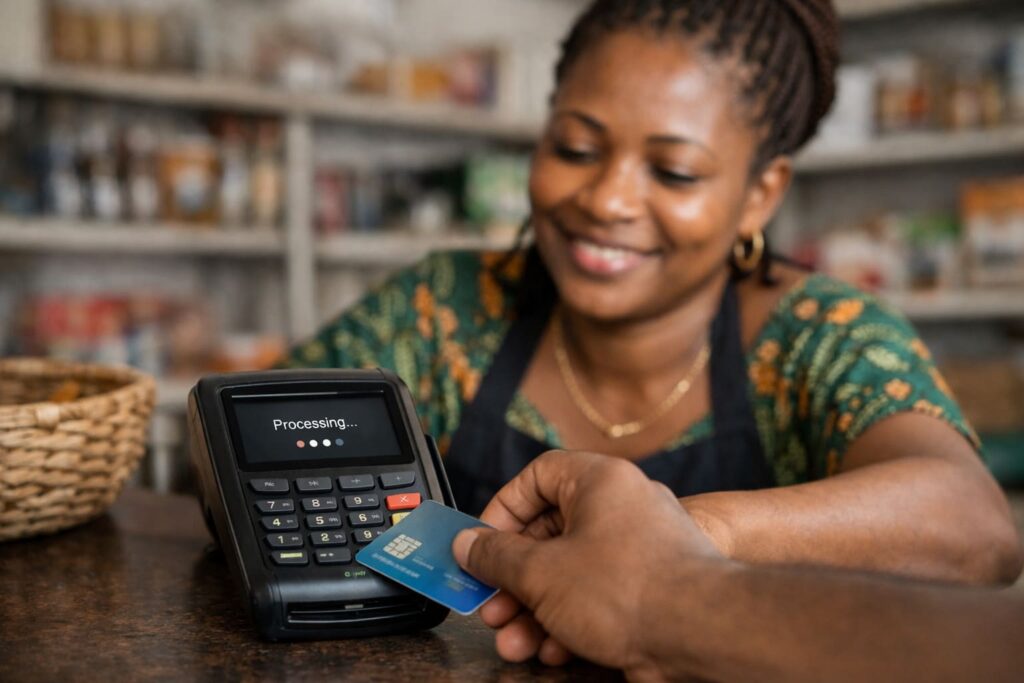
Point of Sale (POS) machines have become essential tools for businesses in Nigeria. From vegetable sellers and salons to supermarkets and petrol stations, POS terminals help merchants accept card payments, bank transfers, and more — often with faster settlement and better reliability than traditional banking.
When choosing the right POS solution, factors like network reliability, settlement speed, cost, and customer support matter a lot.
A POS (Point of Sale) machine is much more than just a payment device. It’s the central hub where customers pay for goods or services electronically, using debit cards, credit cards, or bank transfers. When a customer pays, the POS terminal communicates with the bank to authorize the transaction, then immediately records the sale in your system. This helps reduce errors from manual cash handling and ensures you always have up-to-date sales records.
Many modern POS machines also sync with mobile apps or online dashboards, so you can see daily transactions, sales trends, and payment history right from your phone or computer. This makes it easier to manage cash flow, track performance, and plan promotions based on real data.
These features are especially useful in fast-moving retail environments where knowing what sells and when can make all the difference.
How POS Machines Work for Your Business
POS terminals come in different forms, and knowing the differences helps you choose the best one for your business:
Picking the right type ensures your POS fits how your business operates, whether that’s a busy store or a mobile setup.
A POS machine is useful for any business that receives frequent payments from customers. In Nigeria, many types of businesses now depend on POS machines to operate smoothly.
Types of POS Terminals Available
Retail shops and mini-marts use POS machines to speed up checkout and reduce long queues. Supermarkets rely on them to handle high volumes of daily transactions accurately. Pharmacies and clinics use POS machines to accept secure payments and keep proper records.
Restaurants, food joints, and cafés benefit from faster payments during peak hours, while salons and service businesses use POS machines to track income and reduce cash handling. Market vendors and POS agents also rely heavily on these devices as a primary source of daily income.
If your business involves regular customer payments, a POS machine can improve efficiency and customer trust.
Who Needs a POS Machine?
Not all POS machines perform the same way, even if they look similar. Before choosing one, it’s important to focus on features that affect daily business operations.
Choosing a POS machine based on these features helps ensure smoother operations and better customer experience.
Here are the 10 best POS machines in Nigeria in 2026, with details on features, benefits, and ideal business uses.
Key Features to Consider Before Choosing a POS Machine
Moniepoint POS is one of the most commonly used POS machines in Nigeria, especially among POS agents and busy retail businesses.
It is known mainly for its strong network reliability and high transaction success rate, which helps reduce failed payments and customer complaints.
The device supports card payments, bank transfers, and cash withdrawal services. Transactions are usually processed quickly, even during peak business hours, making it suitable for locations with high daily customer traffic. The hardware is also durable, with a battery that can last through long working hours.
Another reason many businesses choose Moniepoint POS is settlement speed. Funds often reflect quickly, which helps merchants and agents maintain steady cash flow.
This is important for businesses that rely on daily turnover to operate smoothly.
POS Machines Comparison
Moniepoint also provides onboarding support and customer assistance, which helps new users get started without too much confusion.
Best for: POS agents, supermarkets, salons, busy retail shopsWhy it’s popular: reliable network, fast processing, steady settlement
OPay POS is a popular choice among small business owners and POS agents because it is easy to get, affordable, and simple to use.
Many merchants choose OPay as their first POS machine due to its straightforward setup and minimal learning curve.
1. Moniepoint POS
The device supports card payments and bank transfers and handles everyday transactions smoothly. It works well for small shops, kiosks, and market vendors who need a POS that can process payments without complications. The interface is simple, which makes it easy even for first-time users to operate.
OPay POS is also known for its wide usage across Nigeria, which makes customers familiar with the brand and more comfortable using it.
Settlement is generally timely, helping merchants manage daily cash flow.
OPay provides basic support and guidance for merchants, which is helpful for new POS users.
2. OPay POS
Best for: small shops, market vendors, new POS agentsWhy it’s popular: affordable, easy setup, simple interface
PalmPay POS is known for its clean interface and smooth day-to-day performance, making it a good option for merchants who want a POS machine that is easy to operate without extra complexity. It is commonly used by small and medium businesses that handle regular customer payments.
The device supports card payments and bank transfers and processes transactions at a steady pace. Merchants often like PalmPay POS because the system feels simple and familiar, especially for those already using PalmPay’s wallet services. This makes tracking transactions and managing daily sales easier.
3. PalmPay POS
PalmPay POS works well for businesses that don’t need advanced features but still want reliable digital payment acceptance. Settlement is usually consistent, helping merchants plan their daily cash flow.
Best for: mini-marts, retail shops, service businessesWhy it’s popular: user-friendly design, stable performance, easy adoption
Paga POS is built for merchants who want a simple and dependable POS machine without too many extra features.
It focuses on handling basic transactions properly, which makes it suitable for small businesses that just need payments to work without stress.
4. Paga POS
The device supports card payments and bank transfers and is easy to operate, even for people using a POS machine for the first time.
Transactions are processed steadily, and the system is designed to avoid confusion during checkout.
Paga POS is often chosen by traders who prefer clarity over complexity. It does not try to overload users with tools they may not need, which helps keep daily operations smooth.
Best for: small traders, first-time POS usersWhy it’s popular: simple setup, clear interface, reliable basics
5. Kuda POS
Kuda POS is designed for businesses that want banking and POS services in one place. It connects directly with Kuda’s digital banking system, which allows merchants to see transactions almost immediately and manage payments from a single dashboard.
The POS supports card payments, bank transfers, and USSD payments. This flexibility makes it useful for businesses that serve different types of customers.
Merchants can track daily activity easily, which helps with basic accounting and cash flow planning.
Kuda POS works best for businesses that already use Kuda for banking, as the integration reduces delays and makes transaction monitoring more convenient.
6. Baxi POS
Best for: businesses using Kuda bank, digital-first merchantsWhy it’s popular: bank integration, real-time tracking, easy monitoring
Baxi POS is often chosen by merchants who operate in areas where network strength is not always stable.
It is designed to handle transactions smoothly even when internet conditions are not ideal, which makes it practical for many everyday business environments.
The device supports card payments and bank transfers and performs well during busy periods. Some merchants prefer Baxi POS because it reduces transaction delays that can happen with weaker connections, helping them serve customers without long waiting times.
7. Dataway POS
Baxi POS is commonly used by retailers and vendors who need a dependable machine that can keep working throughout the day.
Settlement is generally steady, which helps businesses manage daily earnings without major delays.
Best for: outdoor vendors, semi-urban businesses, busy retail pointsWhy it’s popular: stable performance, handles weak networks better
Dataway POS is a budget-friendly option that is commonly used by people just starting a POS business or small merchants who want a simple payment device. It focuses on basic functionality without adding unnecessary features that could complicate daily use.
8. GTBank POS
The POS machine supports card payments and bank transfers and is easy to set up. Because it is lightweight and simple to operate, many first-time users find it comfortable to use without much training. It handles everyday transactions reliably for low to medium volumes.
Dataway POS may not have advanced tools, but it does the core job well. Settlement is usually consistent, making it suitable for small businesses that depend on steady daily income.
Best for: start-ups, new POS agents, small shopsWhy it’s popular: affordable, simple to use, easy to access
9. FirstMonie POS
GTBank POS is a bank-provided POS machine that appeals to merchants who prefer working directly with a traditional bank.
It offers a sense of trust and stability, especially for businesses that already have an account with GTBank.
The POS machine supports card payments and bank transfers and is suitable for daily retail transactions. Because it is backed by a major bank, many merchants feel more confident about security and settlement reliability. Transactions are processed smoothly, and settlements are generally dependable.
GTBank POS is often offered to qualifying merchants, sometimes with low or no upfront device cost, depending on the business relationship with the bank.
10. DOT PAY POS
Best for: established businesses, GTBank account holdersWhy it’s popular: bank backing, trusted system, stable settlement
FirstMonie POS is provided by First Bank and is widely used by merchants who prefer a bank-backed POS solution.
It is designed to handle everyday transactions reliably and is commonly seen in retail shops and service businesses across Nigeria.
The POS machine supports card payments and bank transfers and works well for regular customer transactions. Because it is connected to First Bank’s infrastructure, many merchants trust it for secure processing and consistent settlement.
Advantages and Disadvantages of POS Machines
FirstMonie POS is especially convenient for businesses that already operate a First Bank account, as it reduces friction between payments and settlement.
Best for: established merchants, First Bank customersWhy it’s popular: bank reliability, secure processing, steady settlement
DOT PAY POS is an Android-based POS machine that offers more flexibility than basic terminals. It is designed for merchants who want to handle payments and also access additional services from a single device.
Advantages of Using POS Machines
The POS supports card payments and bank transfers and usually comes with extra features such as bill payments and simple reporting tools.
Because it runs on Android, the interface feels familiar to users who are comfortable with smartphones, which reduces the learning curve.
DOT PAY POS works well for businesses that want more functionality than a standard POS machine without moving into complex systems.
Settlement is generally steady, making it suitable for regular daily transactions.
Best for: retail stores, service businesses needing extra featuresWhy it’s popular: Android system, added services, flexible use
Disadvantages of POS Machines
Like any business tool, POS machines come with both benefits and limitations. Understanding both sides helps you decide realistically.
POS machines make payments faster and more convenient for customers. Instead of handling cash, transactions are completed in seconds, which reduces queues and improves customer experience.
They also help businesses keep better records. Every transaction is automatically recorded, making it easier to track daily sales and manage accounts.
This reduces errors that often come with manual cash handling.
Future of POS Machines in Nigeria
POS machines reduce the risk of holding large amounts of cash, which improves safety for business owners. They also increase customer trust, as many customers prefer digital payments over cash.
POS machines usually come with transaction fees, which can reduce profit slightly over time. Some devices also depend heavily on network quality, so weak internet can cause delays or failed transactions.
There is also an initial cost for acquiring the device, and occasional technical issues may require support or maintenance.
Final Thoughts
Despite these limitations, many businesses find that the benefits of using a POS machine outweigh the drawbacks.
POS machines in Nigeria are steadily improving as digital payments continue to grow. More providers are focusing on better network support, faster settlement, and improved device durability. As customers become more comfortable with cashless payments, businesses will rely even more on POS systems to handle daily transactions.
Future POS machines are expected to support more contactless payments, better reporting tools, and closer integration with mobile banking apps.
These changes will help business owners track performance more easily and make smarter decisions based on real data.
Frequently Asked Questions About POS Machines in Nigeria
Businesses that adopt reliable POS machines early will be better positioned as payment habits continue to shift away from cash.
Choosing the right POS machine is not just about buying a device. It’s about selecting a payment solution that fits your business type, transaction volume, and daily needs.
From affordable options like OPay POS to more advanced and bank-backed solutions like Moniepoint, GTBank POS, and FirstMonie POS, there is a suitable option for every business size in Nigeria. Understanding how POS machines work, what features matter, and which providers perform well helps you avoid common mistakes.
A reliable POS machine can improve customer experience, reduce cash risks, and support steady business growth in 2026 and beyond.
The cost of a POS machine in Nigeria varies by provider. Some POS machines require an upfront payment for the device, while others may offer the terminal with little or no cost if certain conditions are met. In addition to the device cost, merchants should also consider transaction fees charged per payment.
Most POS providers require basic details such as identification and bank account information before issuing a POS machine.
Both individuals and registered businesses can usually apply, depending on the provider’s requirements.
POS machines generally need network connectivity to process transactions. However, some devices are better at handling weak networks than others.
In areas with poor connectivity, choosing a POS machine known for stable performance is important.
Yes, POS machines are designed with security features to protect transactions. Payments are encrypted, and customer details are not stored on the device.
Using a trusted POS provider further improves safety.
Businesses that handle frequent customer payments benefit the most. This includes retail shops, supermarkets, pharmacies, restaurants, salons, service providers, and POS agents.
Sources and Further Reading
- Retail Payments (Central Bank of Nigeria)
- Point of sale (Wikipedia)
Related Articles

Get the TrustPost briefing
The stories that matter, in your inbox. No spam, unsubscribe anytime.
Newsletter signup will be available soon.
Related stories

Dropshipping Marketing: How to Get Your First Sales
Dropshipping marketing that works in 2026: the channels worth using, the profit numbers that matter, how to get first sales, and the mistakes that waste budget.
Amazon Dropshipping: How It Works and the Rules
Amazon dropshipping explained: how it works, Amazon's strict policy, the seller-of-record rule, the pros and cons, and mistakes that get accounts banned.
How to Start a Shopify Dropshipping Store
How to set up a Shopify dropshipping store step by step: account, supplier apps, product pages, fees, and the settings beginners get wrong before launch.