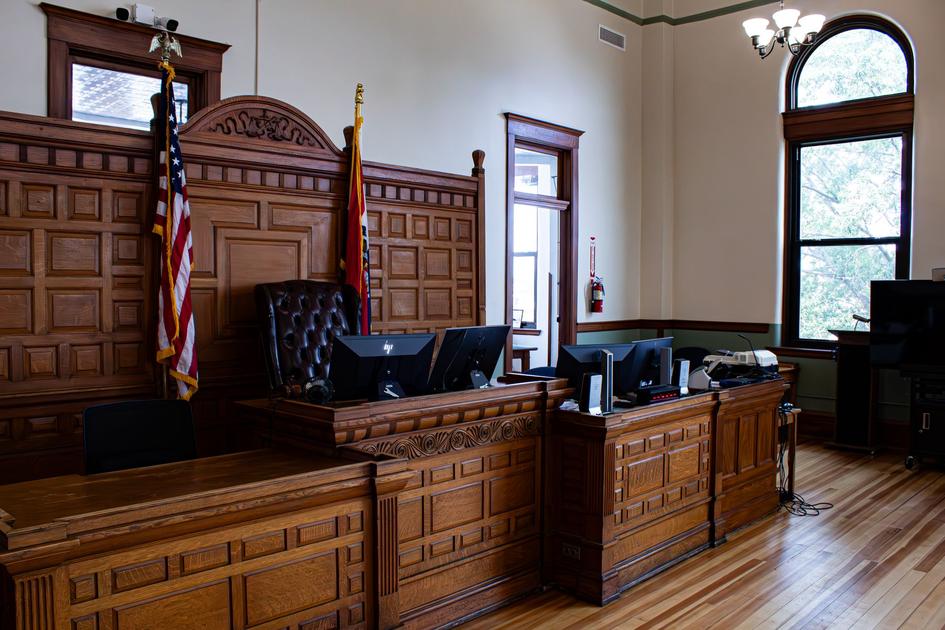
A federal judge in Mississippi has rejected a significant challenge to DeSoto County‘s election maps, a decision that legal experts indicate will have far-reaching implications for voting rights litigation across the Southern United States. U.S. District Judge Glen H. Davidson, presiding over the U.S. District Court for the Northern District of Mississippi in Oxford, issued the ruling on June 24, 2026, finding that plaintiffs failed to provide sufficient evidence that the county’s 2022 redistricting plan diluted Black voting power.
The judgment in *Harris v. DeSoto County* marks one of the first major applications of the U.S. Supreme Court’s recent landmark decision in *Louisiana v. Callais*, which was handed down on April 26, 2026. That Supreme Court ruling significantly altered the legal standard for proving vote dilution claims under Section 2 of the Voting Rights Act of 1965, making such challenges considerably more difficult for plaintiffs to win.
The lawsuit, filed in September 2024, alleged that the electoral map adopted by DeSoto County after the 2020 Census violated federal law by limiting the ability of Black voters to elect candidates of their choice in county office elections. Plaintiffs sought a new redistricting plan and special elections for various positions, including boards of supervisors and education, election commission, constable, and justice court judge.
Federal Court’s Decision in *Harris v. DeSoto County*
Senior U.S. District Judge Glen H. Davidson ruled in favor of DeSoto County, stating that the plaintiffs could not prove their claims for vote dilution pursuant to Section 2 of the Voting Rights Act. The plaintiffs in the case included two NAACP members, Robert Tipton Jr. and Harold Harris, along with the DeSoto County NAACP’s Unit 5574 and the Delta Sigma Theta Sorority. They had brought the suit against the DeSoto County Board of Supervisors and the DeSoto County Election Commission.
The court’s decision followed a 12-day bench trial held in Oxford, Mississippi, with arguments heard in March 2026. Judge Davidson specifically wrote, “plaintiffs cannot prove their claims for vote dilution pursuant to Section 2 of the Voting Rights Act, and judgment must be awarded to defendants.” The ruling highlighted the plaintiffs’ inability to present enough evidence to support a strong inference that the county intentionally drew its districts to afford minority voters less opportunity because of their race.
DeSoto County, located just south of Memphis, has experienced rapid growth, with its Black population increasing from 22.56 percent in 2010 to 31.71 percent in the 2020 census. Despite this demographic shift, none of the 25 county offices determined by the challenged map are currently held by a Black person. The county does have a Black sheriff, Thomas Tuggle, elected countywide, and Black state legislators elected from other districts, but these were not the focus of this specific lawsuit.
The Supreme Court’s *Louisiana v. Callais* Standard
A pivotal factor in Judge Davidson’s ruling was the U.S. Supreme Court’s decision in *Louisiana v. Callais*, which was issued on April 26, 2026, while the DeSoto County trial was already underway. This Supreme Court ruling significantly reinterpreted the test that lower courts must use to evaluate vote dilution claims under Section 2 of the Voting Rights Act of 1965. Section 2 prohibits voting practices or procedures that discriminate on the basis of race, color, or membership in a language minority group.
Legal experts and voting rights advocates have widely criticized the *Callais* decision for weakening the federal Voting Rights Act’s protections against racially discriminatory redistricting. The ACLU of Mississippi, for instance, released a statement calling the DeSoto County decision ‘deeply disappointing,’ asserting that the *Callais* opinion effectively directs federal courts to ignore the clear results of discriminatory maps by updating the test for proving vote dilution.
Amir Badat, lead attorney for the plaintiffs and founder of Badat Legal, expressed disappointment but acknowledged the influence of the *Callais* ruling. He noted that the new framework requires plaintiffs to prove lawmakers intentionally discriminated when drawing district boundaries, a much higher burden than merely demonstrating discriminatory results. This shift makes it ‘almost impossible’ to succeed under the new standard, according to Jade Craig, an assistant professor at the University of Mississippi School of Law, who explained that direct evidence of intentional discrimination is rarely available.
Judge Davidson’s Application of the New Test
Judge Davidson’s ruling meticulously applied the new framework established by *Louisiana v. Callais*, requiring additional briefing from both sides before rendering his judgment. Under his interpretation of *Callais*, the judge barred any use of race in drawing the sample maps that plaintiffs must offer to demonstrate a fairer plan is possible. William S. Cooper, the plaintiffs’ mapping expert, testified that he used ‘green dots’ over areas at least 30 percent Black to guide his work, a method he described as keeping race only ‘in the background.’ However, Davidson held that even such background use now disqualifies proposed maps.
Furthermore, the judge found that the plaintiffs’ proposed maps failed to adhere to DeSoto County’s legitimate districting goals, such as keeping incumbents within their districts and avoiding splits of established communities. Crediting defense expert Sean Trende, Judge Davidson emphasized ‘core retention’ figures, which measure how much an altered map would shift incumbents’ existing constituencies. This metric, while downplayed by the Supreme Court in a 2023 ruling in *Allen v. Milligan*, was deemed newly relevant under the *Callais* standard.
On the second and third threshold requirements for a vote-dilution claim – whether voting in DeSoto County breaks along racial lines – Davidson concluded that the plaintiffs again fell short. He wrote that the new standard demands proof of racial bloc voting that “cannot be explained by partisan affiliation.” Plaintiffs’ expert Jacob Grumbach acknowledged he did not control for party affiliation, considering it inappropriate. In contrast, defense expert John Alford, represented by attorneys like Mike Hurst, the state Republican Party chairman, controlled for partisanship and found no difference in how voters behaved based on a candidate’s race within the pool of Democratic contenders. Because the plaintiffs failed on all three threshold requirements, Judge Davidson did not proceed to the broader ‘totality of the circumstances’ inquiry that typically forms the core of a vote-dilution case.
Implications for Voting Rights Across the South
The DeSoto County ruling serves as a stark early example of how the U.S. Supreme Court’s *Louisiana v. Callais* decision will influence voting rights cases nationwide, particularly in the South. Legal scholars and civil rights advocates are closely watching these developments, as the decision could set a precedent for other local governments facing similar challenges to their electoral maps. This outcome suggests a significantly higher bar for plaintiffs attempting to prove vote dilution under Section 2 of the Voting Rights Act.
The ruling’s impact extends beyond congressional districts, affecting county boards, school districts, and other local government bodies throughout Mississippi and potentially other Southern states. Jade Craig noted that the decision reflects the practical difficulty of mounting successful Voting Rights Act challenges, stating that it “essentially represents a template that other local governments can follow” to defend their redistricting plans. This could lead to fewer legal obstacles for jurisdictions drawing political boundaries, even in the face of growing minority populations.
While the district court case has concluded, the broader debate over fair representation remains active. Plaintiffs’ attorney Amir Badat affirmed that the fight is not over, suggesting continued community organizing and advocacy ahead of the next census and future redistricting cycles. This ongoing struggle for equitable representation highlights the enduring tension between evolving legal standards and the pursuit of voting rights, a dynamic also seen in other legal battles, such as when male athletes dismiss lawsuit challenging New Hampshire women’s sports law.
Frequently Asked Questions
What was the core allegation in the DeSoto County lawsuit?
The lawsuit, *Harris v. DeSoto County*, alleged that the 2022 DeSoto County electoral maps diluted the voting power of Black residents in county office elections. Plaintiffs argued that despite a significant increase in the Black population, the maps made it impossible for Black candidates to win local elections, thereby denying Black voters a fair chance to elect representatives of their choice.
How did the *Louisiana v. Callais* ruling impact this case?
The U.S. Supreme Court’s *Louisiana v. Callais* decision, issued on April 26, 2026, fundamentally changed the legal standard for proving vote dilution under Section 2 of the Voting Rights Act. It imposed a tougher test, requiring plaintiffs to demonstrate intentional discrimination in map drawing and limiting the use of race in proposed alternative maps, which directly influenced Judge Davidson’s rejection of the DeSoto County challenge.
What are the broader implications of this decision?
The DeSoto County ruling is seen as an early indicator of how the *Callais* standard will be applied in future voting rights cases across the South. It suggests that proving vote dilution claims will be significantly more challenging, potentially serving as a template for other local governments to defend their redistricting plans. This could reduce legal avenues for minority voters seeking fairer representation in local elections.
Conclusion
The federal court’s decision to uphold DeSoto County’s election maps under the new *Louisiana v. Callais* standard represents a critical moment for voting rights in the United States. It underscores the heightened burden now placed on plaintiffs seeking to challenge redistricting plans under Section 2 of the Voting Rights Act. While the county board expressed gratitude for the ruling, affirming their adherence to the law, voting rights advocates signal that the pursuit of fair representation will continue through other means, including community organizing and legislative advocacy, as the legal landscape for such challenges has undeniably shifted.

Trust Post Desk
A journalist and editor at TrustPost.org covering world and national news, technology updates and human-interest stories. They check every fact, interview sources in person or online, and aim to deliver clear, accurate reporting. Their work ranges from breaking news to in-depth features and daily newsletters. Outside the newsroom, they follow emerging trends and engage with readers on social media.