In 2026, search isn’t just about Google anymore. AI-powered tools like ChatGPT, Claude, Gemini, and others are shaping how people discover and consume information. Big data from almost 2 million AI search sessions shows that AI discovery patterns vary strongly by platform and use case. This shift means brands have to rethink how they show up when someone asks a question to an intelligent assistant.
Here’s a clear look at what’s going on and how content teams can respond.
AI Search Isn’t One Thing, It’s Many
Data from 2 million LLM sessions reveals that different AI systems dominate different kinds of interactions. ChatGPT still handles most broad discovery queries, but other assistants like Copilot and Claude are growing fast and often lead in specialized workflows. That means a one-size-fits-all AI strategy won’t work if you want real visibility across platforms.
Platforms differ not only in user numbers, but also in how they’re used:
- Some tools are the go-to for broad questions and initial research.
- Others thrive in task-oriented or professional contexts.
This fragmentation means you need to understand which AI engines your audience prefers before you invest in a visibility strategy.
Also read: LinkedIn Adjusts Its Marketing Strategy as AI Changes How Content Is Found
What Visibility Means in an AI-First World
Visibility in AI search is less about traditional SEO rankings and more about being cited directly in AI responses. When a user asks a question to an AI, the assistant often pulls information from multiple sources and combines them into a single text answer. That means your content might appear in the response even if someone never clicks a link.
To show up here, you need to focus on how LLMs actually work: they don’t just index pages. They synthesize knowledge from many documents and generate human-readable answers.
Proven Tactics for Better AI Visibility
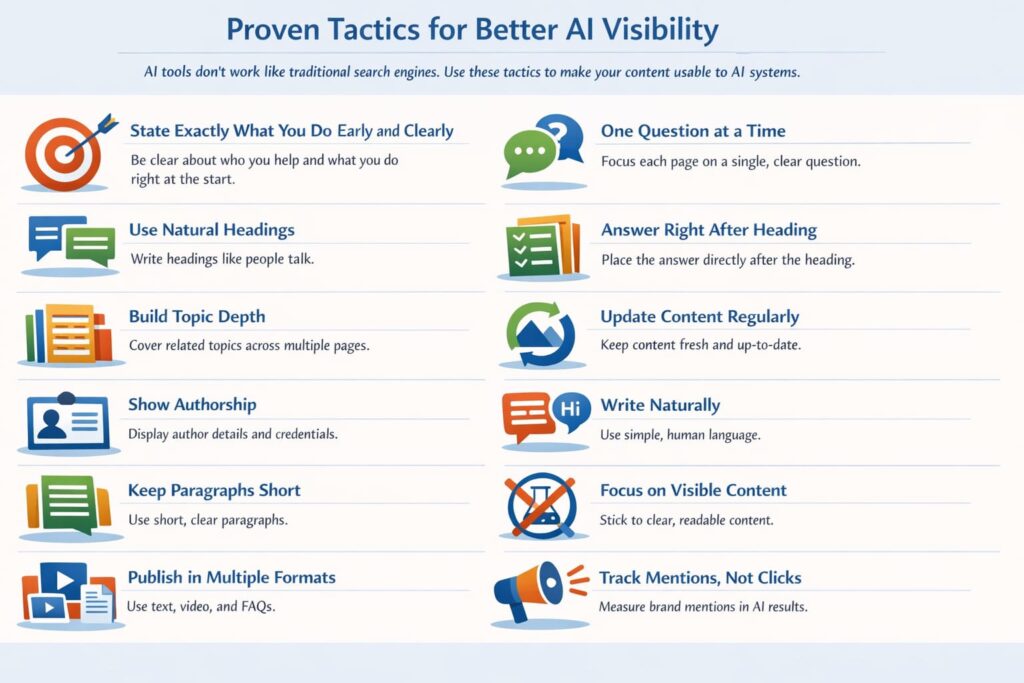
AI tools don’t work like traditional search engines. They don’t rank ten blue links. They read, compare, compress, and then speak. If your content doesn’t survive that process, it disappears. These tactics focus on making your content usable to AI systems.
1. State Exactly What You Do, Early and Clearly
AI models scan pages fast. If the first screen of your site doesn’t explain who you help and what problem you solve, the model moves on. Brand slogans don’t help here. Plain language does. Think of it as introducing yourself to a very impatient reader.
2. Design Content Around One Real Question at a Time
AI answers are question-driven. Pages that try to cover everything at once usually get ignored. When a page answers one clear question thoroughly, it becomes easier for an AI to pull it into a response without rewriting or guessing.
3. Use Headings That Match How People Actually Speak
LLMs are trained on human conversation. Headings written like real questions or statements perform better than clever or abstract titles. If a heading sounds like something someone would say out loud, it’s easier for an AI to connect it to a prompt.
4. Place the Answer Immediately After the Heading
AI systems prefer content where the answer appears right away. Long intros before the point increase the chance your content gets skipped or partially used. A clear answer first, explanation second works best.
5. Build Topic Depth Across Multiple Pages
One strong article helps, but repeated coverage of related topics builds trust. When AI models see the same source explain a subject from multiple angles, that source feels safer to cite. Depth signals expertise more than word count.
6. Update Content Regularly, Even Lightly
Freshness matters more in AI than many people think. If two sources say similar things, the newer one often wins. Updating examples, dates, and explanations keeps your content relevant to current AI outputs.
7. Make Authorship and Ownership Obvious
Clear author names, bios, company details, and contact info help AI systems evaluate credibility. Anonymous or vague content carries less weight, especially for informational or confirmed answers.
8. Write Naturally, Not Like an SEO Formula
AI models are trained on natural language, not keyword tricks. Forced phrasing and repetitive terms weaken clarity. Content written like a human explaining something to another human is easier for AI to reuse accurately.
9. Keep Paragraphs Short and Logical
Dense blocks of text are hard for AI to extract cleanly. Short paragraphs with one idea per section reduce the risk of misinterpretation. Clean structure improves reuse.
10. Focus on Visible Content, Not Experimental Signals
There’s no confirmed shortcut like special AI files or tags that magically boost visibility. What consistently works is readable, public content that explains things well. Basics beat speculation.
11. Publish in More Than One Format
AI systems consume text, video transcripts, FAQs, and summaries. When the same idea exists across formats, it reinforces authority and increases the chance one version gets referenced.
12. Measure Being Mentioned, Not Just Being Clicked
AI visibility doesn’t always mean traffic. Sometimes it means your brand or explanation appears inside an AI response without a link. Tracking mentions across AI tools gives a more realistic picture of success.
The Bigger Picture for Marketers
AI discovery patterns show that no single platform will dominate every niche, and that brands need flexible content strategies. Here are a few big takeaways from the data:
- AI discovery is multipolar. ChatGPT is the largest player, but others grow rapidly and serve different needs.
- Visibility is different from ranking. Instead of thinking only about keywords, think about whether your content can serve as a direct answer.
- Structured, clear content wins. Pages that are easy for AI systems to parse are more likely to get pulled into answers.
In short, AI visibility demands both solid SEO basics and a new layer of design for modern search engines.
Also read:
- 5 Best SEOquake Alternatives for 2026 (When the Sidebar Fails)
- What Is cats.txt? The New Proposed Standard for Websites and AI SEO
- Best Local SEO Companies in 2026: Top Agencies to Grow Your Local Business
- Best Dofollow vs Nofollow Link Checker Tools
- Moltbook Explained: What It Is, How It Works, and Why It’s Different
- Google Shares Its Biggest Crawling Problems From 2025

Trust Post Desk
A journalist and editor at TrustPost.org covering world and national news, technology updates and human-interest stories. They check every fact, interview sources in person or online, and aim to deliver clear, accurate reporting. Their work ranges from breaking news to in-depth features and daily newsletters. Outside the newsroom, they follow emerging trends and engage with readers on social media.