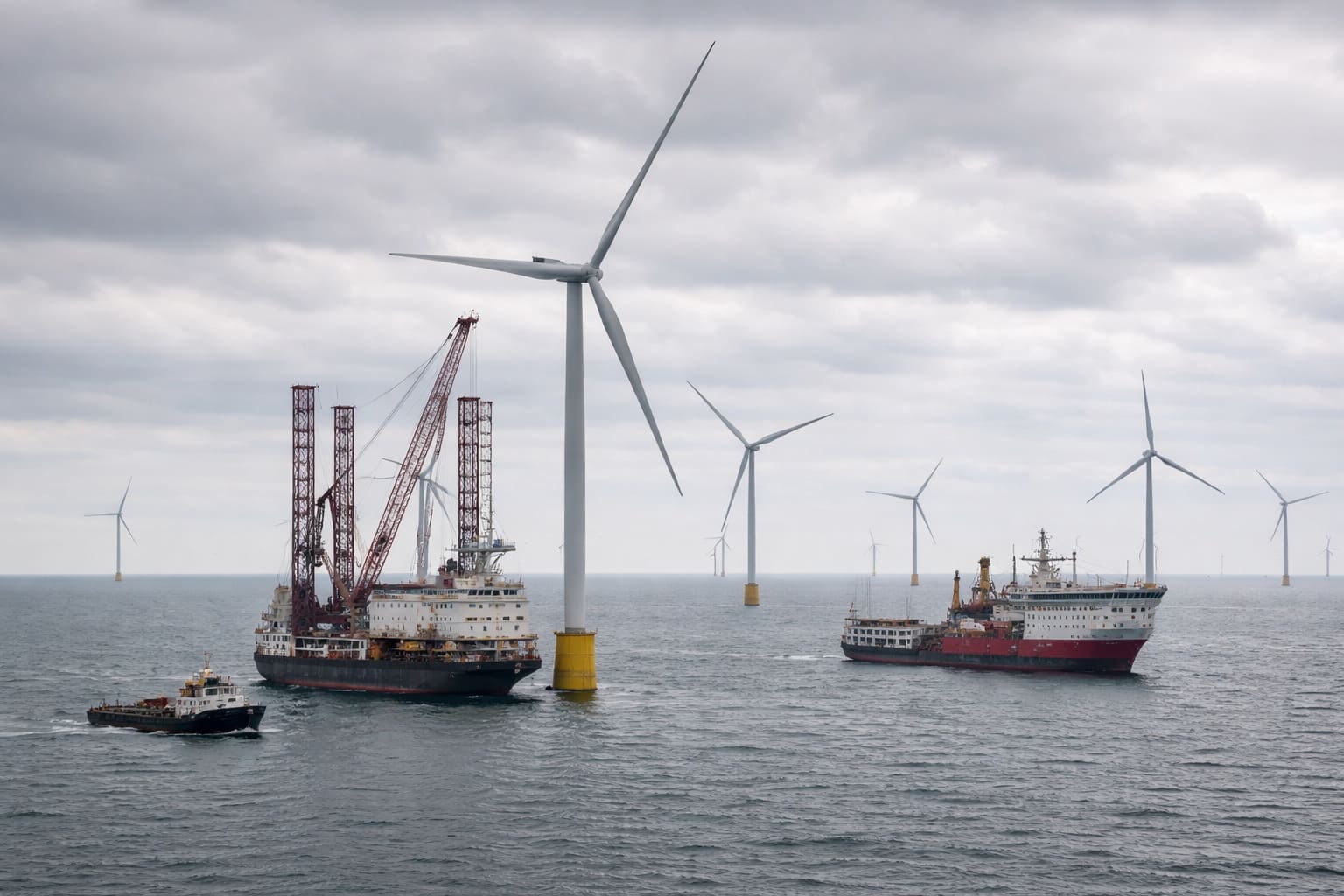
Federal judges have now lifted stop-work orders on every major offshore wind project that was paused at the end of last year, allowing construction to move forward again across the United States.
The rulings come after the Department of the Interior under the Trump administration ordered a halt to five large offshore wind farms in December 2025, citing unspecified national security concerns. Critics said the rationale was vague and did not justify stopping construction on projects that were already well under way.
Judges Rule Against Federal Pause
Over the past few weeks, courts in several jurisdictions rejected the government’s attempts to enforce the suspension. The latest decision cleared the final project to resume work, striking down a stop-work order that had blocked construction on one of the nation’s largest offshore wind developments.
That means all five projects targeted by the federal pause — including Empire Wind, Coastal Virginia Offshore Wind, Vineyard Wind, Revolution Wind, and the Sunrise Wind project — have now won judicial relief and are back in active development.
Developers argued that delays were causing serious financial harm and that the administration had failed to offer enough evidence to support its national security claims. Judges agreed, often noting that the companies were likely to prevail on their legal challenges and could face “irreparable harm” if work did not resume.
What This Means for the Offshore Wind Industry
The restart marks a major win for renewable energy firms and coastal states that have pushed for expanded offshore wind capacity. These projects together represent about 6 GW of planned clean energy generation, enough to power millions of homes once fully operational.
Construction had already progressed on many sites before the pause. For example, the Vineyard Wind project in Massachusetts was nearly complete when it was stopped and has since resumed final work.
Industry leaders say restarting construction quickly is critical to keeping costs down and meeting production targets as climate goals push the US toward low-carbon electricity. The legal outcomes may also reassure investors who had grown nervous during the period of uncertainty.
Political and Legal Backdrop
The Interior Department’s original pause drew political controversy, especially because similar national security concerns had been discussed internally without halting work during earlier permitting. Opponents of offshore wind called the suspension an overreach, while supporters said it threatened jobs and green energy growth.
The series of court decisions now places the projects back on track, but the broader dispute highlights how renewable energy infrastructure can become entangled with federal policy debates. For now, developers and states are focused on catching up on construction and meeting expectations for bringing new wind power online.
Also read:

Trust Post Desk
A journalist and editor at TrustPost.org covering world and national news, technology updates and human-interest stories. They check every fact, interview sources in person or online, and aim to deliver clear, accurate reporting. Their work ranges from breaking news to in-depth features and daily newsletters. Outside the newsroom, they follow emerging trends and engage with readers on social media.