Every website owner wants better Google rankings. Some people build links the slow way with content and outreach. Others look for faster paths. That is where SAPE backlinks enter the picture.
SAPE is a paid backlink network that promises quick ranking movement by placing your links on thousands of sites. It sounds tempting, especially when traffic is low and patience runs out. But speed often comes with hidden costs. This guide explains what SAPE backlinks are, how they work, why people use them, and what risks come with them.
What Are Sape Backlinks
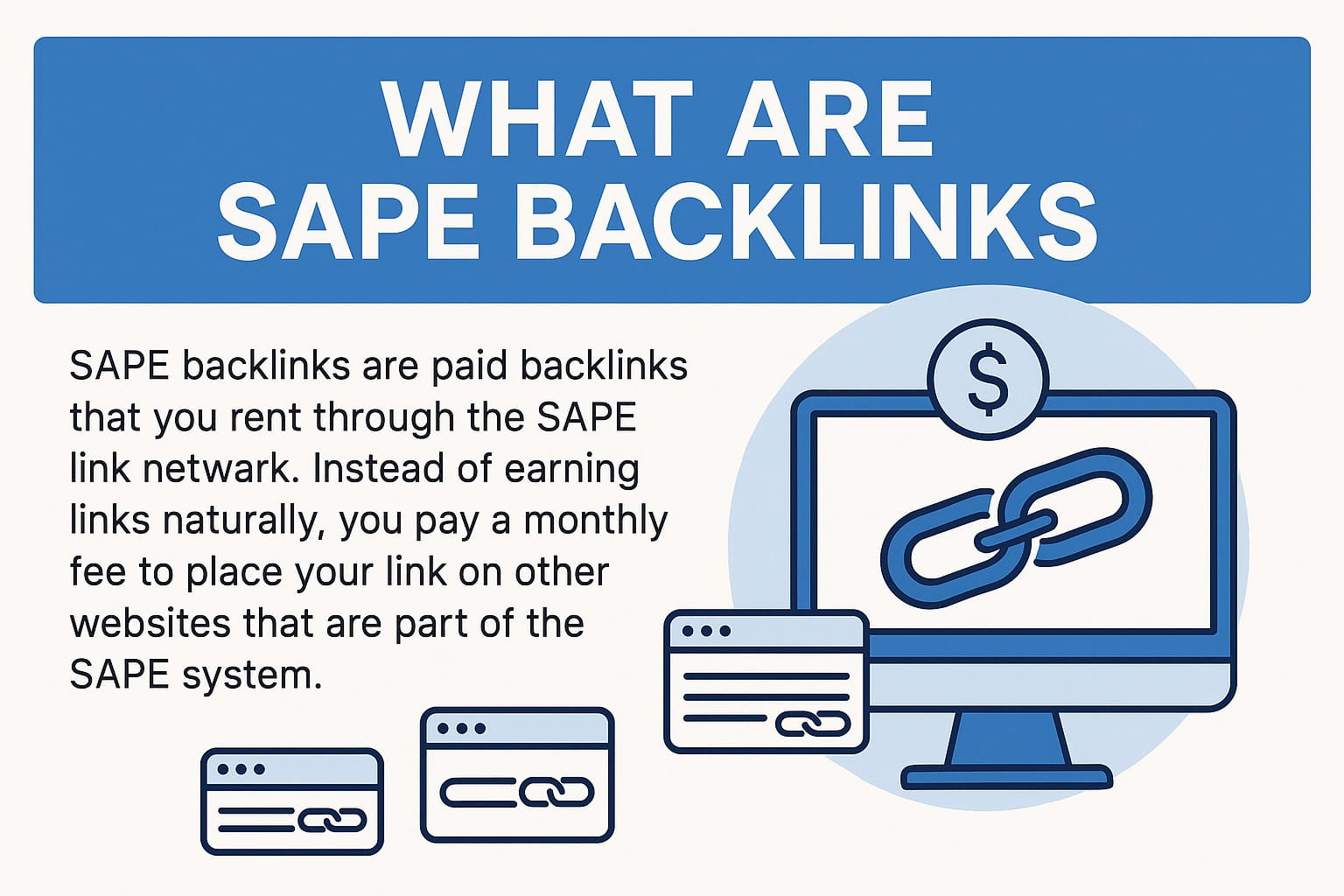
SAPE backlinks are paid backlinks that you rent through the SAPE link network. Instead of earning links naturally, you pay a monthly fee to place your link on other websites that are part of the SAPE system.
These links are not earned through content or outreach. They are rented. As long as you pay, the links stay live. When you stop paying, the links disappear.
Most SAPE links appear in sidebars, footers, or inside older blog posts. The goal is simple. Send ranking signals to Google fast.
How the SAPE Backlink Network Works
SAPE works like a link marketplace.
Website owners join SAPE and install a small script on their site. This allows SAPE to place paid links on their pages automatically.
Buyers sign up to SAPE, add funds, choose websites, select anchor text, and place links with a few clicks. Everything runs on a monthly rental system.
Link placement is instant. No editor approval. No emails. No content check. That speed is why many people are drawn to it.
Why People Use SAPE Backlinks
People use SAPE mainly for one reason. Speed.
Building links the clean way takes weeks or months. SAPE gives links within hours.
Other reasons people choose SAPE include:
- Low cost compared to guest posts
- Ability to build hundreds of links fast
- Full control over anchor text
- Automation with no manual work
For test projects, churn sites, and short campaigns, SAPE feels like a shortcut to quick movement.
Types of Links You Get from SAPE
SAPE provides several kinds of links based on the site you choose.
Most common types include:
- Sidebar links placed on every page
- Footer links that appear across full websites
- In-content links inside blog posts
- Links from private blog networks
These links are usually mixed with many other paid links on the same page. That makes footprints easy to spot for search engines.
Are SAPE Backlinks Safe for Google SEO
Short answer. No.
Google clearly states that buying backlinks to influence rankings goes against its rules. SAPE is one of the oldest and most known paid link systems in the SEO world.
Since SAPE is built for selling links at scale, it fits directly into what Google tries to stop. It creates artificial link signals instead of natural ones.
Some sites may rank for a short time. Many later drop without warning.
How Google Detects SAPE Backlinks
Google does not guess. It detects patterns using both automated systems and humans.
Common detection signals include:
- Repeated anchor text across many sites
- Same groups of IP addresses
- Too many new links in a short time
- Links placed in footers and sidebars
- Sites linking to hundreds of unrelated niches
Once these signals stack up, manual review often follows. That is when penalties happen.
Real Risks of Using SAPE Backlinks
Using SAPE backlinks is a high-risk move. Here is what can go wrong.
- Your site can lose rankings without warning
- You may receive a manual action in Search Console
- Your traffic can drop overnight
- Recovery can take months
- When you stop paying, the links vanish
Many site owners see fast growth first. Then one update hits and everything crashes. That cycle repeats often with paid networks.
When Do People Still Use SAPE
Even with the risks, SAPE is still used in some circles.
Most common use cases include:
- Short-term affiliate sites
- Test projects for new niches
- Churn and burn campaigns
- Spam networks
Serious brands, service sites, and long-term businesses usually avoid SAPE because reputation matters more than fast wins.
Better Alternatives to SAPE Backlinks
If your goal is stable traffic and fewer ranking shocks, there are cleaner options.
- Guest posting on real blogs
- Link insertions on solid content
- Digital PR campaigns
- Original research and tools
- Helpful guides that earn natural links
These take more time. But they do not vanish overnight. That makes a big difference for growth that lasts.
Conclusion
SAPE backlinks are fast but fragile.
They can push rankings for a short time. They can also destroy years of work in one update. If your goal is quick tests with no brand at stake, some people still take the risk. If your goal is long-term traffic and trust, SAPE is not the right path.
In SEO, speed without stability rarely ends well.
FAQs
No. They are rented. Once you stop paying, the links are removed.
Sometimes yes. Often followed by sharp drops later.
There is no fixed time. Some last weeks. Some collapse after one update.
In extreme spam cases, yes. Deindexing can happen if abuse is heavy.
Also read:

Trust Post Desk
A journalist and editor at TrustPost.org covering world and national news, technology updates and human-interest stories. They check every fact, interview sources in person or online, and aim to deliver clear, accurate reporting. Their work ranges from breaking news to in-depth features and daily newsletters. Outside the newsroom, they follow emerging trends and engage with readers on social media.