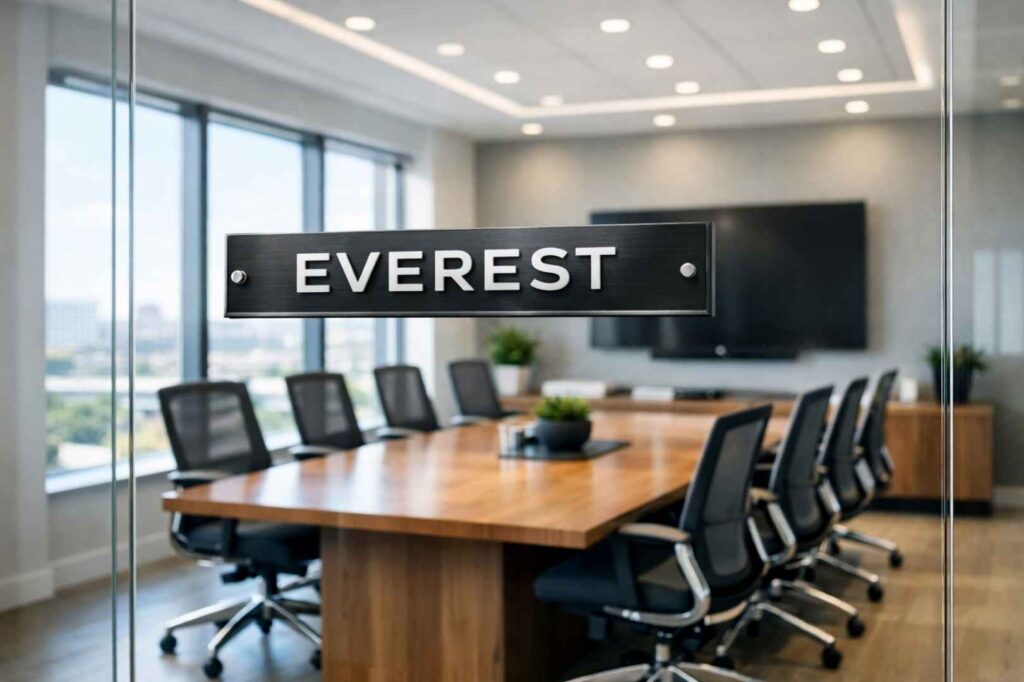
Naming your conference rooms might seem like a small decision, but it’s one that affects your team every single day. A good name makes it easy for employees to find the right room, remember where meetings are happening, and feel a sense of identity with the workplace.
This guide covers everything you need to know about choosing conference room names — from why it matters and how to pick the right theme, to 100+ creative name ideas organized by category. Whether you’re setting up a new office or rebranding your existing rooms, you’ll find everything you need here.
What Are Conference Room Names and Why Do They Matter?
Conference room names are labels given to meeting spaces in an office instead of generic identifiers like “Room 1” or “Meeting Room A.” Companies like Google, Twitter, and Spotify all use creative naming systems for their office spaces, and for good reason.
When you name a room “Jupiter” instead of “Conference Room 3,” something changes. The room gets a personality. Employees remember it. Visitors notice it. And over time, it becomes a small but meaningful part of your workplace culture.
Here’s why that matters more than most people realize.
Why Do Companies Name Their Conference Rooms?

It Eliminates Confusion
In any office with more than two meeting rooms, generic names cause real problems. “Meet me in the conference room” becomes useless when there are four of them.
Creative names solve this instantly. Nobody confuses “Everest” with “Kilimanjaro.” When someone says “I’ll see you in Tokyo,” everyone knows exactly where to go.
It Reflects Your Company Culture
The names you choose say something about who you are as a company. A tech startup that names rooms after science fiction authors is telling a story about creativity and forward thinking. A law firm that names rooms after world capitals is conveying professionalism and global perspective.
Room names are a quiet but consistent signal about what your company values.
It Makes the Workplace More Memorable
Think about the difference between working in an office with rooms called “Room A, Room B, Room C” versus one with rooms called “Bowie, Mercury, Hendrix.” One feels institutional. The other feels intentional.
Creative names give employees something to talk about, show visitors something worth noticing, and make the office feel less generic.
It Helps New Employees Feel Connected
When someone starts a new job, learning the layout of the office is part of settling in. Memorable room names are easier to learn than numbers, and a well-chosen theme gives new hires an immediate glimpse into the company’s personality.
How to Choose the Right Conference Room Naming Theme
Before you start listing names, you need to pick a theme. A good theme makes the whole system coherent and easier to scale as your company grows.
Step 1: Think About Your Brand
Your conference room names should feel like a natural extension of your company identity. A fitness brand naming rooms after mountains makes sense. A food company naming rooms after famous chefs makes sense. A tech company naming rooms after space missions makes sense.
When the theme aligns with your brand, the names reinforce what your company is about every time someone books a meeting.
Step 2: Make Sure It Can Scale
A theme that only gives you three or four names is a problem waiting to happen. If you open a new office or add rooms, you need enough options in the theme to keep going.
Planets give you eight names. Cities give you hundreds. Stars give you thousands. Choose a theme with room to grow.
Step 3: Keep It Inclusive
Room names should be recognizable and welcoming to everyone in your office — regardless of background, age, or nationality. A theme based entirely on American pop culture from the 1980s might alienate international employees or younger team members.
The best themes are ones that everyone can relate to or at least easily learn.
Step 4: Ask Your Team
One of the best ways to get room names that stick is to involve your employees in choosing them. Run a quick poll, collect suggestions, or hold a vote between finalists. When people have a say in the names, they feel more ownership over the space.
It also turns a routine office task into a small team-building moment.
Step 5: Test It Out Loud
Before you print the signs, say the names out loud in a sentence: “I’ll meet you in Everest at 2pm.” “Can you book Hendrix for Thursday?” If it sounds natural and easy to say, you’re on the right track.
100+ Creative Conference Room Name Ideas
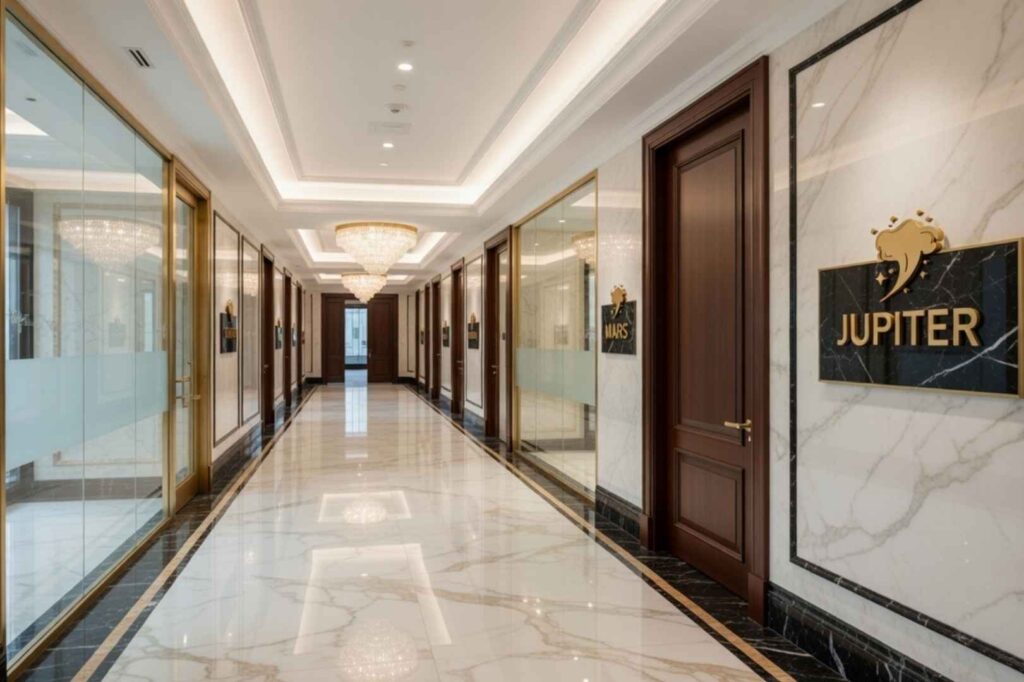
Here are ten theme categories with name ideas for each. Mix and match or stick with one theme throughout your office.
1. Cities Around the World
City names are universally recognizable, easy to pronounce, and offer nearly unlimited scalability. They also add a sense of global reach to your workplace.
- Tokyo
- Paris
- London
- New York
- Dubai
- Sydney
- Nairobi
- Mumbai
- Berlin
- Rome
- Cairo
- Bangkok
- Seoul
- Lagos
- Chicago
- Lisbon
- Amsterdam
- Singapore
- Toronto
- Buenos Aires
Best for: International companies, consulting firms, travel brands, global startups
2. Mountains and Peaks
Mountains communicate strength, ambition, and scale — qualities most companies aspire to. This theme works particularly well in industries that value resilience and achievement.
- Everest
- Kilimanjaro
- Denali
- Matterhorn
- K2
- Mont Blanc
- Fuji
- Annapurna
- Elbrus
- Aconcagua
- Olympus
- Rainier
- Whitney
- Logan
- Blanc
Best for: Outdoor brands, fitness companies, financial institutions, consulting firms
3. Planets and Space
Space-themed names feel modern, ambitious, and slightly futuristic. They’re a popular choice for tech companies and startups that want to signal they’re thinking big.
- Mercury
- Venus
- Mars
- Jupiter
- Saturn
- Uranus
- Neptune
- Pluto
- Titan
- Europa
- Callisto
- Ganymede
- Io
- Triton
- Enceladus
Best for: Tech startups, software companies, engineering firms, science organizations
4. Famous Scientists and Inventors
Naming rooms after great thinkers is a subtle way to encourage intellectual curiosity in your workplace. It also provides great conversation starters during meetings.
- Einstein
- Curie
- Tesla
- Newton
- Hawking
- Darwin
- Turing
- Copernicus
- Galileo
- Lovelace
- Faraday
- Pasteur
- Feynman
- Sagan
- Mendel
Best for: Research institutions, universities, engineering firms, healthcare companies, tech companies
5. Stars and Constellations
Stars give you a virtually unlimited pool of names that are distinctive, easy to remember, and carry a sense of wonder. Constellations add another dimension for offices that need even more names.
- Polaris
- Sirius
- Vega
- Rigel
- Antares
- Betelgeuse
- Aldebaran
- Castor
- Pollux
- Arcturus
- Orion
- Lyra
- Cassiopeia
- Perseus
- Andromeda
Best for: Astronomy organizations, creative agencies, hospitality brands, any company that values aspiration
6. Famous Authors and Writers
A literature-based theme works especially well for publishers, media companies, law firms, and any organization that values clear communication and storytelling.
- Hemingway
- Austen
- Fitzgerald
- Orwell
- Morrison
- Twain
- Woolf
- Dickens
- Tolstoy
- Kafka
- Achebe
- Neruda
- Baldwin
- Dostoevsky
- Plath
Best for: Publishing houses, media agencies, law firms, marketing companies, universities
7. Trees and Nature
Nature-inspired names feel calm, grounded, and approachable. They work well in wellness-focused offices or any workplace that wants to feel less corporate.
- Oak
- Maple
- Birch
- Aspen
- Cedar
- Willow
- Spruce
- Redwood
- Magnolia
- Walnut
- Olive
- Pine
- Sequoia
- Elm
- Poplar
Best for: Wellness brands, environmental organizations, architecture firms, hospitality companies
8. Legendary Musicians and Bands
Music-themed rooms bring energy and personality to an office. This theme works best in creative environments where a more informal, energetic culture is the norm.
- Bowie
- Hendrix
- Mercury
- Lennon
- Cash
- Joplin
- Marley
- Cobain
- Prince
- Zeppelin
- Fleetwood
- Bono
- Sinatra
- Wonder
- Aretha
Best for: Creative agencies, music industry companies, entertainment brands, marketing firms
9. Historic Explorers and Adventurers
Explorer-themed names fit companies that value curiosity, discovery, and going beyond boundaries. They work well in research, tech, and travel-related industries.
- Magellan
- Columbus
- Shackleton
- Amundsen
- Marco Polo
- Vespucci
- Drake
- Livingstone
- Lewis
- Clark
- Cousteau
- Armstrong
- Hillary
- Earhart
- Verne
Best for: Travel companies, research firms, adventure brands, nonprofit organizations
10. Gemstones and Minerals
Gemstone names are short, elegant, easy to remember, and carry a sense of value. This theme works especially well in luxury, design, or retail environments.
- Diamond
- Ruby
- Emerald
- Sapphire
- Onyx
- Amber
- Jade
- Topaz
- Opal
- Pearl
- Garnet
- Amethyst
- Quartz
- Obsidian
- Citrine
Best for: Luxury brands, jewelry companies, design agencies, real estate firms, retail companies
Conference Room Naming by Company Type
Not sure which theme fits your company? Here are direct recommendations based on industry.
| Company Type | Recommended Theme | Example Names |
|---|---|---|
| Tech Startup | Planets or Space | Mars, Titan, Europa, Callisto |
| Law Firm | World Cities | London, Geneva, Tokyo, Vienna |
| Creative Agency | Musicians or Artists | Bowie, Warhol, Kahlo, Basquiat |
| Healthcare Company | Scientists | Curie, Fleming, Pasteur, Lister |
| Fitness Brand | Mountains | Everest, Denali, Fuji, Blanc |
| Publishing House | Authors | Hemingway, Austen, Morrison, Twain |
| Hospitality Brand | Gemstones | Amber, Jade, Sapphire, Pearl |
| Environmental Nonprofit | Trees | Cedar, Sequoia, Willow, Redwood |
| University | Constellations | Orion, Lyra, Perseus, Cassiopeia |
| Travel Company | Explorers | Magellan, Shackleton, Earhart, Cousteau |
Common Mistakes to Avoid When Naming Conference Rooms
Choosing a Theme That’s Too Narrow
If your theme only gives you five or six options, you’ll have a problem the moment you expand. Always pick a theme that has at least double the number of names you currently need.
Using Names That Are Hard to Spell or Pronounce
Room names that people can’t spell or say confidently cause confusion. If you love the idea of using ancient gods but nobody knows how to say “Quetzalcoatl,” it defeats the purpose. Stick with names that are recognizable and easy to communicate verbally.
Ignoring Cultural Sensitivity
Some names carry negative associations in certain cultures or languages. Before finalizing names, especially if you have a diverse team, it’s worth checking whether any of your chosen names have unintended meanings.
Choosing Random Names Without a Theme
Random names — Jupiter, Beethoven, and Red all in the same office — create more confusion than generic numbers. A consistent theme is what makes the system work. The names don’t need to be in the same category as long as they share a coherent connection.
Forgetting to Add Signage
A creative name means nothing if it’s not clearly displayed outside the room. Invest in clear, well-designed signage so people can actually find the rooms they’re looking for.
How to Roll Out New Conference Room Names
Once you’ve chosen your theme and names, introducing them properly makes a difference.
Start by announcing the new names to your team with a brief explanation of the theme and why it was chosen. If employees were involved in the selection, acknowledge their contributions. This turns the room renaming into a small but meaningful cultural moment.
Then update all systems immediately — your room booking software, email calendar, building directory, and any internal documents that reference meeting spaces. Inconsistency during the transition period causes confusion.
Finally, install clear physical signage outside every room. Include the name prominently and, if possible, a small visual that relates to the theme. A mountain icon next to “Everest” or a planet illustration next to “Saturn” reinforces the name and makes the space feel intentional.
Frequently Asked Questions
How many conference rooms should have names?
Every meeting space should have a name, regardless of size. This includes large boardrooms, small huddle rooms, phone booths, and informal meeting areas. Consistency across all spaces makes navigation easier for everyone.
Should conference room names relate to company values?
They don’t have to, but it helps when they do. Names that tie into what your company does or values create a more cohesive environment. However, any well-chosen theme is better than generic numbers, even if it doesn’t directly reflect your business.
Can we use pop culture references as conference room names?
Yes, many companies do this successfully. Pop culture themes like movie characters, TV shows, or famous albums can work well in creative industries. The key is making sure the reference is widely understood and not likely to age poorly or become inappropriate over time.
How often should we change conference room names?
There’s no rule, but changing names too frequently causes confusion. Once you establish a theme, stick with it unless you rebrand the company or significantly expand the office. Small updates, like adding new names as you grow, are fine.
What if employees disagree on the names?
Run a democratic process. Shortlist three or four themes, let employees vote, and go with the majority choice. When people have a say in the decision, they’re more likely to embrace the result even if their first choice didn’t win.
Is it expensive to name conference rooms?
Not at all. The main cost is updating signage and room booking systems. Both are one-time expenses that pay for themselves quickly in reduced confusion and improved employee experience.
What do you do if a name becomes associated with something negative?
Simply rename it. There’s no rule that says room names are permanent. If a name starts carrying unwanted connotations — a company scandal, a controversial figure, or a poor cultural reference — change it and move on.
Conclusion
Conference room names are a small detail that makes a big difference. They eliminate confusion, reinforce company culture, help employees feel connected to their workplace, and make your office feel more intentional and less generic.
The best approach is to choose a theme that fits your brand, has room to scale, and means something to your team. Involve your employees in the process, invest in good signage, and update all your systems at the same time.
Whether you go with world cities, mountain peaks, famous scientists, or legendary musicians, the goal is the same — to give your meeting spaces a personality that makes people want to use them.
A well-named room is one small way to make your office a place people actually enjoy being in.
Also read:
- 50+ Happy Birthday Wishes for Coworkers
- Happy Work Anniversary Wishes, Professional and Thoughtful Messages
- Feature-Benefit Selling: Practical Explanation of How It Really Works