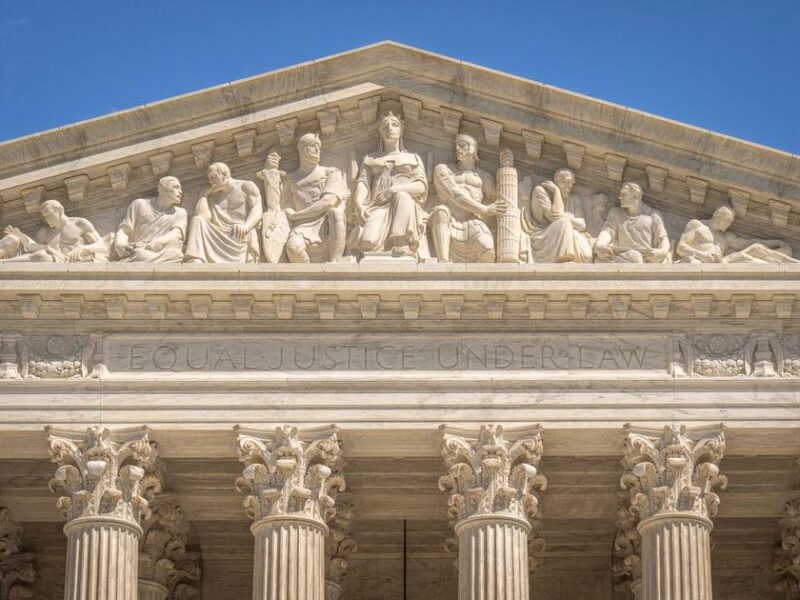
The recent ruling by the Supreme Court in the Alabama redistricting case has ignited a firestorm of controversy, drawing criticism from legal experts and civil rights advocates alike. The decision has raised questions about the Court’s consistency in applying its own legal principles, particularly regarding the Purcell principle, which aims to prevent last-minute changes in election rules that could confuse voters and disrupt the electoral process. This inconsistency has led to significant disruptions in Alabama’s electoral landscape, particularly for Black voters.
Background on the Alabama Redistricting Case
In the wake of the Supreme Court’s ruling in Louisiana v. Callais, states across the South scrambled to redraw their electoral maps. This decision, which was issued just prior to primary elections, allowed states to modify their congressional districts, resulting in a significant reshaping of political power in several Southern states, including Alabama. The redistricting process led to the elimination of a key Black opportunity district, replaced with a district that is predominantly white and more favorable to Republican candidates.
The implications of this ruling have been profound. For the first time in over a century, elections in Alabama faced invalidation, creating confusion among voters and election officials. The 2026 primary elections in Alabama have been particularly affected, with Governor Kay Ivey and Secretary of State Wes Allen announcing that results from the Republican primary in the 1st Congressional District would be invalidated, necessitating new special primaries in four districts on August 11.
The Purcell Principle and Its Application
The Purcell principle, named after a prior Supreme Court decision, serves as a guideline for courts to avoid interfering with election laws close to election dates. It aims to maintain stability and predictability in the electoral process, ensuring that voters are not caught off guard by last-minute changes. However, critics argue that the Supreme Court’s recent decisions demonstrate a troubling inconsistency in how this principle is applied.
Expert Opinions on the Court’s Inconsistency
Legal scholars and election law experts have voiced concerns that the Court’s rulings appear to favor Republican interests, particularly when viewed in the context of the Purcell principle. Douglas Spencer, a law professor at the University of Colorado, remarked, “In 2022, the Court relied on Purcell to the detriment of Black Alabama voters. In 2026, the Court minimizes Purcell to the detriment of Black Alabama voters.” This sentiment reflects a growing perception that the Court’s decisions may be influenced by partisan considerations rather than strict legal principles.
Richard Hasen, a UCLA law professor who coined the term “Purcell principle,” echoed these concerns, stating that the timing of the Court’s rulings has contributed to electoral chaos. “It’s especially bad when the court’s rulings cause states to stop elections already in progress,” Hasen noted, referencing the disruptions seen in Louisiana and Alabama. He argued that had the Court delayed its ruling until June, many of the issues that arose could have been avoided, thus protecting the integrity of the elections.
The Impact on Voter Representation
The redistricting in Alabama has not only led to logistical challenges but has also raised significant concerns about representation for Black voters. Critics argue that the elimination of the Black opportunity district undermines the political power of Black communities in Alabama, effectively diluting their voting strength in a state where racial dynamics have long influenced electoral outcomes.
Election law expert Derek Muller offered a contrasting view, suggesting that the application of the Purcell principle is more nuanced than critics imply. He contended that there are no “hard and fast rules” governing its application and that the Court considers various factors, including the likelihood of success for plaintiffs and the significance of potential injuries.
Consequences for Future Elections
The ramifications of this ruling extend beyond Alabama, as it sets a precedent that could influence how other states approach redistricting and election laws. The potential for further disruptions looms large, particularly with the midterm elections on the horizon. Legal experts warn that the Supreme Court’s apparent inconsistency could lead to increased political polarization and further erosion of public trust in the judicial system.
Looking Ahead: The Broader Implications
The Supreme Court’s handling of redistricting cases raises broader questions about the role of the judiciary in electoral processes. As the legal landscape evolves, scholars like Michael Morley emphasize the need for a critical examination of the motivations behind judicial decisions. He noted that critiques of the Court’s actions are not new and have been a part of legal discourse for decades. “At the end of the day, it’s largely unprovable,” Morley stated, referring to the subjective nature of attributing motives to justices.
The ongoing debate surrounding the Court’s rulings will likely continue to resonate within academic and political circles, as stakeholders seek clarity on the principles guiding judicial decisions in electoral matters. The implications for voter representation, particularly for marginalized communities, remain a pressing concern as the nation approaches a pivotal electoral cycle.
As Alabama prepares for its upcoming elections amid this turmoil, the focus will be on whether the judicial system can uphold principles of fairness and equality in the electoral process, or if partisan interests will continue to overshadow the rights of voters. With the eyes of the nation on Alabama, the stakes have never been higher for the integrity of democracy in America.

Trust Post Desk
A journalist and editor at TrustPost.org covering world and national news, technology updates and human-interest stories. They check every fact, interview sources in person or online, and aim to deliver clear, accurate reporting. Their work ranges from breaking news to in-depth features and daily newsletters. Outside the newsroom, they follow emerging trends and engage with readers on social media.