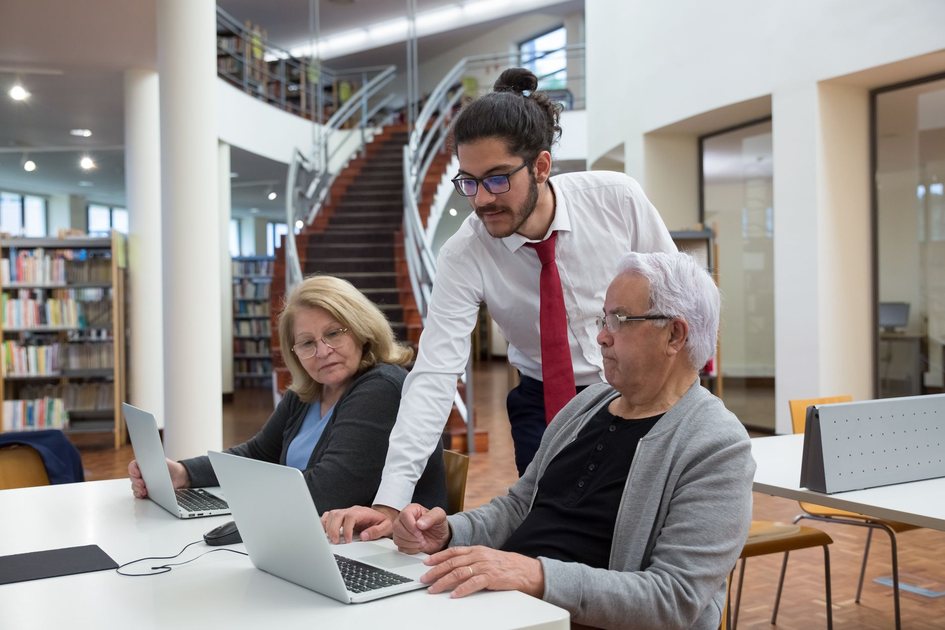
A group of teenagers at Roosevelt High School in Eastvale, California, is running hands-on workshops to teach older residents how to navigate and apply artificial intelligence tools in their daily lives. The Roosevelt High School AI for Good Club hosted its first session on May 5, 2026, at the Eastvale Community Center, introducing seniors to practical AI applications ranging from transcription features on smartphones to photo editing and advanced voice interfaces.
In This Article
- Eastvale Teens Utilize Chatbots for Schoolwork and Community Engagement
- Majority of Teens Believe AI Will Positively Impact Their Lives
- Concerns About Cheating: 59% of Teens Acknowledge AI Misuse in Schools
- Community Workshops: Eastvale Teens Lead AI Literacy Sessions for Seniors
- Bridging Generational Gaps: The Importance of AI Literacy Across Ages
- Frequently Asked Questions
- Conclusion
The initiative addresses a growing need as AI literacy becomes essential across all age groups. While national survey data from Pew Research Center shows that 64 percent of U.S. teens now use AI chatbots, older adults often lack exposure to these same tools. The Eastvale workshops aim to close that gap by pairing tech-savvy students with older community members who want to understand how AI can simplify everyday tasks.
Eastvale Teens Utilize Chatbots for Schoolwork and Community Engagement
According to the Pew Research Center survey conducted between September 25 and October 9, 2025, more than half of American teens use AI chatbots to search for information, with 57 percent reporting this usage. An additional 54 percent turn to these tools for help with schoolwork assignments.
The Roosevelt High School students leading the Eastvale workshops represent this demographic shift. Emily Saldana, a member of the AI for Good Club, explained in an email that attendees learned to confidently use new AI technology for real-world needs.
The May session covered several practical applications. Seniors learned how to use earbuds and phones for transcriptions and closed captioning, employ AI with photos for creating birthday cards and planning home decorating projects, and navigate ChatGPT’s advanced voice feature for conversational assistance.
About 47 percent of teens surveyed by Pew used chatbots for fun or entertainment, demonstrating that students have developed significant familiarity with these platforms beyond academic contexts. This experience positions them well to serve as instructors for community members who are just beginning to explore AI capabilities.
Majority of Teens Believe AI Will Positively Impact Their Lives
Teen attitudes toward artificial intelligence skew more optimistic than anxious when considering personal impact. The Pew survey found that 36 percent of teens expect AI to have a positive effect on their lives over the next 20 years, while only 15 percent anticipate a negative personal impact.
When asked to describe why AI would benefit society, 30 percent of optimistic teens cited that it would make life better or easier. About one-fifth mentioned improvements to learning, information access, or efficiency gains as primary benefits.
Teens who see negative impacts expressed different concerns. Among those expecting harm, 34 percent worried about overreliance, loss of critical thinking, or diminished creativity. Another 25 percent specifically mentioned job displacement as a primary fear.
The generational difference in AI familiarity makes teen-led instruction particularly valuable. More than nine-in-ten teens reported having heard at least something about AI chatbots, with 56 percent saying they had heard a lot about them. This widespread awareness contrasts sharply with older populations who may have limited exposure to these technologies.
Concerns About Cheating: 59% of Teens Acknowledge AI Misuse in Schools
While the Eastvale workshops focus on positive AI applications, the Pew data reveals complex patterns in how students actually use these tools. A majority of teens, 59 percent, believe that using AI to cheat occurs at least somewhat often at their school. About one-third say such cheating happens extremely or very often.
Among students who have used chatbots for schoolwork help, the perception of cheating is even more pronounced. Approximately 76 percent of this group reported that students at their school use chatbots to cheat at least sometimes.
The line between assistance and academic dishonesty remains contested. One-in-ten teens reported doing all or most of their schoolwork with chatbot help, while larger shares said they complete some portion with AI assistance.
Specific academic uses vary widely. About four-in-ten teens or more have used chatbots to research topics or solve math problems, while 35 percent used them for editing their writing. Despite concerns about misuse, 25 percent of all teens said chatbots have been extremely or very helpful for completing schoolwork, with another 25 percent finding them somewhat helpful.
Similar to free AI tools designed to enhance productivity, chatbots serve multiple functions that blur traditional boundaries between independent work and assisted completion.
Community Workshops: Eastvale Teens Lead AI Literacy Sessions for Seniors
The Roosevelt High School AI for Good Club structured its first workshop to address practical, everyday needs rather than abstract technological concepts. The May 5 session walked participants through specific use cases they could immediately apply at home.
Transcription and closed captioning features received significant attention during the workshop. These accessibility tools help older adults who may have hearing difficulties or who want written records of conversations, videos, and voice messages.
Photo manipulation using AI also featured prominently. Seniors learned how to create personalized birthday cards and visualize home decorating options by uploading photos and using AI-powered editing tools. These creative applications demonstrate how AI extends beyond information retrieval into visual design tasks.
ChatGPT’s advanced voice feature allows users to have spoken conversations with the AI system, similar to traditional voice assistants but with more sophisticated conversational abilities. For seniors less comfortable with typing, this interface provides a more accessible entry point to AI assistance.
The club plans additional sessions, though dates have not been finalized. Those interested in attending can email aiforgoodeastvale@gmail.com or text Saldana at 951-314-4400 with their name and email address to receive updates.
This approach mirrors broader intergenerational technology programs like ElderTech Academy, which has paired tech-savvy high school students with older adults since its founding. ElderTech Academy launched the Im(age)ination Project in March 2023, representing the first integrated AI training program in the nation specifically designed for older adults. That program uses both Midjourney and ChatGPT to help participants create images, stories, and other creative works.
Bridging Generational Gaps: The Importance of AI Literacy Across Ages
The Eastvale initiative highlights a significant shift in how communities approach technology education. Rather than assuming older adults will naturally adopt new tools or waiting for institutions to provide training, these students proactively created educational opportunities for their neighbors.
AI literacy has become a crucial skill regardless of age. Experts increasingly call for comprehensive education about AI capabilities, limitations, and ethical considerations as a way to combat misinformation and build informed decision-making skills. The Harvard Graduate School of Education emphasized in September 2024 that students are already using AI extensively and adults need to understand how these tools function in youth contexts.
Teen confidence in using chatbots varies considerably. About one-quarter reported feeling extremely or very confident in their ability to use these tools, while roughly another 30 percent expressed some confidence. About one-in-ten teens lack confidence in using chatbots despite widespread awareness.
For older adults, the learning curve can be steeper. Many seniors did not grow up with smartphones or internet access and may feel overwhelmed by rapid technological changes. Patient, personalized instruction from young people who use these tools daily can break down barriers and reduce anxiety about adopting new technologies.
The ElderTech Academy model demonstrates the mutual benefits of intergenerational technology education. Older adults gain practical skills and dissolve stereotypes about typical high school students, while teen tutors develop teaching abilities, build resumes, and establish meaningful relationships with older community members. ElderTech has provided 2,892 hours of instruction, trained 670 seniors, and created 108 student internships across 30 partnerships.
The specific applications taught in Eastvale address real gaps in how older adults interact with technology. Many seniors receive smartphones from family members but struggle to use advanced features without patient guidance. The workshops provide structured learning at a comfortable pace, unlike rushed family assistance that often leads to frustration on both sides.
Beyond individual skill-building, these initiatives strengthen community bonds. When different generations work together toward shared learning goals, they build social connections that extend beyond the classroom. These relationships can reduce isolation among older adults and give young people broader perspectives on aging and technology adoption.
The timing of the Eastvale program is particularly relevant. As AI tools become embedded in everyday devices and services, basic AI literacy will increasingly determine who can fully participate in digital society. Banking, healthcare, communication, and entertainment platforms are rapidly integrating AI features that assume user familiarity.
Programs teaching older adults about messaging platforms like WhatsApp or social media applications such as Instagram have existed for years. AI literacy education represents the next frontier in ensuring digital inclusion for all ages.
Frequently Asked Questions
How are Eastvale teens teaching older residents about AI?
The Roosevelt High School AI for Good Club organizes hands-on workshops at the Eastvale Community Center where student volunteers provide personalized instruction to seniors. The sessions focus on practical applications including smartphone transcription features, AI-assisted photo editing for projects like birthday cards and home decorating visualization, and ChatGPT’s advanced voice interface. Students demonstrate each tool and guide participants through actual usage rather than abstract explanations. Interested residents can sign up by emailing the club or texting member Emily Saldana to join future sessions.
What specific AI tools are being taught to seniors in Eastvale?
The workshops cover transcription and closed captioning capabilities built into smartphones and earbuds, which convert spoken words to text for accessibility and record-keeping. Seniors learn AI-powered photo editing applications that can generate personalized greeting cards and help visualize home decoration options. The program also teaches ChatGPT’s advanced voice feature, which allows spoken conversations with the AI system rather than typing text queries. These tools were selected for their immediate practical value in everyday tasks that older adults commonly perform.
What are the benefits of AI literacy for older adults?
AI literacy helps older adults maintain independence by enabling them to use modern technology without constant family assistance. Practical skills like transcription support hearing accessibility, while creative tools for photos and design allow seniors to participate in digital communication with family members. Understanding AI voice interfaces provides an alternative to typing for those with vision or dexterity challenges. Beyond individual capability, AI literacy reduces social isolation by connecting seniors with contemporary tools their grandchildren use. It also builds confidence in navigating an increasingly AI-integrated world across healthcare, banking, and communication services.
Conclusion
The Roosevelt High School AI for Good Club demonstrates how youth can lead meaningful community education rather than waiting for institutional programs to address technology gaps. By focusing on practical, immediately useful applications, these Eastvale teenagers have created a model for AI literacy that respects the learning pace and specific needs of older residents.
As AI becomes increasingly integrated into everyday devices and services, initiatives like this ensure that technological progress does not leave behind populations with less exposure to digital tools. The intergenerational approach benefits both groups through skill transfer, relationship building, and mutual respect across age divides.
The success of programs in Eastvale and similar efforts through ElderTech Academy suggests that community-driven education can effectively complement formal institutional training. With teens already using AI extensively for schoolwork, information seeking, and creative projects, their expertise represents an underutilized resource for bridging generational technology divides.

Trust Post Desk
A journalist and editor at TrustPost.org covering world and national news, technology updates and human-interest stories. They check every fact, interview sources in person or online, and aim to deliver clear, accurate reporting. Their work ranges from breaking news to in-depth features and daily newsletters. Outside the newsroom, they follow emerging trends and engage with readers on social media.