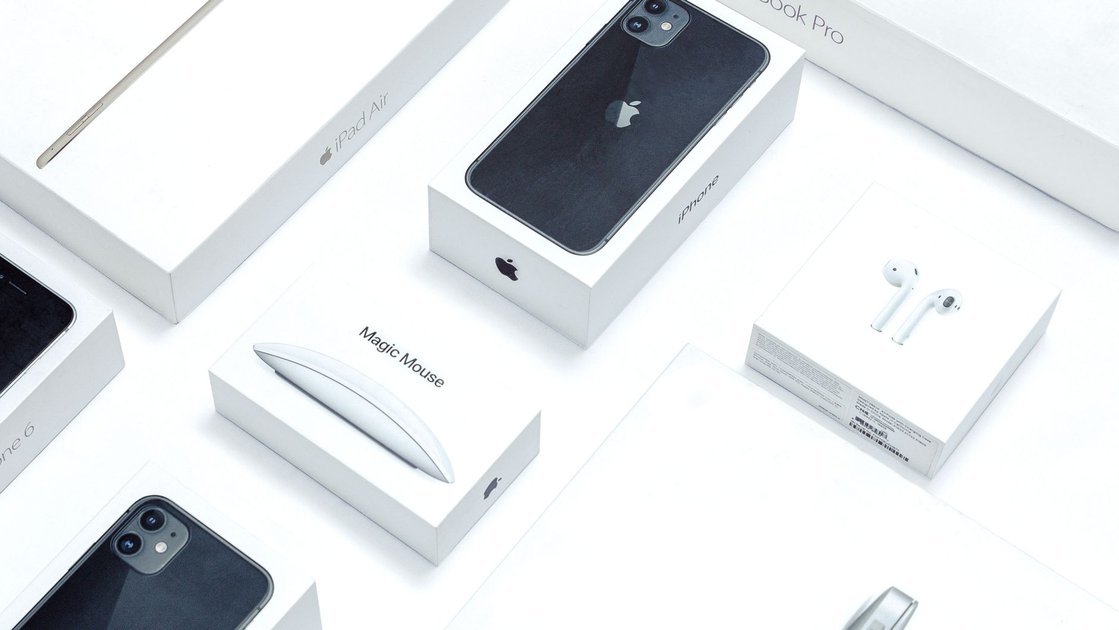
Apple secured a significant vote of confidence this week when Bank of America analyst Wamsi Mohan raised the company’s price target to 380 dollars from 330 dollars, citing a strategic advantage the market has largely overlooked. The June 9 investor note argued that while Apple is often dismissed as a laggard in artificial intelligence due to its delayed Siri upgrades and absence of proprietary frontier models, the company has quietly built what Mohan calls an ‘agentic AI moat’ that could prove more durable than any chatbot benchmark.
The thesis centers on a simple but powerful idea: as AI agents become the primary interface for search, commerce, scheduling, and workflow completion, the platform that controls user identity, payments, authentication, app permissions, and personal context will capture disproportionate value. Apple owns that platform in the smartphone, the most widely adopted consumer device where all these elements already converge. Mohan maintained a Buy rating on the stock, implying roughly 20 percent upside from current levels.
The timing is deliberate. AI agents, semi-autonomous and fully autonomous digital helpers powered by large language models, are already proliferating across hundreds of millions of devices worldwide. They arrange files, scan emails, pull web data, and execute multi-step tasks on behalf of users. While this surge has driven GPU and CPU demand for data centers, Mohan believes Apple’s hardware ecosystem positions it as the secure, trusted gateway for these agents, even if the company never builds the most advanced model itself.
Apple’s Control Over Silicon, Software, and Routing Infrastructure
The real differentiator is not the app store or iMessage lock-in, according to a recent analysis published on LinkedIn. It is Apple’s monopoly over the physical constraints that determine where AI computation happens. Running AI on a pocket-sized device is heavily bound by heat dissipation and memory bandwidth, problems that cannot be solved purely in software.
Apple has locked down the upstream supply chain to control these constraints. The company consistently serves as the anchor customer for Taiwan Semiconductor Manufacturing Company’s most advanced process nodes. In 2025, TSMC’s 3-nanometer node accounted for 24 percent of its wafer revenue, with Apple absorbing the financial risk of early transitions and securing priority allocation. Apple also anchors Amkor’s advanced Arizona packaging facility, which fuses silicon with high-bandwidth memory, a critical bottleneck for AI workloads.
This vertical integration allows Apple to ship complex on-device AI features as baseline defaults without incurring the continuous cloud inference costs that burden competitors. Android original equipment manufacturers may have global scale, but they rely on third-party silicon and platform layers. Apple designs the entire stack, tuning hardware precisely to the workload its software creates.
The strategic payoff extends beyond cost. It allows Apple to route AI requests selectively. When a task is too complex for the iPhone’s A18 Pro or the Mac’s M5 chip, Apple does not send it to a standard cloud server. It routes the query to Private Cloud Compute, an infrastructure built with custom Apple silicon and a hardened operating system that enforces stateless computation. User data is processed exclusively to fulfill the request, then immediately discarded. Apple publishes the expected measurements of the Private Cloud Compute software to a public transparency log for independent verification.
Private Cloud Compute as the Gatekeeper of AI Routing
Private Cloud Compute is not merely a privacy feature. It is the gatekeeper that allows Apple to treat compute as a tightly managed resource, dictating exactly where intelligence lives, where it travels, and when it dies. This architecture gives Apple leverage over model providers, app developers, merchants, advertisers, and payment networks without needing to win the race for the most capable frontier model.
The approach directly contrasts with the market’s push toward cloud-native, persistent memory. OpenAI and Amazon are explicitly training their models to build deep, historical context by remembering past conversations, analyzing uploaded documents, and synthesizing a user’s entire digital history. This alternative is compelling because it offers true cross-context delegation, anticipating needs based on an unbroken memory of habits and workflows.
Apple’s stateless architecture expressly forbids this kind of long-term data retention. If consumers ultimately decide that the utility of an AI that remembers everything about them outweighs the desire for perfect data privacy, Apple’s routing rules could shift from protective moat to functional cage. The company would face a choice between maintaining strict data minimization and matching the deeply personalized utility users find elsewhere.
This tension is the concrete product-market risk Apple faces. The rise of agentic AI cuts both ways: it validates Apple’s control over the trusted interface, but it also raises the stakes for long-term context retention, an area where Apple’s architecture is deliberately constrained.
Wearables and Peripherals as the Primary AI Interface
Apple is positioning its peripherals not as accessories but as the primary tools for everyday AI interaction. The iPhone remains the identity and compute hub, but the interface is migrating outward to the body. AirPods offer continuous wear and frictionless, private voice interaction. The Apple Watch provides a high-trust, body-worn sensor platform for biometrics and health data.
These endpoints solve the input bottleneck. They provide constant, low-friction context and always-available biometric trust that a screen-bound assistant cannot capture. The strategic goal is not to build a better chatbot but to route intelligence smoothly into the ear and onto the wrist, demanding far less behavioral change than interacting with smart glasses or separate AI devices.
The Mac is already capturing this shift. Mac Mini and Mac Studio desktops are reportedly selling out in stores worldwide due to their relatively low starting prices and support for platforms like OpenClaw, an open-source AI agent framework. Most forums now recommend Mac Minis to new users setting up local AI agents over virtual private servers. Apple’s clustering in developer mode is unlike anything else in the ecosystem, and Microsoft is playing catchup on Windows.
Apple does not have misaligned incentives around local AI. With Claude utilization limits stringent and many users distrusting OpenAI, the market is waking up to the fact that running your own models is the only secure method of compute. Apple is welcoming those users with open arms, offering hardware and software explicitly designed for on-device intelligence.
WWDC 2026 and the Golden Gate Strategy
Apple unveiled the new version of its assistant during its Worldwide Developers Conference on June 8, naming the latest Mac operating system Golden Gate. The name is more fitting than it first appears. The much-cited walled garden of Apple services now has golden gates. For users embedded in iMessage, Calendar, Safari, and the broader ecosystem, the walls feel like comfort rather than confinement.
The real message of WWDC lies in the subtext of the Siri presentation, according to a recent analysis published by Digital Chiefs. Apple is positioning its assistant not by competing in the benchmark race for the smartest model but through its proximity to the device. Siri indexes locally what is on the device, drawing context from messages, photos, and calendars that the large language models of competitors simply cannot see.
This shifts the moat from performance to anchoring. A freely interchangeable model is replaceable. An assistant that knows your last two years of communication is not. Siri’s history will soon sync across Mac, iPad, and iPhone. Every interaction expands the shared context, and every additional touchpoint raises the cost of exit. These switching costs do not appear overnight. They grow quietly, with every question asked and every conversation saved.
A dedicated segment of the keynote focused on children and safety, featuring dedicated children’s accounts, granular parental controls, and fine-tuned screen time management. The immediate benefits are real, but the strategic play runs deeper. Better controls lower the barrier to giving a child an iPhone early, and the bet is that early adoption increases long-term loyalty. For strategists, this reveals a patient moat that grows over an entire user lifecycle, not just a single feature.
Siri AI itself launches in fall 2026, initially in English-speaking markets. The European Union rollout remains uncertain due to the Digital Markets Act. The strategic question, however, is one decision-makers need to answer today. As AI governance challenges multiply across industries, the choice between a freely interchangeable best-of-breed model and an integrated context assistant becomes more concrete. The first preserves flexibility at the cost of higher integration effort. The second trades speed and context for growing dependency.
Frequently Asked Questions
What is an agentic AI moat?
An agentic AI moat refers to the competitive advantage a company gains by controlling the platform where AI agents operate. In Apple’s case, this moat is built on ownership of the hardware, operating system, app permissions, identity, authentication, payments, and personal context. As AI agents become the primary interface for tasks like search, commerce, and scheduling, the platform that controls these elements captures disproportionate value, even if it does not build the most advanced AI model.
How does Private Cloud Compute differ from standard cloud AI services?
Private Cloud Compute is Apple’s proprietary infrastructure built with custom silicon and a hardened operating system that enforces stateless computation. Unlike standard cloud services that may retain user data to build long-term context, Private Cloud Compute processes requests and immediately discards the data. Apple publishes expected software measurements to a public transparency log for independent verification. This architecture prioritizes privacy and data minimization over persistent memory, creating a trade-off between security and the kind of deep personalization offered by competitors like OpenAI and Amazon.
Why are Mac desktops selling out for AI agent use?
Mac Mini and Mac Studio desktops are in high demand because of their relatively low starting prices, powerful Apple silicon chips, and strong support for open-source AI agent platforms like OpenClaw. Users running local AI agents prefer Mac hardware over virtual private servers due to superior clustering in developer mode and tighter integration between hardware and software. As concerns grow over cloud-based AI services’ utilization limits and data privacy, many developers and power users are shifting to on-device AI, and Apple’s Mac lineup is the preferred platform for that transition.
Conclusion
Apple’s advantage in the AI era will not be won through chatbot benchmarks or model leaderboards. It will be determined by who controls the routing layer, the physical infrastructure, and the trusted interface where users interact with intelligence. The company has quietly built that position through vertical integration, supply chain dominance, and an architecture that prioritizes on-device computation and stateless cloud routing.
The competitive test is real. If the market standardizes around model APIs and infinite cloud memory, Apple’s advantage narrows. But if consumer AI demands tight latency, biometric trust, and physical integration across devices, Apple is uniquely positioned as the only company that controls the entire stack from silicon to wrist.
The golden gates are open, and the moat is deepening with every device sold and every query routed. The question is whether users will choose the comfort of a bounded, secure ecosystem or the open-ended memory of a cloud that never forgets.

Trust Post Desk
A journalist and editor at TrustPost.org covering world and national news, technology updates and human-interest stories. They check every fact, interview sources in person or online, and aim to deliver clear, accurate reporting. Their work ranges from breaking news to in-depth features and daily newsletters. Outside the newsroom, they follow emerging trends and engage with readers on social media.