Chief Minister Bhupendrabhai Patel unveiled Gujarat’s Industrial Policy 2026 on June 15 at Mahatma Mandir in Gandhinagar, releasing what state government officials described as
the most comprehensive overhaul of the state’s industrial framework in more than a decade. The policy, which was developed through extensive consultations with industry
For more context, see our coverage of Renewable Energy Growth 2026.
Key Developments
associations, major investors, academic institutions, and international business delegations over a period of approximately 18 months, is designed to accelerate Gujarat’s industrial growth, attract
both domestic and foreign direct investment, create employment at scale, and position the state at the forefront of sectors including advanced manufacturing, green energy,
semiconductors, pharmaceuticals, and digital infrastructure. Gujarat has long been India’s most consistently successful state for industrial investment attraction, accounting for a disproportionate share of
Background and Context
For more context, see our coverage of Global Economy 2026 Outlook.
national FDI inflows and hosting some of the country’s largest industrial corridors, and the 2026 policy is designed to maintain that competitive advantage as
other states sharpen their own industrial promotion efforts.
What Experts Are Saying
The Industrial Policy 2026 introduces a revised incentive architecture that offers differentiated benefits based on investment size, employment generated, sector category, and location within
For more context, see our coverage of Electric Vehicle Market 2026.
the state, with enhanced incentives for investments in designated industrial clusters and special investment regions. Large-scale investments above a threshold of approximately Rs 1,000
crore in priority sectors including semiconductors, electric vehicles, hydrogen energy, and specialty chemicals can access a streamlined single-window clearance process with guaranteed decision timelines
and dedicated relationship managers from the Gujarat Industrial Development Corporation. The policy also introduces new provisions for startup-scale investors, acknowledging the growing importance of
technology-driven entrepreneurship to Gujarat’s economic future and offering incubation support, land allocation assistance, and mentorship networks alongside the traditional capital-intensive incentive frameworks that have
been the foundation of Gujarat’s industrial attraction success.
The Industrial Policy 2026 designates several sectors as priority areas for accelerated development, with specific incentive packages tailored to each.
The semiconductor and electronics manufacturing sector receives the most significant targeted support, reflecting national-level strategic imperatives to develop domestic chip manufacturing capability following the
global supply chain disruptions of the early 2020s. Gujarat already hosts the planned Tata Semiconductor Assembly and Test facility near Dholera, and the state
government is positioning Dholera Special Investment Region as the centrepiece of India’s semiconductor manufacturing ambitions, with the 2026 policy providing the incentive framework to
attract additional domestic and international semiconductor-related investments to the cluster. The green hydrogen sector, which requires significant land, water, and grid infrastructure that Gujarat’s
geography and existing industrial base can provide, is also a priority area, as the state attempts to capitalize on India’s rapidly expanding renewable energy
sector and the global demand for green hydrogen as an industrial feedstock and energy carrier. The broader technology investment push in India in 2026
aligns with Gujarat’s industrial ambitions across both heavy manufacturing and digital economy sectors.
Strategic Sectors and Priority Areas
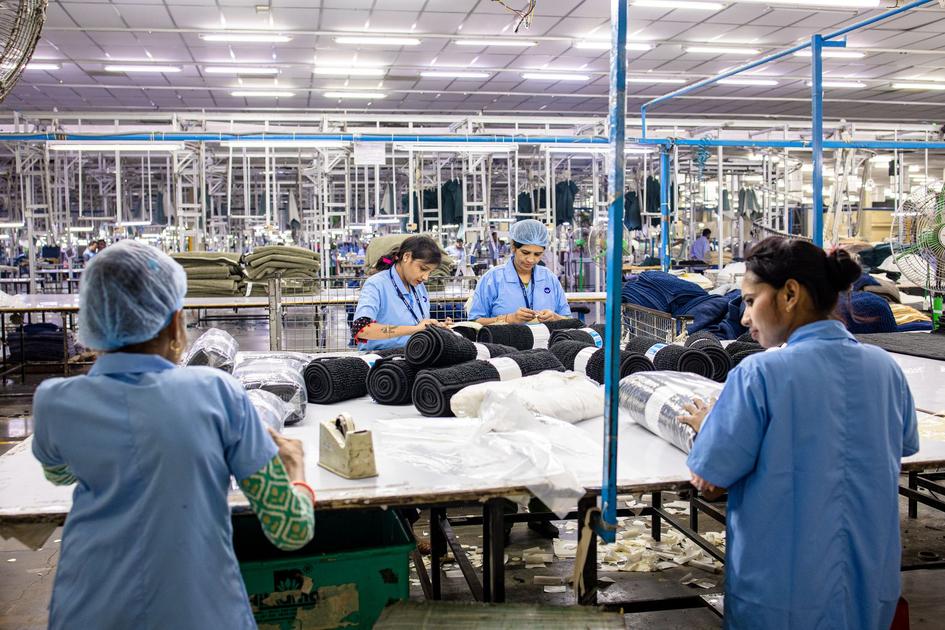
Beyond the headline investment attraction objectives, the Industrial Policy 2026 places significant emphasis on employment creation and the linkages between industrial development and social
advancement. The policy sets a target for Gujarat’s industrial sector to create 2 million new direct jobs over the five-year policy period, with additional
provisions for workforce development, skills training, and the integration of women and youth from rural areas into the formal industrial workforce.
The policy introduces enhanced incentives for industries that achieve specified employment ratios for local residents and women workers, reflecting lessons from Gujarat’s previous policy
cycles where the state attracted large capital-intensive investments that generated relatively fewer jobs per unit of capital than more labor-intensive sectors.
Chief Minister Patel, speaking at the June 15 launch event, framed the Industrial Policy 2026 as the state’s contribution to Prime Minister Modi’s “Viksit
Bharat” vision for a fully developed India by 2047, positioning Gujarat’s industrial success as both a state-level achievement and a component of the national
development project.
Sources and Further Reading
Learn more at TechCrunch.
Learn more at The Verge.
Learn more at Wired.
Related Articles

Trust Post Desk
A journalist and editor at TrustPost.org covering world and national news, technology updates and human-interest stories. They check every fact, interview sources in person or online, and aim to deliver clear, accurate reporting. Their work ranges from breaking news to in-depth features and daily newsletters. Outside the newsroom, they follow emerging trends and engage with readers on social media.