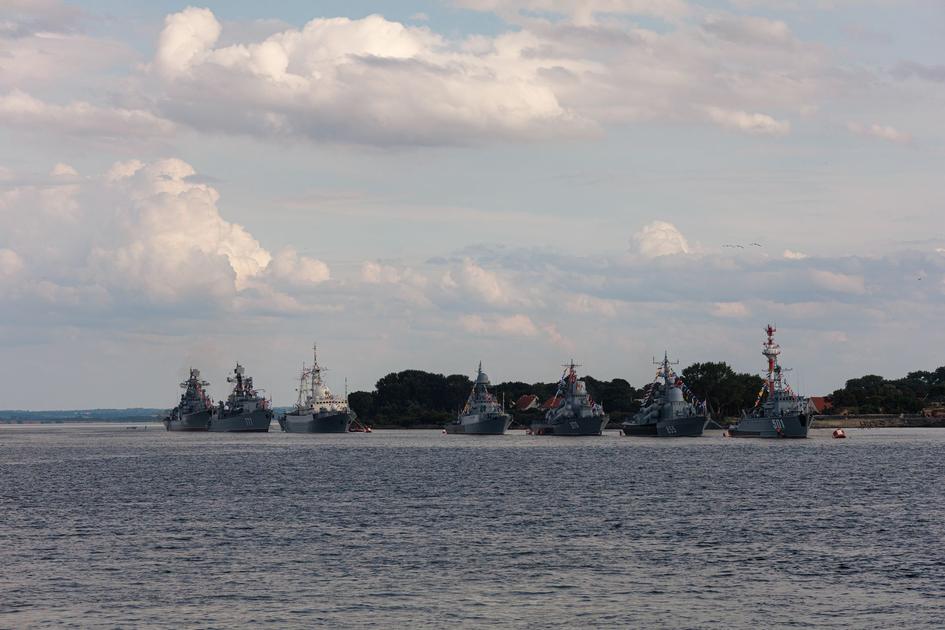
India hosted the largest International Fleet Review in its history at the Eastern Naval Command headquarters in Visakhapatnam, Andhra Pradesh, in February 2026, with
74 nations sending naval representatives and 85 ships – including 19 foreign warships and three submarines – assembling in the Bay of Bengal for
For more context, see our coverage of Trump and Qatar Air Force One Deal.
Key Developments
what was India’s third fleet review since independence. President Droupadi Murmu reviewed the fleet from INS Sumedha, an indigenously designed and built offshore patrol
vessel, a deliberate symbolic choice that emphasized India’s growing capability to produce sophisticated naval vessels domestically rather than relying on foreign procurement.
The event, which also featured a flypast by more than 60 aircraft including helicopters, maritime patrol aircraft, and fighter jets from the Indian Navy
Background and Context
For more context, see our coverage of Quantum Computing 2026 Where We Are.
and Indian Air Force, was the largest gathering of international naval vessels in the Indo-Pacific region in recent memory and served as a powerful
statement of India’s naval ambitions and its expanding network of maritime partnerships.
What Experts Are Saying
The International Fleet Review format – in which navies from partner nations send warships to assemble in a host country’s waters for a formal
For more context, see our coverage of Meta Pays $1.4 Billion Texas Facial Recognition.
review by the head of state – has historically been used by maritime powers to demonstrate their naval reach and signal the health of
their alliance systems. Britain’s Royal Navy pioneered the format in the 19th century, and the United States Navy has hosted several major reviews at
Pearl Harbor and other bases. India’s previous fleet reviews were hosted in 2001 and 2016, and the 2026 event surpassed both predecessors in scale,
the number of participating nations, and the caliber of foreign naval vessels that attended. The participation of 19 foreign warships from nations including the
United States, France, Australia, Japan, South Korea, Indonesia, and Vietnam reflected the breadth of India’s naval partnerships and the growing recognition among Indo-Pacific nations
of India’s strategic significance as a maritime power.
The 2026 International Fleet Review took place against the backdrop of India’s most ambitious naval modernization program in its history, with the country simultaneously
operating the INS Vikrant aircraft carrier – the first indigenously built carrier in India’s history, commissioned in 2022 – while also constructing a second
indigenous carrier and expanding its submarine, destroyer, and frigate fleets through both domestic production and foreign procurement.
The Indian Navy’s strategic direction, as articulated in successive maritime doctrine documents, envisions India as a “net security provider” for the Indian Ocean region,
capable of projecting power from the Gulf of Aden to the Strait of Malacca and providing humanitarian assistance, disaster relief, and security assistance to
partner nations throughout the Indo-Pacific. The fleet review in Visakhapatnam demonstrated both the current state of that ambition and the distance still to travel:
India’s fleet, while significantly larger and more capable than a decade ago, still faces capability gaps in carrier-based aviation, anti-submarine warfare, and undersea warfare
relative to the United States and Chinese naval forces that India must navigate around in the Indo-Pacific’s increasingly contested maritime environment.
The fleet review’s linkage to the Great Nicobar Island project is direct: the fleet review showcased India’s current naval partnerships and capability, while the
Nicobar project represents the physical infrastructure that will allow the Indian Navy to sustain operations at the chokepoint most critical to India’s strategic competition
with China.
India’s Naval Modernization and Indigenous Production
Beyond the military display, the International Fleet Review served as a diplomatic event that brought together naval chiefs, defense ministers, and senior security officials
from 74 nations for bilateral meetings on the sidelines of the main event. India used the occasion to deepen defense relationships with several Indo-Pacific
partners, including further discussions of joint patrol arrangements in the Andaman Sea and the Bay of Bengal with ASEAN navies, expanded information-sharing agreements with
Australia and Japan, and coordination on counter-piracy operations in the western Indian Ocean with Gulf state navies.
The presence of 74 nations – a figure that exceeds the number of countries present at many multilateral diplomatic forums – reflects India’s success
in positioning itself as a convening power for maritime security discussions in a region where the United States, China, and traditional European naval powers
are increasingly competing for influence and partnerships.
Sources and Further Reading
Learn more at ESPN.
Learn more at BBC Sport.
Learn more at Sky Sports.
Related Articles

Trust Post Desk
A journalist and editor at TrustPost.org covering world and national news, technology updates and human-interest stories. They check every fact, interview sources in person or online, and aim to deliver clear, accurate reporting. Their work ranges from breaking news to in-depth features and daily newsletters. Outside the newsroom, they follow emerging trends and engage with readers on social media.