Economic modeling of the Iran war’s impact on Gulf Cooperation Council states reveals a dramatic divergence between the countries most exposed to the Strait
of Hormuz disruption and those with more diversified export infrastructure.
For more context, see our coverage of Trump and Qatar Air Force One Deal.
Key Developments
Qatar and Kuwait, both of which are almost entirely dependent on the Strait of Hormuz for the export of their primary revenue-generating commodities –
liquefied natural gas for Qatar and crude oil for Kuwait – face potential GDP contractions of up to 14 percent according to economic analysis
published during the conflict period, making them the most economically vulnerable GCC states by a significant margin.
Background and Context
For more context, see our coverage of Gaza Ceasefire Collapse 2026.
Saudi Arabia and the UAE, while facing their own significant economic pressures from the conflict, have partial mitigants through alternative pipeline export routes and
more diversified economic bases that reduce – though do not eliminate – their dependence on Hormuz for revenue generation.
What Experts Are Saying
Read also: World Cup 2026 June 18: Mexico, South Korea, Canada, Qatar.
For more context, see our coverage of US-India Trade Deal Latest Updates.
Related Articles
Qatar’s economic exposure is particularly acute because of the nature of its primary export commodity.
The country produces approximately 77 million tonnes of LNG per year, making it one of the world’s largest LNG exporters and the dominant supplier
to several major Asian and European markets.
Unlike crude oil, which can be transported by pipeline over land, LNG requires specialized liquefaction facilities, dedicated LNG tankers, and deep-water port infrastructure that
is tied to specific geographic locations. See also: PM Carney at G7 Evian: Canada Champions AI and Clean Energy.
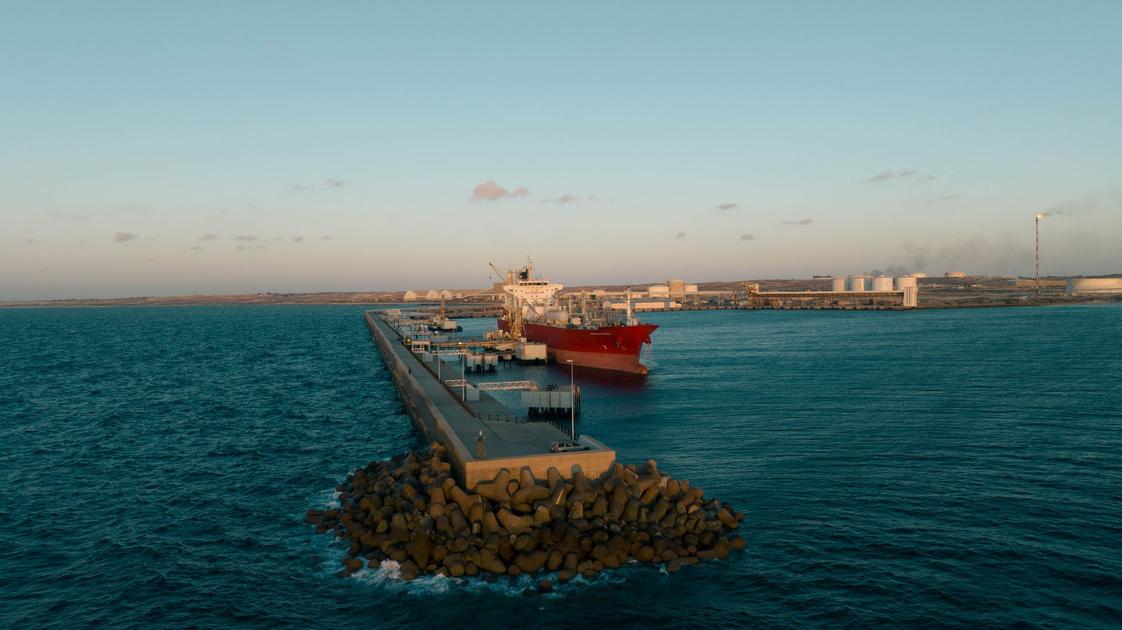
Qatar’s LNG is produced at the Ras Laffan Industrial City complex on Qatar’s northeastern coast, and the only viable export route for that LNG
is through the Persian Gulf and the Strait of Hormuz.
There is no alternative export route, and no amount of emergency planning or storage capacity can maintain Qatar’s LNG export volumes when the Strait is effectively closed to commercial shipping.
The 15-week Hormuz disruption that ran from late February through the ceasefire MOU of June 14 resulted in a severe reduction in Qatari LNG
deliveries to customers in Japan, South Korea, Taiwan, India, and Europe who had contracted for long-term supply.
Qatar’s LNG revenues represent approximately 85 percent of total government revenues and a similarly dominant share of GDP when oil and gas are considered together.
A reduction in LNG export volumes of even 50 percent – which is what the Hormuz disruption approximated at its most severe phase, as
some tankers made high-risk transits while others diverted – translates directly into a dramatic collapse in Qatari government revenue and GDP.
The 14 percent GDP contraction projected in worst-case modeling assumed a prolonged and total Hormuz closure, which did not fully materialize, but even the
partial disruption that occurred has delivered an economic shock of historic magnitude for Qatar.
The country’s substantial sovereign wealth fund – the Qatar Investment Authority, which holds approximately $475 billion in assets – provides a financial buffer that
allows the government to maintain public spending and avoid fiscal crisis in the short term, but it does not replace the real economic activity
and trade flow disruption that the conflict created.
Kuwait’s economic exposure follows a similar logic: the country produces approximately 2.6 million barrels of crude oil per day, virtually all of which must
transit the Strait of Hormuz to reach export markets.
The additional disruption from the June 2-3 airport strikes compounded the economic stress Kuwait was already experiencing from the Hormuz closure.
The June 14 ceasefire MOU between the US and Iran creates the preconditions for Hormuz shipping to resume normal operations, which is expected to
be the most immediate catalyst for economic recovery in Qatar and Kuwait.
LNG tanker owners and operators had maintained their vessels in safe anchorages away from the Persian Gulf during the most intense conflict phases, and
the restoration of secure passage is expected to allow them to resume loading and delivery schedules relatively quickly once the security environment normalizes.
Qatar’s long-term LNG supply contracts – most of which contain force majeure provisions that may allow customers to defer or reduce deliveries during the
conflict period without penalty – will need to be renegotiated in some cases, and the reputational impact on Qatari LNG as a reliable supply
source may affect some customers’ willingness to enter new long-term contracts without diversification provisions.
The medium-term economic recovery for both Qatar and Kuwait will be shaped primarily by how quickly Hormuz operations normalize, how durable the ceasefire proves
to be, and whether the 60-day MOU negotiating period produces a comprehensive peace settlement that reduces the prospect of future conflict disruption.
Sources: Reuters – Ukraine | BBC News – Ukraine | NPR – Ukraine
Sources and Further Reading
Learn more at TechCrunch.
Learn more at The Verge.
Learn more at Wired.
Related Articles

Trust Post Desk
A journalist and editor at TrustPost.org covering world and national news, technology updates and human-interest stories. They check every fact, interview sources in person or online, and aim to deliver clear, accurate reporting. Their work ranges from breaking news to in-depth features and daily newsletters. Outside the newsroom, they follow emerging trends and engage with readers on social media.