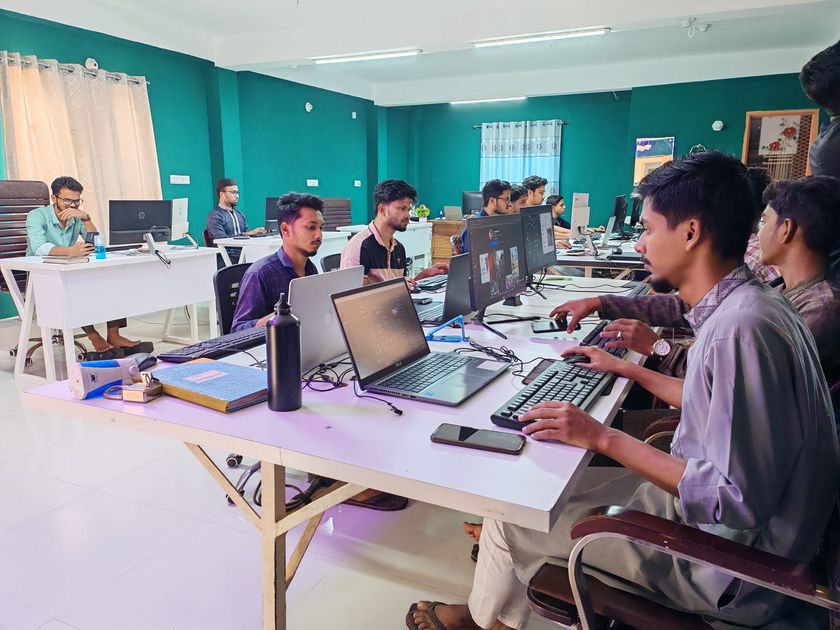
The Gbenga Fawehinmi Foundation and technology firm Decision Spaak have launched a significant partnership aimed at expanding access to artificial intelligence education for underserved communities across Africa. Unveiled in Lagos on Monday, June 22, 2026, the collaboration sets an ambitious target to train 10 million Africans in AI and various digital skills, marking a substantial push to democratize advanced technological knowledge.
This initiative directly addresses the growing demand for AI proficiency in the global digital economy, offering practical knowledge in artificial intelligence, analytics, and innovation. For students and young people in Africa, this means gaining essential skills that can access new career opportunities, foster local innovation, and bridge existing knowledge gaps, ultimately accelerating development within their communities.
The program is designed to equip participants with hands-on experience, moving beyond theoretical exposure to ensure they can apply learned concepts to solve real-world problems. By focusing on practical application, the partnership seeks to cultivate a generation of innovators capable of contributing meaningfully to Africa’s technological advancement and economic growth.
Decision Spaak’s Mission to Democratize AI Knowledge
Decision Spaak, a technology company, has articulated a broader mission to democratize access to AI knowledge across the African continent. Philip Adekambi, President and Chief Executive Officer of Decision Spaak, stated that the company is “on a mission to train 10 million Africans on AI.” This ambitious goal underscores the firm’s commitment to fostering a digitally literate workforce.
The company delivers its training through a diverse network of partnerships. These include educational technology platforms, universities, professional communities, and corporate organizations. This multi-pronged approach allows Decision Spaak to reach a wide array of learners, from working professionals seeking to upskill to university students preparing for their careers.
This new collaboration with the Gbenga Fawehinmi Foundation represents Decision Spaak’s first major foray into secondary schools. Previously, the company’s efforts primarily focused on professionals, university students, and working adults. Adekambi emphasized that AI education is not exclusive to graduates, stating, “AI is not just for graduates or working professionals. It can also be for students in secondary schools who can begin to understand the technology early and apply it throughout their lives.”
Decision Spaak has already made significant strides, reaching over 500,000 people through various channels. These include radio and television programs, podcasts, and direct training initiatives conducted across Nigeria and other African countries. This extensive reach demonstrates the company’s capacity for large-scale educational outreach.
To ensure accessibility, Decision Spaak has established a 50 million USD scholarship program. This fund is specifically designed to support participants who might otherwise be unable to afford specialized training courses in critical areas such as business analytics and artificial intelligence. Such financial aid is crucial for broadening participation in high-demand tech fields.
Gbenga Fawehinmi Foundation’s Two Decades of Youth Empowerment
The Gbenga Fawehinmi Foundation brings nearly two decades of experience in supporting vulnerable children and young people to this partnership. Gbenga Agboola, a Board Member and Director of the Foundation, highlighted the organization’s long-standing commitment to youth development through scholarships, mentorship, and empowerment programs. This history provides a strong foundation for the new AI skills initiative.
Agboola described artificial intelligence as a truly significant technology. He noted its potential to bridge knowledge gaps and accelerate development, particularly within underserved communities. “AI has changed the game. It allows us to bring technology closer to our communities and use it to spark development and creativity,” Agboola explained.
The partnership will enable the Foundation to strengthen its existing focus areas. These include digital literacy, STEM education, and youth development, especially among children in the communities where it operates. Integrating AI skills into these programs will enhance their relevance and impact in the rapidly evolving digital landscape.
The initiative will commence with a pilot phase, involving selected students to test and refine the program’s delivery. Joshua Aremu, Head of Operations, Governance, and Partnerships at the Foundation, confirmed this phased approach. This initial phase will allow for careful evaluation before scaling up to larger groups, ensuring effectiveness and efficiency.
Participants in the program will receive access to comprehensive learning resources and practical training. Aremu stressed the importance of a hands-on approach, stating, “We want this to be practical and hands-on. The goal is not just to expose students to AI but to ensure they can apply what they learn to solve problems and create value.” Impact assessments and performance tracking will be integral to guiding future expansion and ensuring the program achieves its objectives.
Overcoming Bureaucracy and Scaling Impact
Despite the ambitious goals and significant investment, Decision Spaak continues to encounter challenges in expanding its educational access, particularly within schools. Philip Adekambi noted that bureaucratic processes and approval requirements from government agencies and education authorities often impede broader implementation. These hurdles highlight the complexities of large-scale educational initiatives in diverse regulatory environments.
The partners plan to actively collaborate with schools, community organizations, and government agencies to overcome these obstacles and broaden the program’s reach. This collaborative strategy is essential to ensure more young Africans gain access to these critical emerging technology skills. Such partnerships are vital for navigating the regulatory landscape and securing the necessary approvals for widespread adoption.
The initiative’s focus on secondary school students is particularly noteworthy. Introducing AI concepts at an earlier age can significantly impact long-term skill development and career trajectories. This approach aligns with global trends where countries are increasingly recognizing the importance of early exposure to advanced technologies to prepare for future workforces. For instance, many educational bodies are now looking at how to integrate AI into existing curricula, a topic that often comes up when leaders tackle AI governance and online safety at international summits like the G7. You can read more about how Tech Executives Head to G7 Summit as Leaders Tackle AI Governance and Online Safety.
The commitment to practical, hands-on learning is a key differentiator. This methodology is proven to be more effective than purely theoretical instruction, especially for complex subjects like AI. Data from various learning platforms, including Google’s AI skills initiatives, indicates that hands-on learning leads to higher completion rates and better retention of skills. For example, Google’s own learning platform emphasizes hands-on experience, noting that 77% of learners prefer some level of instructor-led training over on-demand training alone, and 90% of instructor-led learning is completed versus less than 5% of self-paced learning.
This partnership also contributes to the broader effort to close the technology gap in Africa. As other nations, like China, escalate AI espionage to close their tech gaps, initiatives like this become even more critical for developing indigenous talent and capabilities. The investment in local skills development helps to build a resilient and self-sufficient digital economy, reducing reliance on external expertise and fostering local innovation. This is particularly relevant as Beijing Escalates AI Espionage to Close Tech Gap, CrowdStrike reports.
The 50 million USD scholarship program is a substantial financial commitment that addresses a major barrier to entry for many aspiring learners. Specialized AI training courses can be expensive, making such scholarships vital for ensuring equitable access. This investment not only supports individual students but also strengthens the overall AI talent pipeline in Africa, which is essential for economic diversification and growth. Such efforts are crucial as Alphabet Raises 84 Billion dollars to Fund AI Buildout with Berkshire Hathaway as Key Investor, demonstrating the massive capital flowing into AI development globally.
The long-term implications of this initiative are profound. By empowering young Africans with AI and digital skills, the partnership is not just creating job-ready individuals but also fostering a culture of innovation and problem-solving. These skills are increasingly vital for various sectors, from healthcare to agriculture, and can help address local challenges with locally developed solutions. This kind of foundational skill-building is essential for any nation looking to leverage AI to Boost Your Daily Workflow and drive national progress.
Frequently Asked Questions
What is the primary goal of the Gbenga Fawehinmi Foundation and Decision Spaak partnership?
The primary goal is to expand access to artificial intelligence education for underserved communities across Africa, with a specific target of training 10 million Africans in AI and digital skills. The initiative aims to equip students and young people with practical knowledge to thrive in the evolving digital economy.
Who is the target audience for this AI skills development program?
The program primarily targets students and young people, marking Decision Spaak’s first major push into secondary schools. It extends AI education beyond its previous focus on professionals, university students, and working adults, aiming to introduce AI concepts at an earlier age.
How will the program address the cost of specialized AI training?
Decision Spaak has established a 50 million USD scholarship program to support participants who may not be able to afford specialized training courses in areas such as business analytics and artificial intelligence. This scholarship aims to ensure equitable access to the program for all eligible learners.
A Future Forged in Digital Skills
The partnership between the Gbenga Fawehinmi Foundation and Decision Spaak represents a critical investment in Africa’s human capital and digital future. By targeting 10 million individuals, particularly secondary school students, the initiative is laying the groundwork for a robust, digitally literate workforce capable of driving innovation and economic growth. The emphasis on practical, hands-on training, coupled with significant scholarship support, positions this program to make a tangible difference in the lives of countless young Africans. Overcoming bureaucratic hurdles will be key to its widespread success, but the commitment from both organizations suggests a determined path forward. This collaboration could serve as a blueprint for other regions seeking to democratize AI education and empower their youth for the challenges and opportunities of the 21st century.

Trust Post Desk
A journalist and editor at TrustPost.org covering world and national news, technology updates and human-interest stories. They check every fact, interview sources in person or online, and aim to deliver clear, accurate reporting. Their work ranges from breaking news to in-depth features and daily newsletters. Outside the newsroom, they follow emerging trends and engage with readers on social media.