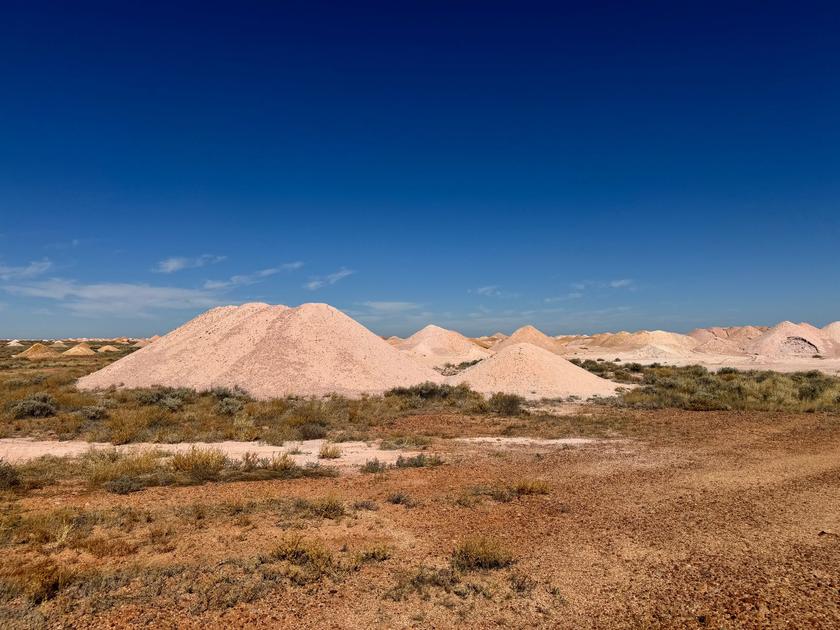
Australia’s federal government is implementing its Critical Minerals Strategy in 2026, combining production incentives, processing investment support, and strategic partnerships with allied nations to
position Australia as a major supplier of processed critical minerals – not just raw ore – to the battery supply chains, clean energy manufacturers,
For more context, see our coverage of US Open 2026 Golf Shinnecock Hills.
Key Developments
and defense technology companies that are the end-markets driving extraordinary global demand for lithium, nickel, cobalt, rare earth elements, and other minerals where Australia
has world-class geological endowment.
The strategy reflects a deliberate shift in Australian resource policy: for decades, Australia has exported raw or minimally processed minerals – iron ore, coal,
For more context, see our coverage of Global Economy 2026 Outlook.
liquefied natural gas – and captured the relatively modest value-added from extraction while more value-intensive processing, manufacturing, and use occurred in other countries, principally
China.
The critical minerals strategy aims to move Australia up the value chain by supporting the construction of lithium hydroxide refineries, nickel sulfate plants, rare
For more context, see our coverage of EU Nations Push Capital Markets Integration.
earth separation facilities, and other processing infrastructure that would allow Australia to export battery-ready materials rather than the unprocessed precursors that currently leave Australian
ports. Read also: World Cup 2026 June 19: USA vs Australia, Brazil vs Haiti.
The strategy faces significant challenges
The strategy faces significant challenges.
China currently dominates global critical minerals processing – controlling over 60 percent of global lithium chemical refining capacity, over 70 percent of cobalt refining,
and over 85 percent of rare earth processing – and the cost and scale advantages that Chinese processing companies have accumulated through decades of
investment are substantial competitive barriers for new entrants.
Australia’s relatively high labor costs, compared to processing locations in China or Southeast Asia, make the economics of domestic processing challenging without either significant
government support or premium pricing from buyers who value supply chain provenance – which the US Inflation Reduction Act and EU Critical Raw Materials
Act are now providing through policy-created price differentials for non-Chinese-sourced battery materials. See also: US Open Golf 2026: Wyndham Clark Leads at Shinnecock Hills.
The Albanese government’s Critical Minerals Facility, w
The Albanese government’s Critical Minerals Facility, which provides government loans and co-investment for strategic projects, has committed approximately $4 billion to a portfolio of
processing projects that includes the ASX-listed companies developing lithium hydroxide refineries in Western Australia and rare earth separation facilities in Queensland.
The US-Australia critical minerals partnership, formalized under the Biden administration and maintained by the Trump administration as a supply chain diversification priority, creates a
diplomatic framework that supports Australian processing investment with the promise of access to US defense and clean energy procurement programs.
The broader allied supply chain coordination on technology inputs and battery materials creates the commercial and policy environment within which Australia’s critical minerals processing ambitions are being pursued.
Related Articles
Sources: CNBC – Economy | Reuters – Business | Bloomberg – Economics
Sources and Further Reading
Learn more at TechCrunch.
Learn more at The Verge.
Learn more at Wired.
Related Articles

Trust Post Desk
A journalist and editor at TrustPost.org covering world and national news, technology updates and human-interest stories. They check every fact, interview sources in person or online, and aim to deliver clear, accurate reporting. Their work ranges from breaking news to in-depth features and daily newsletters. Outside the newsroom, they follow emerging trends and engage with readers on social media.