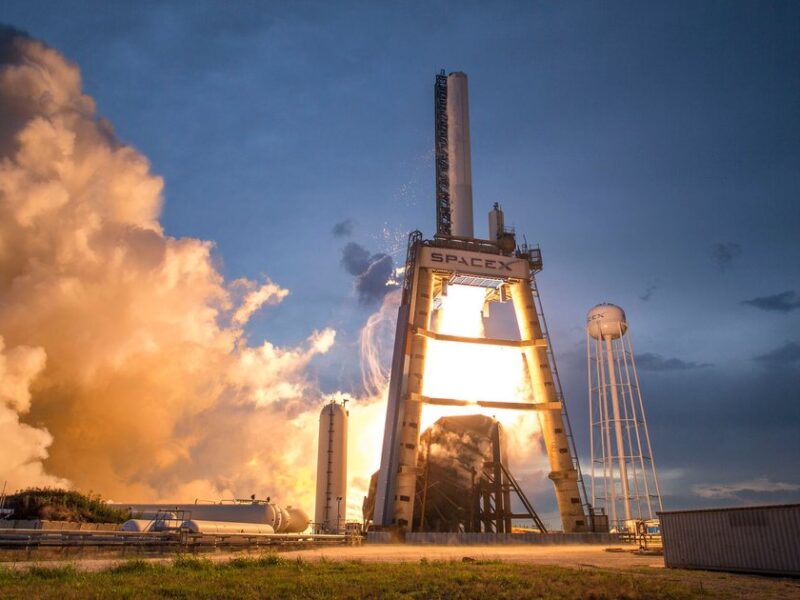
The SpaceX IPO has transformed the space investment landscape by bringing the most valuable private space company into the public market. For investors who want exposure to the commercial space sector, the universe of publicly traded options has expanded significantly, but the choice between different companies requires understanding which part of the space economy each represents and what time horizon makes sense for each investment thesis.
SpaceX (SPCE on Nasdaq)
The obvious choice post-IPO, SpaceX offers direct exposure to the company that has most dramatically changed the economics of space launch and is building what could become a multi-trillion dollar satellite internet business through Starlink. The 19% first-day surge has already priced in significant enthusiasm, however, and investors buying after the debut are paying a premium relative to the IPO price. The investment case rests on Starlink’s subscriber growth, Starship’s eventual commercial viability, and continued dominance of the commercial launch market.
Rocket Lab (RKLB)
Rocket Lab has established itself as the credible competitor in the small satellite launch market, where SpaceX’s Falcon 9 is oversized. The Electron rocket has a strong launch cadence and the company is developing a medium-lift vehicle, Neutron, that would expand its addressable market significantly. Unlike many space companies that went public via SPAC at inflated valuations, Rocket Lab has shown genuine operational discipline and is on a path toward profitability that makes the investment case more straightforward than earlier-stage peers.
- Planet Labs (PL): Operates the world’s largest Earth observation satellite constellation, generating recurring revenue from government and commercial customers who pay for daily imaging of anywhere on Earth.
- Redwire (RDW): Space infrastructure company focused on components and manufacturing for both government and commercial missions, less headline-grabbing than launch companies but generating real revenue.
- Intuitive Machines (LUNR): NASA contractor focused on lunar surface delivery services, with contracts under the Commercial Lunar Payload Services program that provide near-term revenue visibility.
ETF Option: Procure Space ETF (UFO)
For investors who want broad space sector exposure without single-stock selection, the Procure Space ETF holds a basket of space-related companies across launch, satellite services, defense, and ground systems. The ETF provides diversification across the space ecosystem, though it includes companies with space as a secondary business rather than a primary focus, which dilutes the pure-play exposure.
Key Risks in Space Investing
Space companies carry risks that are different from typical technology investments. Launch failures are binary events that can destroy years of revenue and trigger investigations lasting months. Government contracts can be cancelled with relatively short notice. The capital intensity of building rockets and satellites creates ongoing dilution risk for equity investors. And the long development timelines for new vehicles mean that financial projections require very long time horizons to validate.
Frequently Asked Questions
Is SpaceX a good investment after the IPO pop?
The first-day surge makes the risk/reward calculation more challenging than it was at IPO pricing. Long-term investors focused on the Starlink opportunity may still find the thesis compelling at current prices, but near-term volatility is likely. This is not financial advice – consult a licensed advisor.

Trust Post Desk
A journalist and editor at TrustPost.org covering world and national news, technology updates and human-interest stories. They check every fact, interview sources in person or online, and aim to deliver clear, accurate reporting. Their work ranges from breaking news to in-depth features and daily newsletters. Outside the newsroom, they follow emerging trends and engage with readers on social media.