Claude vs Gemini 2.5 in 2026: Speed, Accuracy, and Price
Claude and Gemini are the top AI comparison of 2026, with different strengths in speed, accuracy, and price.
Anthropic’s Claude leads on coding quality and writing, while Google’s Gemini 2.5 leads on price, speed, and multimodal range.
This guide compares every major dimension: speed, accuracy, context window, pricing, coding, and real-world research tasks.
Claude vs Gemini 2026 Comparison: Side-by-Side Overview

Claude Sonnet 4.6 and Gemini 2.5 Pro are both frontier models competing directly at the mid-tier performance and price point.
Claude’s biggest advantage is writing quality, instruction-following accuracy, and deep reasoning on complex multi-step problems.
Gemini’s biggest advantages are its 1 million token context window, multimodal input support, and significantly lower API pricing.
On most benchmark tests in 2026, the two models are within 2 percentage points of each other, making real-world use the tiebreaker.
Claude is the better choice for professional writing, coding assistance, and nuanced document analysis requiring high precision.
Gemini is the better choice for real-time research, image understanding, audio processing, and large-scale API deployments on a budget.
At the consumer level, both cost $20 per month, making this comparison irrelevant at the subscription tier where price is identical.
The comparison matters most at the API level, where Gemini is 20 times cheaper per input token than Claude Sonnet 4.6.
Claude vs Gemini Speed: Response Times and Latency in 2026

Gemini 2.5 Flash is Google’s speed-optimized model, designed explicitly for fast response times with sub-second latency targets.
Claude Sonnet 4.6 is not optimized for raw speed in the same way, prioritizing output quality over time-to-first-token.
In benchmark testing, Gemini 2.5 Flash produces responses roughly 30 to 40% faster than Claude Sonnet 4.6 on standard prompts.
For real-time chat applications, Gemini Flash’s speed advantage creates a noticeably more responsive user experience in 2026.
Claude Haiku is Anthropic’s speed tier equivalent to Flash, offering much faster responses than Sonnet at reduced quality.
For coding tasks, Claude Sonnet’s response speed is competitive with Gemini Pro because it generates fewer corrections and retries.
Enterprise teams building latency-sensitive products typically choose Gemini Flash, while quality-first teams lean toward Claude Sonnet.
The speed comparison shifts when reasoning mode is activated: both models slow significantly when performing extended thinking tasks.
For everyday conversation and content tasks, Claude and Gemini Pro feel similarly fast in practical desktop and web app use.
Claude vs Gemini Accuracy: Benchmark Scores and Test Results
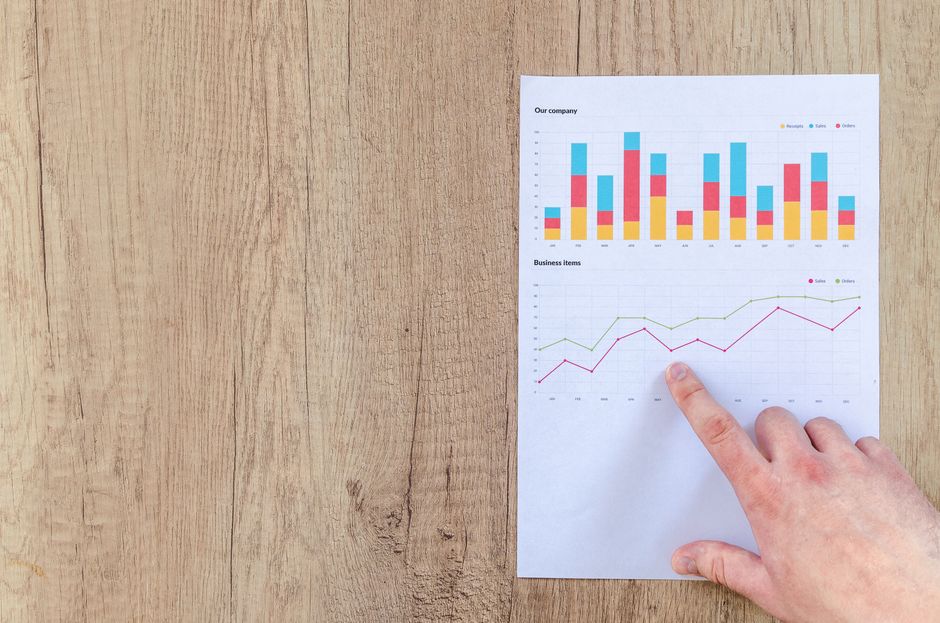
On SWE-bench Verified, the premier coding accuracy benchmark, Claude Opus 4.6 scores 80.8% versus Gemini 3.1 Pro at 80.6%.
The coding benchmark results are effectively tied, with less than one percentage point separating the two frontier models.
On GPQA Diamond, the graduate-level reasoning and science benchmark, Claude Opus 4.6 scores 91.3%, outpacing Gemini 3.1 Pro.
Gemini leads on multilingual accuracy benchmarks, performing better than Claude across non-English tasks including Japanese and Korean.
On instruction-following benchmarks that test complex multi-constraint prompts, Claude consistently ranks higher than Gemini Pro.
For math benchmarks including MATH-500, both models score above 90%, with Gemini maintaining a slight 1 to 2 point edge.
On long-context recall tests, Gemini 3.1 Pro maintains 90% accuracy at 1 million tokens, while Claude drops measurably past 750K.
In real-world writing quality tests evaluated by human raters, Claude consistently scores higher on naturalness and tone accuracy.
Per tech-insider.org testing, Claude leads on accuracy for software tasks while Gemini leads on reasoning breadth overall.
Claude vs Gemini Pricing: Which AI Is Cheaper in 2026?
At the consumer tier, Claude Pro and Google One AI Pro both cost $20 per month, eliminating price as a consumer decision factor.
The pricing gap becomes massive at the API level: Gemini 2.5 Flash costs $0.15 per million input tokens versus Claude Sonnet 4.6 at $3.00.
That is a 20x price difference on input tokens, making Gemini Flash the overwhelming choice for high-volume API deployments.
Gemini 2.5 Pro costs $1.25 per million input tokens versus Claude Sonnet 4.6 at $3.00, a 58% cost saving on mid-tier models.
Output token pricing shows a smaller gap: Gemini 2.5 Pro charges $10.00 per million versus Claude Sonnet 4.6 at $15.00.
For startups and developers building AI products with large token volumes, Gemini’s pricing advantage is financially significant.
Claude’s API premium is justified for applications requiring highest writing quality or complex reasoning where accuracy matters most.
For content moderation, data tagging, and high-volume classification tasks, Gemini Flash is the economical choice in 2026.
Our full breakdown of Claude pricing is covered in our Claude subscription pricing guide for readers planning API usage.
Context Window: Claude 200K Tokens vs Gemini 1 Million Tokens
Gemini 2.5 Pro’s 1 million token context window is 5 times larger than Claude’s 200K consumer context window in 2026.
At the API tier, Claude does offer a 1 million token window matching Gemini, but Gemini maintains the advantage at consumer price points.
A 1 million token window allows Gemini to process approximately 2,500 pages of text or 50,000 lines of code in a single session.
This makes Gemini the better choice for legal firms reviewing massive contracts or developers analyzing large enterprise codebases.
Claude’s 200K window handles approximately 500 pages, sufficient for most individual professional document tasks and research projects.
Crucially, Gemini 3.1 Pro maintains over 90% recall accuracy across its full 1M context window, not just at the beginning.
Claude maintains high recall accuracy within 750K tokens but shows measurable performance drops in the final 250K token range.
For teams processing entire codebases, legal discovery documents, or research corpora in one session, Gemini wins on context capacity.
For most individual users reading research papers, books, or moderate-length documents, Claude’s 200K window is entirely sufficient.
Coding Comparison: Claude vs Gemini for Software Development
Claude is the preferred AI for coding tasks among professional developers, with Cursor IDE using Claude as its default model.
Claude’s instruction-following accuracy means it produces cleaner code with fewer unnecessary comments and more predictable output.
Gemini is catching up on coding tasks, with Gemini 3.1 Pro scoring competitively with Claude on SWE-bench Verified in 2026.
For day-to-day single-file coding tasks like function generation and syntax help, both models perform at approximately the same level.
For multi-file refactors and architectural reasoning, Claude’s instruction-following advantage becomes more pronounced and measurable.
Gemini Code Assist, Google’s IDE plugin, competes directly with GitHub Copilot and Claude Code for VS Code users in 2026.
Claude Code, Anthropic’s terminal agent, outperforms Gemini Code Assist on complex autonomous coding workflows across multiple files.
For developers already using Google Cloud and Firebase, Gemini’s tight integration with the Google ecosystem creates workflow advantages.
Our coverage of YC Spring 2026 startups shows that most new AI-first developer tools are built on Claude rather than Gemini.
Multimodal Capabilities: Where Gemini Leads Claude in 2026
Gemini was built from the ground up as a multimodal model, processing text, images, audio, and video in a unified architecture.
Claude processes text and images on Claude.ai, but has no native audio processing or video understanding as of mid-2026.
Gemini 2.5 Pro can analyze YouTube videos directly by URL, extract information from audio recordings, and process complex charts.
This makes Gemini the stronger choice for workflows involving media processing, content moderation, or video-to-text summarization.
Claude’s image understanding is strong for charts, screenshots, documents, and visual reasoning tasks within uploaded image files.
Claude cannot generate images, requiring users to switch to separate tools like Midjourney or DALL-E for any visual creation needs.
Gemini 2.5 integrates with Google’s Imagen model for image generation, keeping creative workflows inside the same interface.
For teams building customer support bots that need to process product photos and recorded calls, Gemini is the practical choice.
Anthropic has indicated multimodal expansion is a future roadmap item, but Claude remains text-and-image only in 2026.
Claude vs Gemini for Long Document Analysis and Research

For academic research, legal document review, and large-scale corpus analysis, the context window advantage favors Gemini strongly.
Gemini can load an entire PhD thesis, all related citations, and supplementary materials in a single 1 million token context window.
Claude’s 200K window requires researchers to chunk large corpora into segments, introducing the risk of missing cross-document connections.
On writing quality for research synthesis, Claude produces more coherent summaries and better-structured analytical outputs than Gemini.
Gemini’s web search integration is powered by Google Search, giving it real-time access to the most comprehensive index available.
Claude’s web search capabilities are strong but do not match Google’s index depth, particularly for academic and niche domain queries.
For literature review tasks requiring both large-context loading and high writing quality, the ideal workflow uses both tools together.
Researchers with JSTOR or institutional database access often use Gemini for retrieval and Claude for synthesis and writing output.
As Nobel laureate John Jumper moving to Anthropic suggests, top AI researchers see long-term value in Claude’s approach to reasoning.
API Pricing Deep Dive: Gemini Is 20x Cheaper Than Claude Per Token
The most striking fact in the Claude vs Gemini comparison is the 20x API pricing gap for input tokens at the fast tier.
Gemini 2.5 Flash at $0.15 per million input tokens makes it viable for applications requiring billions of tokens per month on modest budgets.
At 10 billion tokens per month, Gemini Flash costs $1,500 versus Claude Sonnet at $30,000, a savings of $28,500 per month.
For startups building at scale, the Gemini pricing advantage can represent the difference between viable and unviable unit economics.
Claude’s API premium is justified when output quality directly impacts revenue, such as in customer-facing writing or legal draft review.
Many teams use a hybrid approach: Gemini Flash for classification and routing tasks, Claude Sonnet for high-stakes generation tasks.
Google’s API pricing also benefits from Google Cloud credits, making Gemini even cheaper for teams already on GCP infrastructure.
Per developer analysis published in 2026, most cost-conscious teams choose Gemini Flash as their default and Claude as their quality override.
Should You Use Claude or Gemini 2.5 in 2026? Final Verdict

Choose Claude for professional writing, coding assistance, precise instruction following, and complex reasoning tasks in 2026.
Choose Gemini for budget-sensitive API projects, multimodal workflows, real-time research with Google Search depth, and large-context tasks.
Claude is the default choice for content creation, software development, and analytical work requiring the highest output quality.
Gemini is the default choice for developers building at scale, researchers needing million-token context, and teams processing media files.
The comparison is not winner-take-all: many professional teams in 2026 use both models for different workflow stages.
If you can only pick one at the $20 consumer tier, Claude’s writing and instruction quality edge makes it the stronger all-rounder.
If you are building an API product and cost is critical, Gemini Flash’s pricing makes it the practical foundation layer to start with.
For broader AI industry context, see our report on big tech AI investment in 2026 covering Google and Anthropic funding.
The gap between Claude and Gemini is narrowing in 2026, and which model leads will likely shift again with the next major model release.