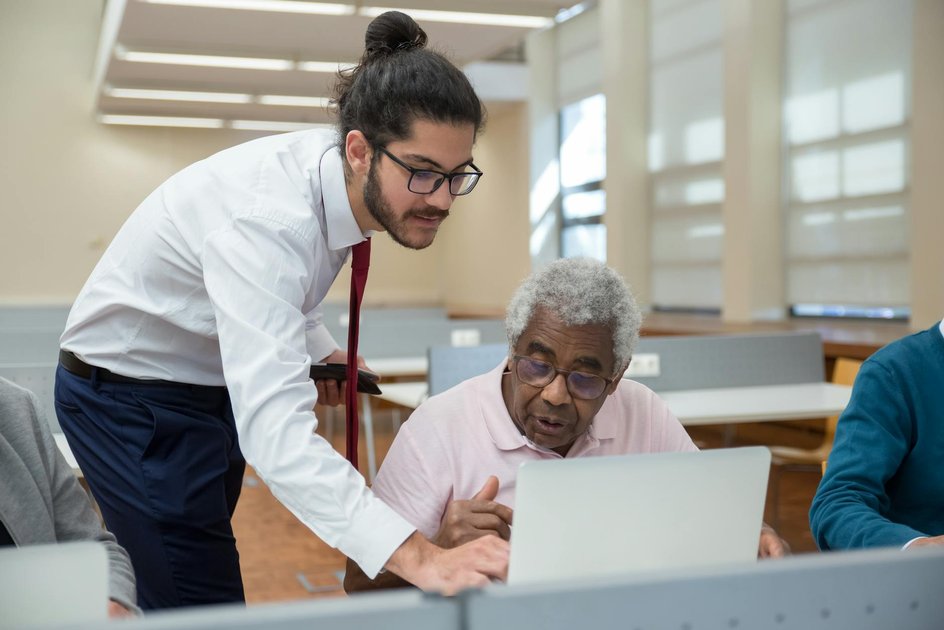
A group of teenagers at Roosevelt High School in Eastvale launched a community workshop series to teach older residents how to use artificial intelligence tools in their daily routines. The AI for Good Club held its first session on May 5, 2026, at the Eastvale Community Center, introducing seniors to practical AI applications ranging from voice transcription to creative design tasks.
The workshop addressed a growing need for digital literacy among older adults, who often face barriers to adopting emerging technologies. Club member Emily Saldana explained that attendees learned to confidently use AI-powered features already built into devices they own, such as smartphones and earbuds, for tasks like transcription and closed captioning.
Eastvale Teens Launch AI Workshops to Empower Older Residents
The Roosevelt High School AI for Good Club organized the May 5 workshop as part of a broader effort to bridge the technology gap between generations. The event focused on helping seniors understand that AI tools are not exclusive to younger users or tech experts.
Participants explored how to apply artificial intelligence to solve real-world problems they encounter daily. The curriculum emphasized accessibility, showing attendees that many AI features are already available on devices they currently own.
The students designed the workshop to be approachable and hands-on. Rather than overwhelming participants with technical jargon, the teens demonstrated specific use cases that directly improved everyday tasks.
The club plans to host additional workshops, though the date for the second session has not yet been finalized. Interested residents can register by emailing aiforgoodeastvale@gmail.com or texting their name and contact information to Saldana at 951-314-4400.
This initiative aligns with broader trends in technology education, where free AI tools are becoming more accessible to users of all ages and technical backgrounds.
Real-World Applications of AI Demonstrated at Community Center Event
The workshop covered several practical AI applications that seniors could immediately implement in their lives. One major focus area was audio transcription and closed captioning using smartphones and wireless earbuds.
These features allow users to convert spoken words into text, which can help those with hearing difficulties or anyone who needs written records of conversations and meetings. The technology is built into most modern smartphones and requires no additional software purchases.
Participants also learned creative applications of AI, including using photo editing tools powered by artificial intelligence to design birthday cards and visualize home decorating ideas. These features let users generate custom designs without needing professional graphic design skills.
The workshop included hands-on training with ChatGPT’s advanced voice feature. This tool allows users to have natural conversations with an AI assistant, asking questions and receiving spoken responses in real time.
According to research from Harvard’s Graduate School of Education, more than half of young people aged 14 to 22 have used generative AI at some point, with the most common uses being information retrieval and brainstorming.
The Eastvale workshop aimed to extend these same benefits to older adults who might otherwise feel excluded from technological advances. Many seniors express interest in learning new technologies but lack opportunities for patient, accessible instruction.
By focusing on tools already present in devices most people own, the workshop eliminated the barrier of purchasing specialized equipment or expensive software subscriptions. This approach makes AI accessible regardless of budget constraints.
Future Plans for Continued AI Education in Eastvale
The AI for Good Club intends to expand its educational programming beyond the initial May workshop. Club members are currently planning a second session, with the schedule to be announced through their email and text communication channels.
The teens recognize that one workshop cannot cover all aspects of AI technology that might benefit older adults. Future sessions may address different tools and applications based on participant feedback and emerging technologies.
Registration for upcoming workshops will follow the same process as the first event. Seniors can reach out directly to the club via email or text message to reserve their spots.
This model of student-led community education offers a sustainable approach to technology literacy. High school clubs can continue offering workshops year after year as new students join and older members graduate.
The initiative also provides valuable experience for the teens involved. Teaching complex technical concepts to adults helps students develop communication skills and deepen their own understanding of AI systems.
Similar to how students might explore AI tools to boost daily workflow, the workshop showed seniors how to integrate these technologies into their established routines without overwhelming them.
Intergenerational Learning: Bridging the Digital Divide
The Eastvale workshop represents a growing trend of intergenerational technology mentorship. Young people who grew up with digital tools are increasingly stepping into teaching roles for older adults who want to learn.
This reversal of traditional educational hierarchies benefits both groups. Seniors gain access to patient instruction from people who intuitively understand modern technology interfaces, while teens develop teaching skills and gain perspective on how different generations approach learning.
Organizations like Cyberseniors have pioneered this model, connecting young volunteers with older adults for technology training. The approach promotes both digital literacy and meaningful cross-generational connections.
Research shows that older adults who engage with technology report higher levels of social connection and independence. AI tools can help seniors manage health information, stay in touch with family members, and access services remotely.
The digital divide between generations is not merely about access to devices. Many older adults own smartphones and computers but lack confidence in using their full capabilities.
Workshops like the one in Eastvale address this confidence gap by providing supportive environments where questions are encouraged and mistakes are treated as learning opportunities. The format allows seniors to proceed at their own pace without feeling rushed or judged.
Students benefit from seeing how their technical knowledge translates into practical help for others. This experience can inform career choices and foster empathy for users with different levels of technical proficiency.
The AI for Good Club’s initiative also challenges stereotypes about both teenagers and seniors. It demonstrates that young people are capable of serious civic engagement while showing that older adults are willing and able to learn cutting-edge technologies.
Just as productivity apps have become essential for younger generations, AI tools are becoming increasingly important for users of all ages who want to maintain independence and connection.
Frequently Asked Questions
What specific AI tools were taught to the seniors during the workshop?
The workshop covered several practical AI applications built into common devices. Participants learned to use voice transcription and closed captioning features on smartphones and wireless earbuds. The session also included instruction on ChatGPT’s advanced voice feature for conversational AI interactions. Seniors explored AI-powered photo editing tools for creating birthday cards and visualizing home decorating ideas. All tools demonstrated were either free or already included in devices most participants owned.
How can older residents sign up for future AI workshops?
Interested seniors can register for upcoming workshops through two methods. They can send an email to the AI for Good Club at aiforgoodeastvale@gmail.com. Alternatively, they can text their name and email address to club member Emily Saldana at 951-314-4400. The club will announce the date for the second workshop once it has been finalized. Registration is handled directly through these contact channels rather than through a formal online system.
What are the benefits of teaching AI to seniors?
Teaching AI to older adults provides multiple practical benefits. AI tools can help seniors maintain independence by simplifying tasks like transcribing conversations, managing information, and communicating with family members. These technologies can assist with health monitoring, fall detection, and medication management when applied to elderly care. Learning AI also reduces social isolation by helping seniors stay connected to digital communication platforms. Furthermore, understanding AI empowers older adults to protect themselves against AI-generated scams and misinformation that increasingly target their demographic.
Conclusion
The AI for Good Club’s initiative demonstrates how intergenerational collaboration can address the digital divide affecting older Americans. By teaching practical AI applications through hands-on workshops, Eastvale teenagers are empowering seniors to confidently use technologies that enhance daily life.
The workshop series proves that AI literacy is achievable for users of all ages when instruction is patient, accessible, and focused on real-world applications. As AI becomes increasingly embedded in everyday devices and services, ensuring older adults can use these tools becomes crucial for maintaining their independence and connection to society.
The club’s ongoing commitment to hosting additional sessions creates a sustainable model for community technology education. This approach not only teaches valuable skills but also builds meaningful connections between generations while challenging assumptions about both teenagers and seniors.

Trust Post Desk
A journalist and editor at TrustPost.org covering world and national news, technology updates and human-interest stories. They check every fact, interview sources in person or online, and aim to deliver clear, accurate reporting. Their work ranges from breaking news to in-depth features and daily newsletters. Outside the newsroom, they follow emerging trends and engage with readers on social media.