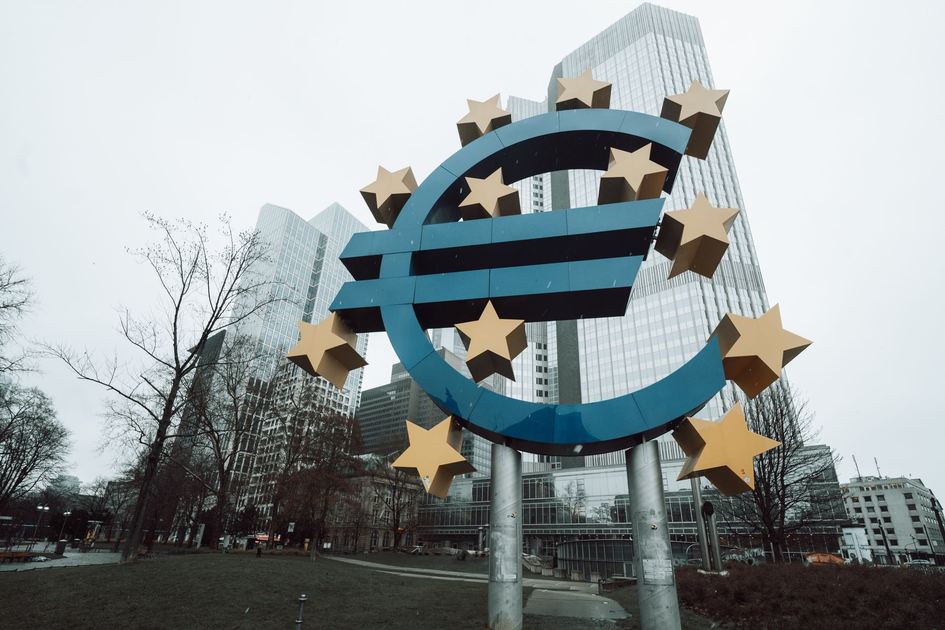
The European Central Bank left its benchmark interest rates unchanged at its latest policy meeting, keeping the main refinancing rate at 2.15%, the deposit facility rate at 2.0%, and the marginal lending rate at 2.4%. While the hold was broadly expected by markets, the accompanying statement delivered a hawkish signal: policymakers simultaneously revised their inflation forecasts upward, citing the escalating Middle East conflict as a significant source of uncertainty for the eurozone’s price outlook.
The decision reflects the delicate position the ECB now occupies. Having spent the better part of two years tightening policy to bring inflation down from post-pandemic peaks above 10%, the bank is now trying to navigate a narrowing corridor between premature rate cuts that could reignite price pressures and excessive restrictiveness that could tip a fragile European economy into recession.
Inflation: Not Yet Tamed
Eurozone inflation has been on a declining trend throughout 2025 and into 2026, but the ECB’s target of 2% in the medium term remains elusive. Energy prices have been the primary complicating factor. The Middle East conflict has introduced fresh volatility into global oil markets, and European gas prices – still structurally higher than pre-Ukraine war levels – remain sensitive to any further geopolitical deterioration in energy-producing regions.
The bank’s updated projections now show inflation remaining above 2% for longer than previously forecast, with the convergence to target pushed further into 2027. Core inflation – which strips out energy and food prices and is watched most closely by policymakers as a measure of underlying price dynamics – has proven stickier than anticipated, particularly in services, where wage growth continues to feed through into prices at a pace that concerns some Governing Council members.
Growth Risks on the Other Side
The ECB’s statement was careful to acknowledge that the same geopolitical uncertainty generating upside inflation risks also creates downside growth risks. A sustained escalation in the Middle East could simultaneously push energy costs higher – inflationary – while dampening consumer confidence and business investment across Europe – deflationary through demand destruction.
This dual uncertainty is the central dilemma confronting ECB President Christine Lagarde and the Governing Council. Standard monetary policy frameworks are designed to handle one variable at a time: too much inflation means tighter policy, too little growth means looser policy. When both risks intensify simultaneously from the same source, the policy calculus becomes considerably harder.
Several ECB policymakers have flagged that European export-oriented economies, particularly Germany, are already experiencing demand weakness from slower Chinese growth and competition from Chinese manufacturers in key industrial sectors. Adding an energy shock on top of existing structural headwinds could make the case for eventual rate cuts more compelling, even if inflation forecasts have been revised upward in the short term.
Market Reaction and Rate Cut Expectations
European bond markets reacted with modest movement to the ECB’s announcement. German 10-year Bund yields edged slightly higher on the hawkish inflation revision, while the euro strengthened marginally against the US dollar. Interest rate futures markets pushed back their expectations for the next ECB rate cut by approximately six weeks following the statement.
Consensus among eurozone economists now points to the ECB beginning a gradual cutting cycle in the fourth quarter of 2026 at the earliest, with the pace and magnitude of cuts highly dependent on how the Middle East situation evolves and whether energy prices stabilise or continue to drift higher. A severe escalation that sent oil above $120 per barrel would almost certainly force the ECB to delay any easing indefinitely.
Implications for Businesses and Consumers
For European businesses and consumers, the ECB’s hold means borrowing costs will remain elevated for the foreseeable future. Mortgage rates across the eurozone, while below their 2023 peaks, remain at levels that are suppressing housing market activity in countries including Germany, the Netherlands, and France. Corporate investment in rate-sensitive sectors – commercial real estate, infrastructure, manufacturing plant and equipment – continues to be constrained by financing costs that companies regard as prohibitively high relative to expected returns.
Small and medium-sized enterprises, which rely more heavily on bank lending than large corporations with access to capital markets, are feeling the squeeze most acutely. Several ECB surveys have shown a meaningful tightening of credit standards over the past eighteen months, with banks becoming increasingly selective about which SME borrowers they will lend to and at what rates.
The ECB’s next scheduled meeting will be watched closely for any signals that the balance of risks is shifting sufficiently to open the door to a rate adjustment. Until then, Europe’s economy continues to operate in a high-rate environment that is keeping inflation on a downward path – but at a real cost to growth momentum that policymakers cannot afford to ignore indefinitely.

Trust Post Desk
A journalist and editor at TrustPost.org covering world and national news, technology updates and human-interest stories. They check every fact, interview sources in person or online, and aim to deliver clear, accurate reporting. Their work ranges from breaking news to in-depth features and daily newsletters. Outside the newsroom, they follow emerging trends and engage with readers on social media.