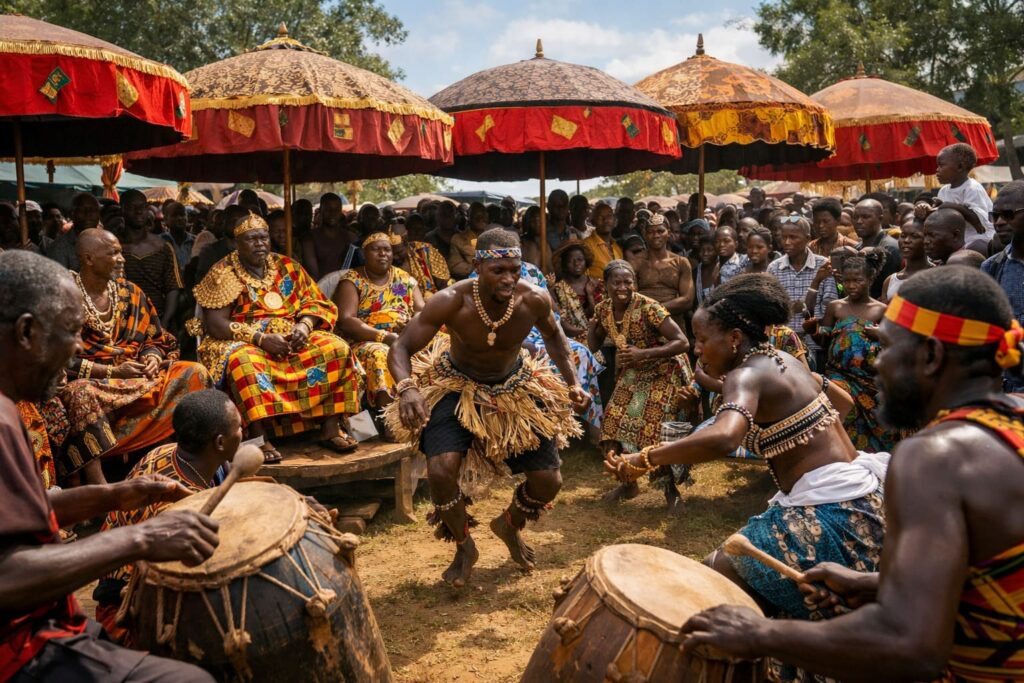
Ghana does not preserve its history in books alone. It preserves it in festivals. Across the country, communities gather each year to remember famine, celebrate harvests, honor ancestors, and pass values from one generation to the next. These festivals are not performances for tourists. They are deeply personal moments that connect people to their past and to each other.
From coastal fishing towns to northern savannahs, festivals mark turning points in community life. Some are centuries old, others are modern expressions of identity. Together, they show how tradition continues to live and change in Ghana today.
1. Homowo Festival
Homowo is celebrated by the Ga people in Accra and nearby towns. The word “Homowo” means “hooting at hunger,” and the festival remembers a time when the Ga people survived a devastating famine. After months of hardship, a successful harvest brought relief, and the community marked the victory over hunger with thanksgiving.
Before the main celebration, there is a period of silence in the town. This silence is respected and enforced to allow spiritual preparation. Traditional priests later sprinkle kpokpoi, a special maize-based meal, to feed the gods and ancestors. Once rituals are complete, drumming, dancing, and feasting begin across Ga communities. Homowo reminds people of patience, discipline, and gratitude.
2. Aboakyir Festival
The Aboakyir Festival is celebrated by the Effutu people of Winneba. It is one of the most physically demanding festivals in Ghana. The festival centers on a hunting competition between two local groups, who must capture a live deer from the forest using only their hands.
This tradition dates back centuries and represents courage, strength, and unity. The captured animal is presented to the chief as a sacred offering. Alongside the hunt, the festival includes drumming, dancing, and a grand durbar where chiefs appear in colorful regalia. Aboakyir strengthens community bonds and celebrates bravery.
3. Odwira Festival
Odwira is observed by the Akuapem and Akyem people, especially in Akropong. It is a purification festival that focuses on cleansing both the land and the people. The festival also honors ancestors and marks the beginning of a new traditional year.
During Odwira, sacred stools are purified, and rituals are performed to remove misfortune. Old conflicts are resolved, and unity is restored. Chiefs play a major role, leading ceremonies and receiving homage from their people. Odwira highlights respect for leadership, ancestors, and moral order.
4. Hogbetsotso Festival
Hogbetsotso is celebrated by the Anlo Ewe people in Anloga. This festival recalls the historic migration of the Ewe people from Notsie, where they escaped harsh rule and oppression. The story of this escape is retold every year to preserve identity and history.
The celebration includes storytelling, symbolic reenactments, drumming, and dancing. Chiefs and elders use the occasion to advise the youth and promote unity. Hogbetsotso serves as both a history lesson and a reminder of resilience and freedom.
5. Bakatue Festival
Bakatue is celebrated by the people of Elmina, a coastal town known for fishing. The festival marks the official opening of the fishing season after a period of rest for the lagoon and sea.
Before fishing resumes, priests perform rituals to ask for protection and abundance. Canoes are beautifully decorated, and there is a procession through the town. Bakatue reflects the strong connection between the Elmina people and the sea, as well as respect for nature and tradition.
6. Damba Festival
The Damba Festival is celebrated by the Dagomba people in Yendi and other northern towns. It has strong Islamic influence and is linked to the birth of the Prophet Muhammad.
Damba is known for colorful horse riding displays, drumming, and royal appearances. Chiefs ride through the town on horses while crowds cheer. The festival reinforces traditional authority and brings together families from different areas.
7. Kundum Festival
Kundum is celebrated by the Nzema and Ahanta people in the Western Region. It is mainly a harvest festival, thanking the gods for crops and protection during the farming season.
Traditional dances, drumming, and rituals dominate the celebration. Kundum also promotes unity among clans and gives thanks for life and food. It is a time for reflection and renewal.
8. Fetu Afahye
Fetu Afahye is celebrated by the Oguaa people of Cape Coast. The festival focuses on cleansing the town of bad luck, sickness, and negative influences.
Before public celebrations begin, sacrifices and rituals are performed. Afterward, the town comes alive with music, dancing, and a grand durbar. Fetu Afahye attracts many visitors and plays a big role in tourism.
9. Adae Festival
Adae is observed by the Ashanti people in Kumasi. It honors ancestors and sacred royal stools. The festival is spiritual and deeply respected.
The Asantehene appears at Manhyia Palace, where people pay homage. Drumming, symbolism, and tradition dominate the event. Adae strengthens royal authority and cultural pride.
10. Apoo Festival
The Apoo Festival is celebrated by the Bono people of Techiman. It is unique because it allows people to openly criticize leaders and social behavior without fear.
Songs, drama, and satire are used to expose wrong actions. The goal is social correction and moral balance. Apoo promotes honesty and accountability in society.
11. Bugum (Fire) Festival
Bugum, also called the Fire Festival, is celebrated by northern communities, including the Dagomba and Mamprusi. It remembers a historic search for a lost prince.
At night, people carry flaming torches through the streets while drumming and chanting. The sight is powerful and symbolic, representing hope and unity.
12. Asafotu Festival
Asafotu is celebrated by the Ada people in Ada. It honors warriors and past battles fought to protect the land.
Chiefs wear war clothing, and mock battles are staged. The festival keeps military history alive and teaches bravery and sacrifice.
13. Ngmayem Festival
Ngmayem is celebrated by the Krobo people in the Eastern Region. It marks harvest time and reflects Krobo values around farming, womanhood, and family.
Traditional rites and cultural performances take place, strengthening social bonds and identity.
14. Kobine Festival
Kobine is celebrated by the Dagaaba people in Lawra. It marks the end of the farming year and gives thanks for survival and food.
Music, dance, and storytelling dominate the celebration, bringing communities together.
15. Samanpiid Festival
Samanpiid is celebrated by the Kusasi people in the Upper East Region. It marks peace after conflict and encourages unity among families and clans.
The festival focuses on reconciliation and harmony, making it socially meaningful.
16. Panafest
Panafest is celebrated in Cape Coast and Elmina and brings together Africans and the diaspora. It focuses on African unity and remembrance of the transatlantic slave trade.
Cultural performances, conferences, and historical tours are key parts of the festival.
17. Akwasidae Festival
Akwasidae is held every six weeks by the Ashanti people in Kumasi. It honors the Golden Stool and ancestors.
It is deeply spiritual and centered around royal tradition and respect.
18. Yam Festival
The Yam Festival is celebrated across Ghana by many ethnic groups. It marks the first yam harvest.
Before eating new yams, offerings are made to give thanks for food and life.
19. Chale Wote Street Art Festival
Chale Wote is a modern festival held in Accra. It celebrates street art, music, fashion, and performance.
It blends tradition with modern creativity and attracts youth from around the world.
20. Kpalongo Festival
Kpalongo is celebrated mainly by the Ga people in parts of Accra and surrounding coastal communities. While many people know Kpalongo as a dance, it is also tied to festival-style community gatherings that celebrate identity, rhythm, and storytelling through movement.
The festival centers on energetic drumming, call-and-response songs, and expressive dance steps that reflect daily life, humor, and social values. Young people play a strong role in performances, while elders guide the meaning behind the music and rhythms. Costumes are colorful, and performances often take place in open community spaces where everyone can join.
Kpalongo represents how Ghanaian culture continues to grow without losing its roots. It shows that tradition is not frozen in the past. It adapts, responds to modern life, and still carries deep cultural meaning. Including Kpalongo highlights the creative and artistic side of Ghanaian festivals, not just ritual and history.
Why Festivals Matter in Ghana
Festivals keep history alive, teach values, and strengthen identity. They also support tourism and local businesses. In Ghana, festivals are not just events. They are living culture.
Also read:
- What Is MVR in Baseball and Why It Matters
- How to Check Your MTN Number in Ghana (All Working Methods)
- Where Is Dubai Really Located? The Geography Behind the Global City
- Who Really Owns Fiji Water? The Story Behind the Famous Bottle
- How to Check Your Glo Number in Nigeria (All Working USSD Codes)