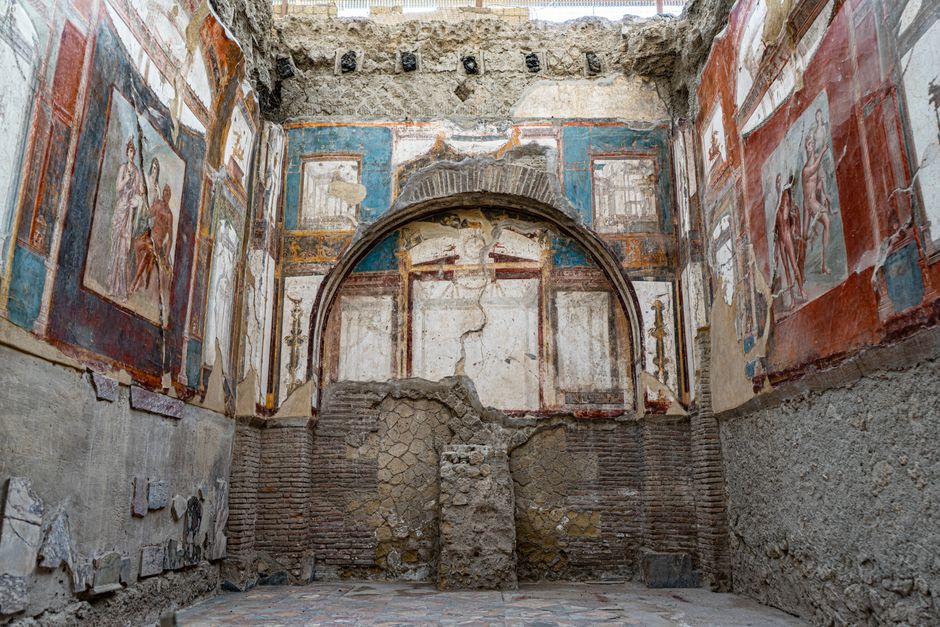
Researchers have successfully deciphered the complete text of a sealed Herculaneum scroll that remained closed since Mount Vesuvius buried the Roman town in 79 A.D. The breakthrough, announced in June 2026, reveals philosophical texts previously unknown to history and demonstrates how AI-powered imaging can unlock secrets locked away for nearly 2,000 years. Greek Reporter and NBC News both reported on the historic discovery.
The achievement is part of the Vesuvius Challenge, a competition offering prizes to researchers who can read sealed scrolls without opening them. The winning technique used advanced X-ray imaging combined with machine learning algorithms trained to recognize ink patterns invisible to human eyes. The approach succeeded where centuries of traditional archaeology failed: reading a complete sealed text while preserving it perfectly for future study. This breakthrough exemplifies how AI is revolutionizing archaeology.
What the Scrolls Contain
The newly readable scrolls include 70 columns from “On Vices, Book 1,” a Greek-language philosophical work attributed to Epicurean philosopher Philodemus. The text explores ethics, human behavior, and virtue in ways that match philosophical traditions already known but with specific arguments and examples previously lost to history. Additionally, researchers recovered nearly 1.5 meters of readable text from a scroll dated 200-300 B.C., making it the oldest Herculaneum scroll yet read.
These are not minor fragments. They are complete works or substantial sections of works. The philosophical content is sophisticated and detailed, providing insights into how educated Romans thought about ethics, virtue, and the good life. Scholars will spend years analyzing these texts, writing papers, and extracting lessons that apply to philosophy today.
The Technology Behind the Discovery
Traditional archaeology would open the scroll physically, risking destruction. The pages are fragile, carbonized by volcanic heat, and nearly crumbled to dust. Opening them would almost certainly destroy them. The Vesuvius Challenge competitors developed a different approach: non-invasive imaging combined with AI.
X-ray and infrared imaging can detect the chemical differences between ink and papyrus, revealing text without touching the scroll. However, the images are subtle and noisy. Machine learning algorithms trained on readable scrolls learned to recognize ink patterns, essentially “seeing” the text that human eyes cannot see even in the images. The combination of physics and AI unlocked what time and chemistry had concealed. Discover more about machine learning applications in the humanities.
Why This Matters for History
Herculaneum was buried so quickly that its libraries were preserved in a way Pompeii’s were not. The library contained thousands of scrolls. Only a fraction have been read. With this AI imaging technique, historians can now read hundreds more scrolls that have been sealed for 2,000 years. Entire libraries of ancient philosophy, medicine, engineering, and everyday life can be recovered without destroying them.
The implications extend beyond history. Each newly readable scroll provides a window into how people thought, what they valued, and how they lived. Some scrolls may contain recipes, letters, or technical instructions. Others may refute assumptions scholars have held for centuries. The potential for discovery is enormous.
The Future of Archaeological Technology
Yahoo News noted that the technique opens the door to reading other sealed or damaged historical documents. Medieval manuscripts damaged by water or fire, cuneiform tablets buried in clay, and other cultural artifacts can potentially be read without physical handling. This technique could revolutionize how archaeologists preserve and study fragile materials.
Related Articles
How AI is Revolutionizing Archaeology and Historical Research

Trust Post Desk
A journalist and editor at TrustPost.org covering world and national news, technology updates and human-interest stories. They check every fact, interview sources in person or online, and aim to deliver clear, accurate reporting. Their work ranges from breaking news to in-depth features and daily newsletters. Outside the newsroom, they follow emerging trends and engage with readers on social media.