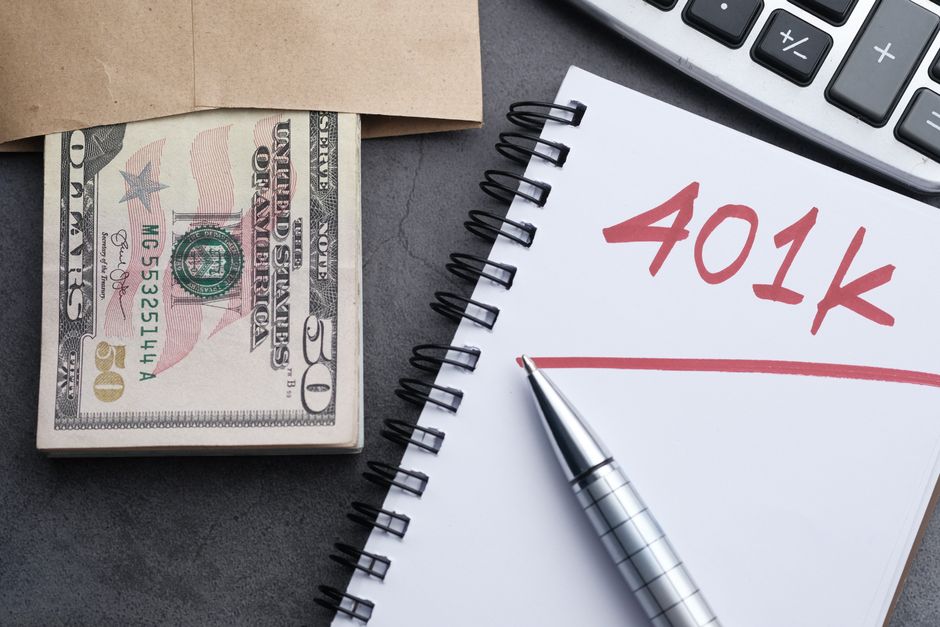
A 401(k) is the most common retirement savings plan offered by American employers, and for many workers it is the single biggest engine of long-term wealth they will ever have. Yet many people contribute to one without really understanding how it works, how much they should put in, or how to make the most of the free money many employers offer. Understanding your 401(k) can add hundreds of thousands of dollars to your retirement.
This guide explains exactly what a 401(k) is, how contributions and employer matching work, the 2026 limits, the difference between traditional and Roth versions, and the common mistakes that quietly cost workers money. Whether you are just starting your first job or want to optimize an existing plan, understanding these fundamentals puts you in control of your retirement.
What a 401(k) Actually Is
A 401(k) is an employer-sponsored retirement account that lets you save and invest a portion of your paycheck before or after taxes. The money is automatically deducted from your pay and deposited into your account, where you choose how to invest it among the options your plan offers. Because contributions come straight out of your paycheck, saving becomes automatic and consistent, which is one of the plan’s greatest strengths.
The account is named after a section of the tax code, and its defining feature is its tax advantage. Like an IRA, a 401(k) shelters your investments from annual taxes, allowing your money to compound more efficiently over decades. The combination of automatic payroll contributions, tax benefits, and often an employer match makes the 401(k) one of the most powerful wealth-building tools available to ordinary workers.
How Employer Matching Works
Many employers offer to match a portion of what you contribute, and this is effectively free money you should never leave on the table. A common arrangement is a match of 50 percent or 100 percent of your contributions up to a percentage of your salary, such as the first 6 percent you put in. If your employer matches your contributions dollar for dollar up to 6 percent, contributing that 6 percent instantly doubles your savings rate.
Failing to contribute enough to capture the full match is one of the most expensive mistakes a worker can make. Walking away from a full employer match is like turning down a guaranteed 100 percent return on your money. At a minimum, aim to contribute at least enough to receive every dollar of matching funds your employer offers, then build from there as your budget allows.
2026 Contribution Limits
For 2026, the IRS set the employee contribution limit at $24,500. Workers aged 50 and older can add a catch-up contribution of $8,000, bringing their total to $32,500. Those between ages 60 and 63 may be eligible for a larger super catch-up of $11,250 if their plan allows, raising their limit to $35,750.
These limits apply only to your own contributions; employer matching funds are separate and do not count against them. As Fidelity notes, the combined total of employee and employer contributions can reach $72,000 in 2026. One important change starting in 2026 is that high earners who made more than $145,000 from their employer the prior year must make any catch-up contributions as Roth, or after-tax, dollars.
Traditional vs Roth 401(k)
Many plans now offer both traditional and Roth 401(k) options, mirroring the choice between traditional and Roth IRAs. With a traditional 401(k), your contributions are made before taxes, lowering your taxable income today, and you pay taxes when you withdraw the money in retirement. With a Roth 401(k), you contribute after-tax dollars now and enjoy tax-free withdrawals later.
The right choice depends on whether you expect to be in a higher or lower tax bracket in retirement, the same calculation that applies to IRAs. Our guide on Roth versus traditional IRAs walks through that decision in detail, and the same logic applies to your 401(k). Some savers split contributions between both to diversify their future tax exposure.
How to Choose Your Investments
Once money lands in your 401(k), you must choose how to invest it, and leaving it in cash is a costly mistake. Most plans offer a menu of mutual funds, and the best choices for most people are low-cost, broadly diversified index funds. Our guide to index fund investing explains why these consistently outperform more expensive, actively managed options over the long run.
Many plans also offer target-date funds, which automatically adjust your mix of stocks and bonds as you approach retirement. These are a convenient, hands-off option for savers who prefer not to manage their own allocation. Whatever you choose, pay close attention to the expense ratio, since high fees can quietly erode a large share of your returns over a career.
Common 401(k) Mistakes to Avoid
The most damaging mistake is not contributing enough to capture the full employer match, which leaves guaranteed money on the table. Another is leaving contributions sitting in cash or a low-return default option rather than investing them in growth-oriented funds. A third is cashing out your 401(k) when you change jobs, which triggers taxes and penalties and erases years of compounding.
When you leave an employer, you can usually roll your 401(k) into your new employer’s plan or into an IRA, preserving its tax advantages. Borrowing against your 401(k) or stopping contributions during tough times can also set you back significantly. Treat the account as untouchable retirement money, and let it grow undisturbed for the decades it needs to reach its full potential.
Why Starting Your 401(k) Early Matters
The single biggest advantage you have with a 401(k) is time. Because of compounding, money invested in your twenties has decades to grow and can end up worth far more than the same amount invested later in life. Starting early, even with small contributions, means a larger share of your eventual balance comes from growth rather than from the money you actually set aside.
Consider two workers who each contribute the same monthly amount, but one starts at age 25 and the other at age 35. The early starter often ends up with hundreds of thousands of dollars more at retirement, simply because their money had an extra decade to compound. This is why financial advisers urge young workers to enroll in their 401(k) as soon as they are eligible and to increase contributions over time, ideally each time they get a raise.
How to Increase Your Contributions Over Time
If you cannot afford to contribute much right now, you can still build the habit and grow it gradually. A simple and effective approach is to raise your contribution rate by one percentage point each year, or to direct half of every future raise into your 401(k). Because the increase comes from new income, you barely feel the difference in your take-home pay.
Many plans offer an automatic escalation feature that bumps up your contribution rate for you each year, removing the need to remember. Over a career, these small, steady increases compound into an enormous difference in your final balance. The goal is to keep moving toward saving around 15 percent of your income, a level many experts consider a strong target for a comfortable retirement.
The Bottom Line on Your 401(k)
Your 401(k) is one of the most powerful wealth-building tools you will ever have access to, combining automatic saving, valuable tax advantages, and often free employer matching money. Making the most of it does not require expertise, only a few smart habits: contribute at least enough to capture the full match, invest the money in low-cost diversified funds rather than leaving it in cash, and avoid cashing out when you change jobs.
Start as early as you can, increase your contributions steadily over time, and let compounding do the heavy lifting across the decades. Pair your 401(k) with the other building blocks of a strong financial plan, from an emergency fund to high-yield savings, and you put yourself firmly on the path to a secure and comfortable retirement.
Frequently Asked Questions
How much should I contribute to my 401(k)?
At a minimum, contribute enough to capture your full employer match, since that is free money. Many experts suggest aiming to save 15 percent of your income for retirement across all accounts, building up to that level over time as your budget allows.
What is the 401(k) contribution limit for 2026?
The 2026 employee contribution limit is $24,500. Workers 50 and older can add an $8,000 catch-up, and those aged 60 to 63 may add up to $11,250 if their plan allows. Employer matching funds are separate and do not count toward these limits.
What happens to my 401(k) when I change jobs?
You can typically leave it with your old employer, roll it into your new employer’s plan, or roll it into an IRA. Rolling it over preserves the tax advantages. Cashing it out, by contrast, triggers taxes and penalties and should be avoided.
Should I choose a traditional or Roth 401(k)?
It depends on your expected tax bracket in retirement. A traditional 401(k) lowers your taxes now, while a Roth 401(k) provides tax-free withdrawals later. Younger savers who expect higher future income often favor the Roth option.
Related Articles
Roth IRA vs Traditional IRA: Which Is Right for You

Trust Post Desk
A journalist and editor at TrustPost.org covering world and national news, technology updates and human-interest stories. They check every fact, interview sources in person or online, and aim to deliver clear, accurate reporting. Their work ranges from breaking news to in-depth features and daily newsletters. Outside the newsroom, they follow emerging trends and engage with readers on social media.