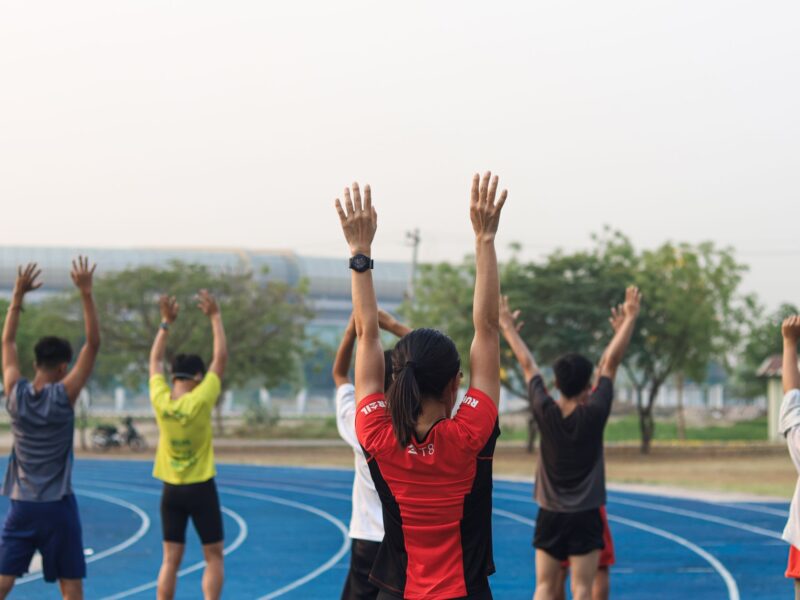
Mental toughness in sports is the psychological capacity to perform consistently under pressure, adversity, distraction, and fatigue.
When two athletes have identical fitness, the mentally tougher one wins. This pattern holds across every competitive sport studied.
What Is Mental Toughness in Sports and Why It Matters
Mental toughness is not a personality trait you are born with. Research consistently shows it is a trainable skill built through deliberate practice.
Per Red Bull mental toughness, the core of mental toughness in sports is grit: passion and perseverance directed toward long-term goals over time.
The Four Components of Mental Toughness in Sports
- Focus: the ability to maintain concentration on task-relevant cues while blocking out crowd, score, and distraction
- Resilience: recovering quickly from errors, losses, and setbacks without ruminating on what went wrong
- Confidence: believing in your ability to execute even when outcomes are uncertain and the margin is thin
- Emotional control: managing anxiety, anger, and doubt so they do not impair technical execution under pressure
Visualization: The Most Widely Used Mental Toughness Tool
Visualization involves mentally rehearsing a skill or scenario in vivid sensory detail before performing it in real conditions.
Studies show that mental rehearsal activates the same motor neurons as physical practice, building neural pathways without physical fatigue.
Elite athletes like Michael Phelps and Novak Djokovic have publicly credited daily visualization practice as central to their performance preparation.
Per CE Performance blog, effective visualization rehearses both successful execution and recovery from unexpected adversity, building adaptability under pressure.
Breathing and Mindfulness for In-Game Mental Control
Box breathing (4 seconds in, 4 hold, 4 out, 4 hold) activates the parasympathetic nervous system and reduces cortisol within 90 seconds.
Mindfulness training teaches athletes to observe thoughts without reacting to them, preventing negative self-talk from escalating under pressure.
Studies show 8 weeks of mindfulness practice improves athletic focus scores and reduces competitive anxiety in both team and individual sports.
How to Build Mental Toughness in Sports Through Training
Design training scenarios that replicate competitive pressure: time constraints, audience presence, fatigue states, and simulated consequence.
Practice deliberately failing and recovering. Athletes who never fail in practice have no rehearsed response when they fail in competition.
Set process goals, not outcome goals. Focusing on execution quality rather than winning outcome reduces anxiety and improves performance.
Mental toughness also requires managing physical adversity. injury prevention guide shows how injury prevention supports confidence and long-term mental resilience.
Study high performers at every level. top athletes 2026 profiles athletes whose careers demonstrate how mental investment compounds with physical ability.
Daily Mental Toughness Habits for Competitive Athletes
Journaling after training or competition builds self-awareness. Write what worked, what did not, and what mental state you brought to it.
Cold exposure, like cold showers or ice baths, trains the mind to stay calm in physical discomfort. This transfers directly to competitive pressure.
Consistent routine reduces decision fatigue before competition. Pre-performance rituals anchor focus and activate familiar patterns of readiness.
Surround yourself with mentally tough athletes. Mindset is contagious inside training groups, both in a positive and a negative direction.
Related Articles

Trust Post Desk
A journalist and editor at TrustPost.org covering world and national news, technology updates and human-interest stories. They check every fact, interview sources in person or online, and aim to deliver clear, accurate reporting. Their work ranges from breaking news to in-depth features and daily newsletters. Outside the newsroom, they follow emerging trends and engage with readers on social media.