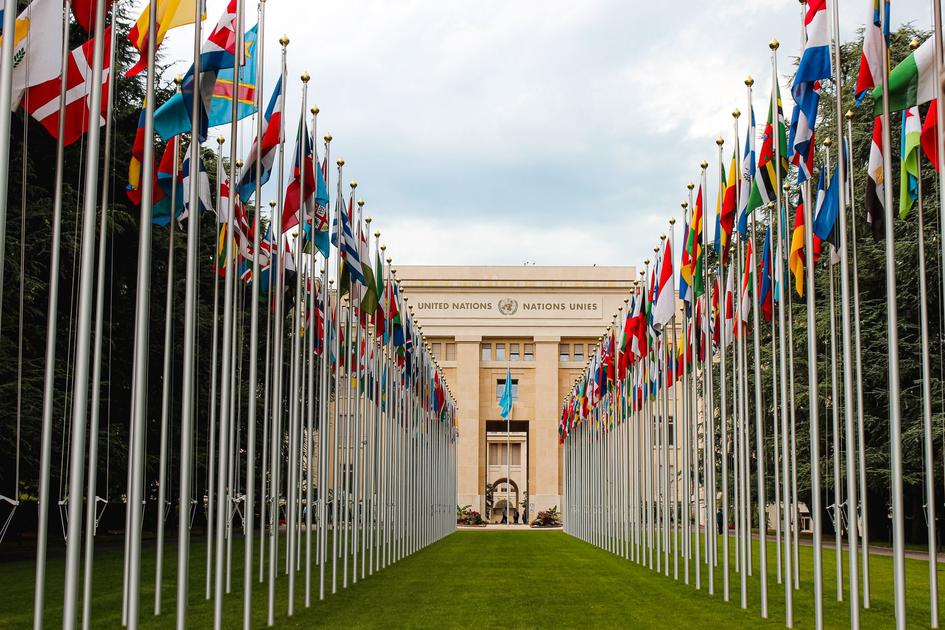
Prime Minister Narendra Modi attended the 52nd G7 Leaders’ Summit at Evian-les-Bains in the French Alps from June 15-17, 2026, as an invitee of
French President Emmanuel Macron in the summit’s outreach country program that typically brings leaders from major non-G7 economies to participate in selected sessions alongside
For more context, see our coverage of US-India Trade Deal Latest Updates.
Key Developments
the core group of the United States, United Kingdom, France, Germany, Italy, Japan, and Canada. Modi’s presence at Evian continued a pattern of Indian
prime ministerial attendance at G7 summits that has become an annual feature of India’s multilateral diplomacy, reflecting both the G7’s interest in engaging the
world’s most populous country and fastest-growing major economy, and India’s own recognition that participation in the world’s most powerful club of democracies provides diplomatic
Background and Context
For more context, see our coverage of Trump and Qatar Air Force One Deal.
leverage and agenda-setting influence that India’s status as a formal G7 member would not exceed in practical terms.
The G7 outreach format gives India a seat at the leadership table without the binding commitments that formal membership would entail, an arrangement that
What Experts Are Saying
suits India’s traditionally non-aligned foreign policy posture.
For more context, see our coverage of Global Economy 2026 Outlook.
The Evian summit agenda covered four major areas: the ongoing war in Ukraine and support for Kyiv; the US-Iran ceasefire memorandum and the reopening
of the Strait of Hormuz; the governance of artificial intelligence, with particular emphasis on protecting children from online harms; and addressing macroeconomic imbalances, industrial
overcapacity, and the structure of global trade. India’s participation in discussions on each of these areas carried its own significance: on Ukraine, India has
consistently called for dialogue and a negotiated settlement rather than military escalation, a position that distinguishes it from the G7 consensus while not placing
it in opposition; on the Iran deal, India as one of the countries most affected by the Strait of Hormuz disruption has a direct
economic stake in the ceasefire’s success; on AI governance, India’s IndiaAI Mission positions it as a constructive voice on AI development frameworks for the
Global South; and on trade imbalances, India’s growing trade surpluses with major economies make it both a subject and a participant in discussions about
global economic balance.
On the sidelines of the plenary sessions, Modi held bilateral meetings with several G7 leaders and other outreach participants, including discussions with President Trump,
President Macron, UK Prime Minister Starmer, and German Chancellor Friedrich Merz. The meeting with Trump focused on the US-India strategic partnership, including defense procurement,
technology cooperation, and the terms of the trade relationship that has been under review since the earlier rounds of US tariff adjustments that affected
Indian exports in 2025. The meeting with Starmer provided an opportunity to discuss the implementation of the India-UK Free Trade Agreement that entered force
in April 2026, the first major UK bilateral trade deal concluded post-Brexit, which carries significant symbolic and commercial weight for both governments.
The Evian summit’s setting – a small spa town on the shore of Lake Geneva with sweeping views of the Alps – provided the
kind of intimate leadership environment that facilitates genuine conversation rather than the formal statement-reading that characterizes many multilateral diplomatic events, and Indian officials reported
that the bilateral margins were among the most substantively productive in recent memory. The summit’s broader geopolitical context – the Iran deal scrutiny, Ukraine
war updates, and AI governance discussions – gave India’s participation a weight beyond mere symbolic inclusion in the world’s most exclusive leadership forum.
Modi’s Bilateral Meetings at Evian
Sources and Further Reading
Learn more at TechCrunch.
Learn more at The Verge.
Learn more at Wired.
Related Articles

Trust Post Desk
A journalist and editor at TrustPost.org covering world and national news, technology updates and human-interest stories. They check every fact, interview sources in person or online, and aim to deliver clear, accurate reporting. Their work ranges from breaking news to in-depth features and daily newsletters. Outside the newsroom, they follow emerging trends and engage with readers on social media.