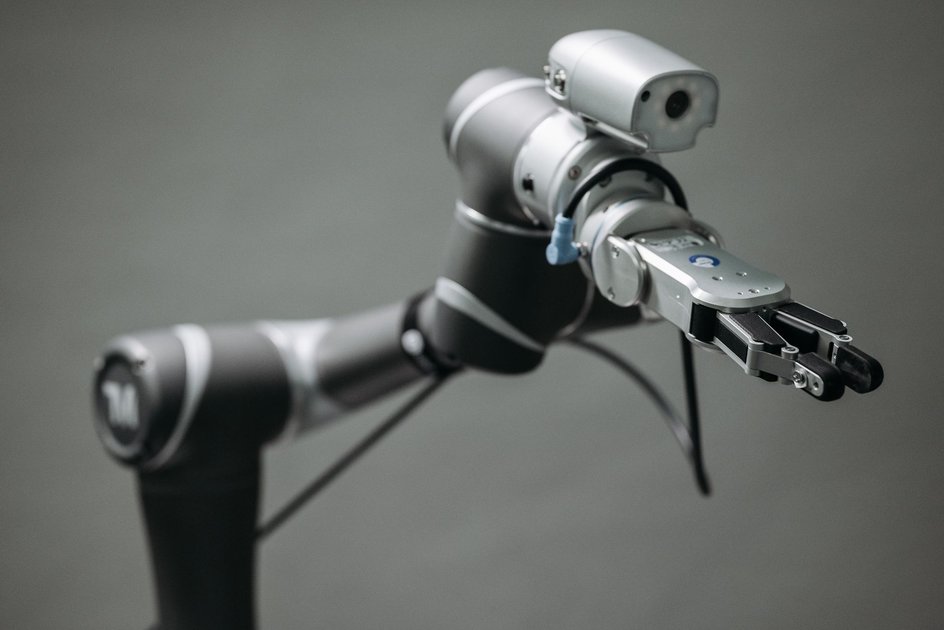
German humanoid robotics company NEURA Robotics has secured up to $1.4 billion in funding from a group of high-profile investors including Nvidia, Amazon, and cryptocurrency company Tether, in one of the largest single funding rounds ever raised by a robotics startup. The investment signals that the race to build practical, deployable humanoid robots has moved well beyond the research phase and into serious commercial competition.
The fundraise was reported simultaneously by CNBC, the Wall Street Journal, and CoinDesk, each confirming the involvement of their respective focus areas – semiconductors and tech, traditional finance, and cryptocurrency. The breadth of the investor group reflects how broadly the physical AI sector has captured the attention of capital allocators across industries.
What NEURA Robotics Builds
NEURA Robotics, founded in 2019 and headquartered in Metzingen, Germany, develops humanoid robots designed for real-world industrial and service applications. Unlike research robots designed to demonstrate capabilities in controlled lab environments, NEURA’s products are engineered from the ground up for reliability in messy, unpredictable human workspaces – factories, warehouses, hospitals, and eventually homes.
The company’s MAiRA robot is designed to work alongside human employees in automotive manufacturing, performing complex assembly tasks that have historically been too dexterous for traditional industrial robots. The company has been working with several major European automotive manufacturers on pilot deployments, and the new funding will accelerate both hardware development and the software AI stack that makes the robots adaptable to new tasks without reprogramming.
Why Nvidia and Amazon Invested
Nvidia’s investment is strategically obvious. Humanoid robots require enormous computational power to process sensor data, make real-time decisions, and run the AI models that govern their behavior. As robots become more capable, they will consume more Nvidia chips, making robot companies natural partners and customers. Nvidia CEO Jensen Huang has spoken extensively about ‘physical AI’ as the next frontier after language and image models.
Amazon’s interest is more operationally motivated. The company runs one of the largest warehouse and logistics networks in the world, and labor shortages combined with rising wages have made automation a boardroom priority. Humanoid robots that can navigate Amazon’s existing warehouse layouts without requiring facility redesign would represent a major competitive advantage.
- Tether, the cryptocurrency stablecoin company, led the round with a significant anchor investment, marking a rare diversification of crypto capital into deep-tech hardware.
- The $1.4 billion figure represents a ceiling on the round – the actual amount raised may be somewhat lower depending on tranche timing.
- NEURA joins a growing list of well-funded humanoid robot companies including Figure, 1X Technologies, Apptronik, and Tesla’s Optimus program.
The Broader Humanoid Robot Investment Surge
NEURA’s fundraise is part of a broader surge in humanoid robot investment that has accelerated dramatically over the past two years. The total capital flowing into humanoid robotics globally has reached unprecedented levels as investors bet that the combination of advanced AI models and improved actuator hardware has finally crossed the threshold needed for practical deployment outside of research labs.
The market opportunity is genuinely enormous. Global labor shortages in manufacturing, logistics, and elder care create demand that traditional automation cannot fully address because those environments require the flexibility of human-shaped bodies that can navigate stairs, use existing tools, and work in spaces designed for people. Humanoid robots that can be quickly trained on new tasks through AI instruction rather than manual programming could address labor gaps in ways no previous automation technology has managed.
Frequently Asked Questions
When will NEURA robots be available commercially?
NEURA has active pilot programs with industrial customers in Europe. Full commercial deployment is expected to scale significantly through 2027 and 2028 as production capacity expands with the new funding.
How does NEURA compare to Tesla Optimus?
Tesla Optimus is designed primarily for Tesla’s own factory use with broader ambitions, while NEURA is focused on selling robots to third-party customers. NEURA has a head start on commercial deployments outside of a single company’s internal use case.

Trust Post Desk
A journalist and editor at TrustPost.org covering world and national news, technology updates and human-interest stories. They check every fact, interview sources in person or online, and aim to deliver clear, accurate reporting. Their work ranges from breaking news to in-depth features and daily newsletters. Outside the newsroom, they follow emerging trends and engage with readers on social media.