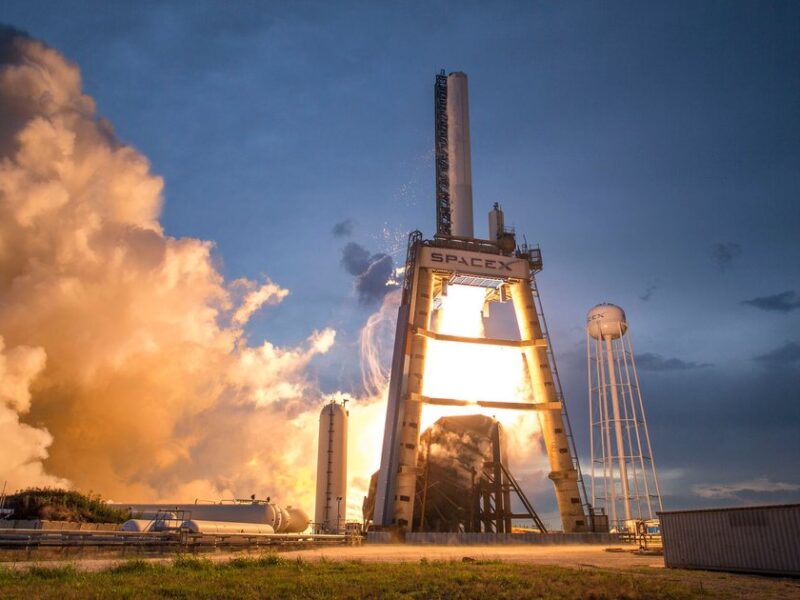
SpaceX’s stock market debut on Thursday delivered one of the most remarkable first-day performances in modern IPO history, with shares surging approximately 19% to push the company’s market capitalization past $2 trillion and directly into competition with Amazon for a position among America’s five most valuable companies. For investors who spent years watching SpaceX grow through private funding rounds while unable to participate, the IPO represented an opportunity that drove extraordinary retail and institutional demand.
The Nasdaq debut was watched closely not just as a milestone for SpaceX, but as a signal for how public markets are pricing the intersection of space technology, AI infrastructure through Starlink, and the Elon Musk premium that has historically added significant valuation to companies associated with the world’s most famous entrepreneur. The verdict from the market on day one was enthusiastically positive.
How SpaceX’s Valuation Stacks Up
At a $2 trillion market cap, SpaceX immediately became one of the most valuable companies in the world. To put this in context, Amazon – which SpaceX is ‘closing in on’ according to Reuters – has a market cap in a similar range. Apple, Microsoft, and Nvidia sit above $2 trillion, while Meta and Tesla fluctuate in the $1-2 trillion range. SpaceX’s debut places it firmly in the conversation with the world’s most valuable technology companies despite having a fraction of the revenue history of those peers.
- The 19% first-day gain exceeded most analyst estimates, which had anticipated a 10-15% opening surge.
- Trading volume on day one was among the highest ever recorded for an IPO on the Nasdaq.
- Retail investor demand was noted by brokers as exceptionally high, with platforms reporting unusually large numbers of small orders alongside the institutional block trades.
- Elon Musk’s personal net worth crossed $1 trillion as a direct result of the IPO, with his SpaceX stake now publicly valued for the first time.
What SpaceX’s Business Actually Generates
Investors buying SpaceX stock need to understand the underlying business generating the revenue behind the valuation. SpaceX operates three main business segments, each with different growth profiles and competitive dynamics.
Starlink is the highest-growth segment and the one most responsible for the premium valuation. The satellite internet service has grown from zero to several million paying subscribers globally in just a few years, and it operates in a market – global broadband access, particularly in underserved rural and remote areas – that has enormous expansion potential. Starlink’s recurring subscription revenue makes it more like a SaaS business than a rocket company, and that revenue quality is a key reason investors are willing to pay a significant multiple.
The launch services business – putting satellites, cargo, and eventually people into orbit – generates substantial revenue from government contracts including NASA and the US Department of Defense. These contracts provide a stable revenue floor, though margins can be compressed by the engineering complexity of individual missions.
Risks That Could Pressure the Stock
The valuation is priced for exceptional execution over many years, and several risks could interrupt that trajectory. Starlink faces regulatory challenges in multiple countries that have raised concerns about spectrum interference and market competition. A Starship failure during a high-profile mission could trigger an extended grounding that disrupts launch revenue and dampens investor sentiment. And the Musk factor cuts both ways – his presence commands a premium when things are going well, but his personal controversies have historically created stock volatility in his other companies.
Frequently Asked Questions
Can individual investors buy SpaceX stock now?
Yes. SpaceX is now publicly traded on the Nasdaq, meaning any brokerage account holder can purchase shares through their normal trading platform.
Does SpaceX pay a dividend?
No. SpaceX is a growth company that reinvests its cash into development programs. A dividend is not expected in the foreseeable future.

Trust Post Desk
A journalist and editor at TrustPost.org covering world and national news, technology updates and human-interest stories. They check every fact, interview sources in person or online, and aim to deliver clear, accurate reporting. Their work ranges from breaking news to in-depth features and daily newsletters. Outside the newsroom, they follow emerging trends and engage with readers on social media.