
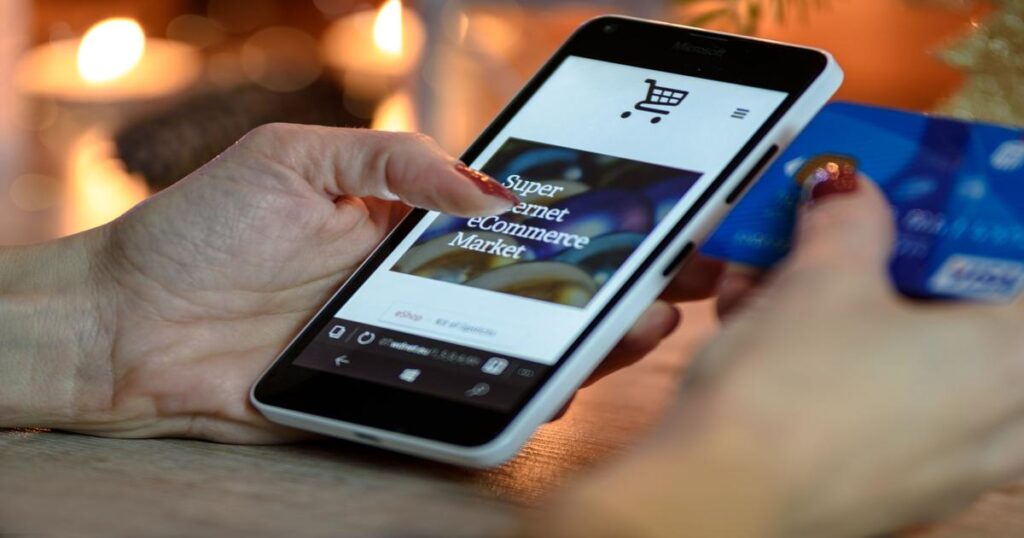
In 2026, a new digital behavior is spreading fast among Gen Z in South Korea: visiting “dopamine sites,” fake versions of real apps that let you browse products, fill a cart, place an order, and even track a delivery in real time, without spending a single cent or
For more context, see our coverage of Social Media Trends 2026.
Key Developments
receiving anything at all.
The trend has been covered by The Korea Times, Fast Company, and TechSpot, and it raises a real question: why would anyone go through the entire motions of buying something they know will never arrive?
Background and Context
For more context, see our coverage of Trump and Qatar Air Force One Deal.
The answer lies in neuroscience, rising costs of living, and a generation burned out on real-world consequences. Read also: World Cup 2026 June 19: USA vs Australia, Brazil vs Haiti.
Related Articles
What Experts Are Saying
Dopamine sites are fully functional simulations of e-commerce and delivery platforms. They replicate the visual design, product listings, star ratings, promotional banners, and checkout flows of real apps.
You browse. You filter. You read fake reviews. You add items to a cart. You enter your real delivery address. You press the order button.
For more context, see our coverage of Remote Work Trends 2026.
A simulated courier accepts the order. A live map tracks the delivery moving toward your location. Then nothing arrives. No charge hits your account.
The entire experience simply resets. See also: World Cup 2026 June 18: Mexico, South Korea, Canada, Qatar.
The most widely discussed example is FoodNeverComes, a fake food delivery site where the name itself is the punchline.
Another site simulates the experience of taking a smoke break with coworkers, displaying a cigarette image, a start timer, and live messages from other users who are online at the same moment, without any actual smoking or physical proximity.
A third platform, justbuynothing.com, functions as a general merchandise simulation, letting users “purchase” thousands of products that will never be manufactured or shipped.
The name is not an accident. Dopamine is the neurotransmitter most associated with anticipation and reward.
What researchers have found is that dopamine releases most strongly before the reward arrives, not after.
The moment you press “add to cart” and see the order confirmation screen, your brain registers the hit. The actual package showing up, days later, is almost anticlimactic by comparison.
Dopamine sites exploit this gap deliberately. By simulating every step up to delivery, they trigger the same neurological sequence as a real purchase.
The brain cannot easily distinguish between the anticipation of a real order and a fake one, at least not quickly enough to stop the reward signal.
According to research published in Nature Neuroscience, anticipatory dopamine release is 40 to 60 percent larger than the response to the actual reward being delivered.
This means the checkout screen is neurologically more satisfying than opening the package.
Dopamine sites capture exactly that window and nothing else.
The primary users are South Korean Gen Z, aged roughly 18 to 28, who are navigating one of the most economically pressured environments among wealthy nations.
South Korea has a youth unemployment rate near 7 percent, some of the most expensive urban housing in Asia relative to income, and a deeply competitive academic and professional culture that contributes to some of the highest burnout rates in the OECD.
South Korea also has a total fertility rate of 0.72, the lowest in the world, with young people explicitly citing financial anxiety and exhaustion as reasons they are not forming families or making discretionary purchases.
Against that background, dopamine sites offer something specific: the psychological satisfaction of a consumer ritual, at zero cost.
“For many young people, using these sites has become a real-life hack in the face of the high cost of living and the constant temptation of advertising,” the Korea Times reported in May 2026.
“The real benefit is savings while getting the psychological satisfaction of going through the addictive shopping experience.”
The smoke break simulation addresses a separate but related need.
Young professionals in South Korea, like elsewhere, use smoke breaks as a social ritual more than a nicotine delivery mechanism.
The fake break site replicates the feeling of stepping away with colleagues, creating ambient social connection for people who work alone or remotely.
There is a concept in behavioral psychology called “surrogate activity,” the idea that humans find satisfaction in completing an activity that mimics a goal-directed behavior, even when no real goal is achieved.
Dopamine sites are surrogate activities built for the digital consumer age.
They satisfy the impulse that advertising, social media, and frictionless checkout flows have trained into a generation, without the financial consequence.
Insight Trends World described the phenomenon as “simulated comfort culture,” noting that fake digital rituals are becoming a form of emotional self-soothing infrastructure for users who cannot or will not engage with the real versions.
The same dynamic appears in other places. Watching cooking videos without cooking. Watching travel vlogs without traveling. Browsing Zillow listings of houses you have no intention of buying.
Dopamine sites are a more deliberate, more designed version of the same behavior.
What makes dopamine sites distinct is that someone built the simulation on purpose, knowing exactly what it was for.
The honest answer is: nobody knows yet, because the behavior is too new to have rigorous longitudinal data behind it.
The case for dopamine sites being net positive is straightforward.
If someone would otherwise spend $80 on an impulsive delivery order, using a fake delivery site to scratch the itch and then closing the app costs them nothing.
Financially, it is obviously better.
Some users report using dopamine sites as a budget tool, visiting the fake shopping site when they feel an urge to buy, completing the fake checkout, and then finding the urge has passed enough to close the tab.
The case against is also credible. Critics point out that dopamine sites do not treat the underlying compulsion, they redirect it.
Repeatedly simulating the checkout experience may reinforce the neural pathway rather than weaken it, meaning users could develop stronger rather than weaker shopping impulses over time.
There is also a concern about what the trend reveals: that a significant portion of young people in one of the world’s wealthiest countries cannot comfortably afford the consumer experiences their peers in wealthier generations took for granted.
The dopamine site is, in that reading, a symptom of economic exclusion dressed up as a quirky digital trend.
Psychologist Dr.
Binna Han, quoted in The Print, said these behaviors reflect “a generation that has been trained to expect immediate gratification by the internet, but cannot access the real-world version of that gratification due to economic pressure.” She described dopamine sites as “a coping mechanism, not a cure.”
So far, the trend has remained primarily South Korean.
Comments on Reddit and other Western platforms have been skeptical, with many users expressing confusion about why anyone would “waste time” on a fake shopping experience.
But several conditions that created the trend in South Korea exist or are growing in other countries: rising costs of living for young people, high-frequency dopamine conditioning from social media algorithms, burnout culture, and increasing remote work isolation.
The United States, United Kingdom, and Australia all have Gen Z housing affordability crises. All three have documented youth mental health deterioration tied to social media.
The economic pressure that drove South Korean young people to dopamine sites is not uniquely Korean.
Industry analysts at Dexerto noted that if a dopamine site launched with polished English-language UX and strong social media presence, it could find an audience in the West faster than the current Korean-origin sites have.
Several Korean platforms have already been adopted by international users who discovered them through news coverage and TikTok clips.
The language barrier has not fully stopped spread, it has only slowed it.
There is something genuinely strange about an era in which people voluntarily simulate buying things they cannot afford, and find it satisfying.
But the strangeness is mostly a mirror. Modern e-commerce is already optimized to the point that the purchase process itself has become the product. One-click buying. Saved addresses.
Instant confirmation emails. Real-time tracking. The entire machinery of online retail has been engineered to make the act of buying feel as rewarding as possible.
Dopamine sites strip out the financial transaction and leave the reward architecture intact.
That this works reveals something about how thoroughly the checkout experience has been designed to bypass rational decision-making.
The next time you feel the urge to add something to a cart at midnight, you are not primarily responding to needing the thing.
You are responding to a designed experience that has been refined over two decades to produce exactly that urge. Dopamine sites, in a weird way, make that visible.
They also raise a question worth sitting with: if the reward is real enough to satisfy the craving, and no product is required to produce it, what exactly were you buying in the first place?
Dopamine sites are websites that simulate real online shopping or delivery experiences without involving any actual purchase or delivery.
Users browse products, add items to a cart, enter their address, and go through a full checkout flow, including simulated courier tracking, but nothing is shipped and no money is charged.
The term comes from dopamine, the brain chemical triggered by the anticipation of a reward.
Dopamine sites originated in South Korea in 2025 and gained mainstream attention in early 2026.
They emerged among Gen Z users dealing with high costs of living, financial anxiety, and burnout.
South Korean media and The Korea Times were among the first outlets to cover the trend.
As of mid-2026, the behavior remains most common in South Korea but has attracted international attention.
Yes. Dopamine sites are free. No payment information is processed and no money is charged during the simulated checkout.
The entire experience is a simulation designed to replicate the psychological journey of online shopping without any financial transaction.
The research is too early to give a definitive answer. For people resisting an impulsive purchase, the sites may provide a useful outlet that costs nothing.
Psychologists have raised concerns that repeatedly simulating the reward cycle could reinforce rather than weaken consumer impulse patterns over time.
Most experts treat dopamine sites as a coping mechanism rather than a therapeutic tool.
Possibly as a short-term harm reduction tool, but not as treatment for compulsive shopping behavior.
Shopping addiction, clinically called oniomania, involves compulsive purchasing that causes financial and psychological harm.
A dopamine site removes the financial harm but does not address the underlying compulsive behavior.
Anyone experiencing genuinely compulsive shopping patterns should seek support from a licensed therapist familiar with behavioral addictions.
Sources and Further Reading
Learn more at TechCrunch.
Learn more at The Verge.
Learn more at Wired.
Related Articles
- Social Media Trends 2026
- Trump and Qatar Air Force One Deal
- Remote Work Trends 2026
- Higgsfield AI X Account Suspended: What Just Happened

Get the TrustPost briefing
The stories that matter, in your inbox. No spam, unsubscribe anytime.
Newsletter signup will be available soon.
Related stories

Best Instagram Hashtag Generators in 2026: Free and Paid Tools
Instagram hashtag generators are now essential tools for content creators, helping discover the right tags faster and improving reach across every niche. Instead of manually researching hashtags one by one, these tools…

How to Build a Morning Routine That Actually Sticks
A morning routine does not need to be long to be effective. Even a focused 15 minutes changes your output and mood for the entire day. Here is how.

How to Protect Your Privacy Online: A Practical Guide
In an age when companies, advertisers, and data brokers constantly collect information about what we do online, protecting your privacy has never been more important or more challenging. Every search, purchase, and…