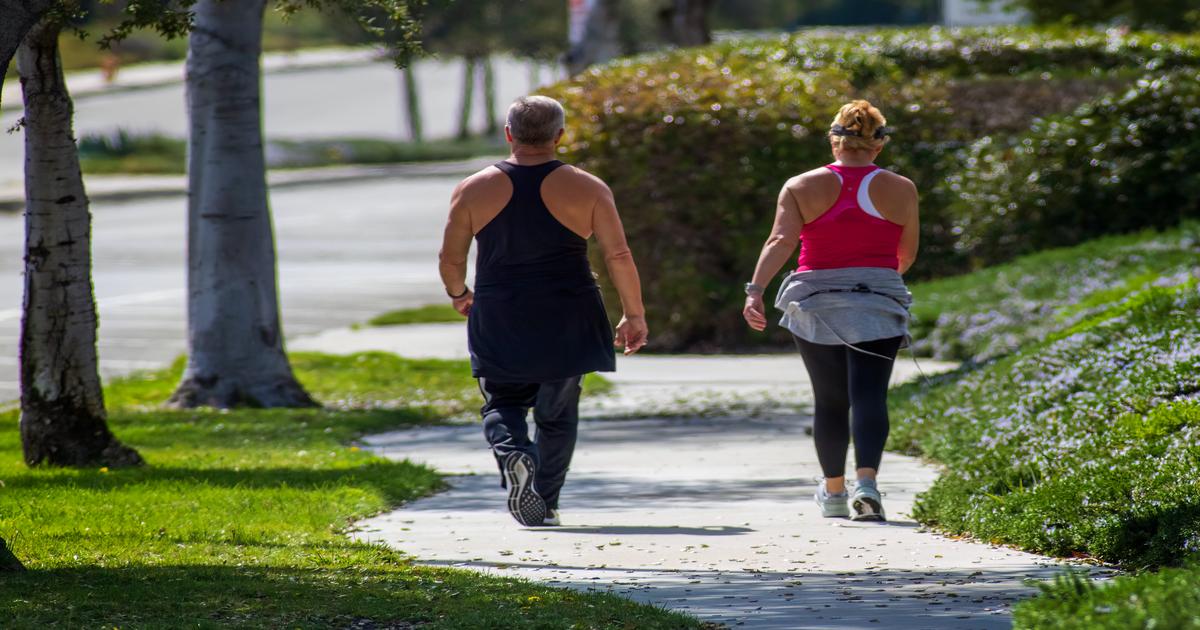
Japanese walking is the number one fitness trend of 2026, with search interest surging 2,986 percent year-over-year according to PureGym’s annual fitness trends report. It is not a new invention.
The protocol was developed at Shinshu University in Japan in the early 2000s, but TikTok and Instagram wellness creators rediscovered it in late 2025
For more context, see our coverage of Social Media Trends 2026.
Key Developments
and it has since become the most-shared workout format of the year.
The basic idea is deliberately simple: alternate between three minutes of slow walking and three minutes of fast walking, repeated five to ten times
for a 30-minute session. Read also: FIFA World Cup 2026 Hydration Breaks Explained.
Background and Context
For more context, see our coverage of Trump and Qatar Air Force One Deal.
Related Articles
For more context, see our coverage of FIFA World Cup 2026 Hydration Breaks Explained.
What Experts Are Saying
That alternation, called interval walking, produces measurably better cardiovascular results than walking at a constant moderate pace, according to the original Japanese research and multiple independent replications.
Its appeal in 2026 comes from fitting into an era of “sustainable fitness,” where people are rejecting grueling gym regimens in favor of habits
For more context, see our coverage of Remote Work Trends 2026.
that actually stick. See also: World Cup 2026 June 19: USA vs Australia, Brazil vs Haiti.
Dr. Hiroshi Nose of Shinshu University published the foundational research in 2007, tracking participants who performed interval walking three times per week for five months.
Read also: World Cup 2026 Golden Boot Race: Messi Leads.
The interval walkers showed a 14 percent improvement in VO2 max (aerobic capacity), compared to 3 percent for participants who walked at a constant moderate pace for the same duration.
Leg muscle strength increased 13 percent in the interval group versus no significant change in the steady-pace group. Blood pressure improved significantly in the interval group among participants with hypertension.
The results have since been replicated in studies in Finland, the UK, and the United States.
The mechanism is straightforward: alternating between intensities forces your cardiovascular system to adapt to changing demands rather than settling into a steady state.
The high-intensity intervals push your heart rate into zones that trigger adaptation; the recovery intervals allow enough rest to repeat the effort without stopping the session.
The protocol requires no equipment, no gym membership, and no particular fitness level. The only requirement is the ability to walk at two different speeds.
Start at a slow, comfortable pace where you can hold a full conversation without any effort. Walk at that pace for exactly three minutes.
Then increase to a fast walk, aiming for roughly 70 percent of your maximum effort, where talking becomes difficult but not impossible. Hold that for three minutes. Repeat the cycle.
A complete beginner session covers two or three cycles (12 to 18 minutes). A standard session covers five cycles (30 minutes).
Advanced versions extend to ten cycles (60 minutes), though most research benefits appear in the 30-minute format.
According to Daily Burn, the reason it has caught on is that it is “sustainable, short, doable, requires no gym, and has lots of
benefits.” The word sustainable appears in nearly every trainer commentary on the trend, reflecting fatigue with high-intensity workouts that many people start but cannot
maintain.
Most fitness trends sell novelty: a new piece of equipment, an exclusive class format, a celebrity-endorsed routine. Japanese walking sells the opposite.
It is free, it requires nothing, it can be done anywhere, and the research behind it was published in a peer-reviewed journal nearly 20 years before it went viral.
That research backing is a meaningful differentiator in 2026, when social media audiences have grown more skeptical of wellness claims.
Unlike many trending routines that collapse under scrutiny, Japanese interval walking holds up.
Fitness professionals quoted in the Time coverage of the trend consistently express genuine enthusiasm, which contrasts with the qualified or skeptical reactions that greet many viral fitness claims.
People who have avoided exercise due to joint pain, intimidation by gym environments, or lack of time are the primary beneficiaries.
The slow intervals provide recovery within the session, making the workout accessible to people who could not sustain constant fast walking.
Older adults benefit substantially.
Research on participants over 65 showed significant improvements in physical fitness measures and reductions in blood pressure and blood glucose that appeared after just five months of regular interval walking.
People recovering from cardiovascular events have used supervised versions of interval walking as rehabilitation, with doctor approval.
The adjustable intensity makes it adaptable to a much wider range of fitness levels than most trending workouts.
Japanese walking is an interval walking protocol developed at Shinshu University in Japan that alternates between three minutes of slow walking and three minutes
of fast walking, repeated five times for a 30-minute session.
Research shows it improves cardiovascular fitness by 14 percent and leg strength by 13 percent, significantly outperforming constant-pace walking.
The slow interval should be a comfortable conversational pace, roughly 40 to 50 percent of maximum effort.
The fast interval targets approximately 70 percent of maximum effort, where talking becomes difficult but you are not sprinting. Both intervals are walking, not running.
The original Shinshu University research protocol called for three sessions per week on non-consecutive days. Most fitness professionals recommend three to five sessions per week for general health benefits.
Because the sessions are only 30 minutes and the slow intervals provide active recovery, daily sessions are also possible for people without joint issues.
Research consistently shows yes, for cardiovascular and strength outcomes in the same time investment.
The 14 percent VO2 max improvement from interval walking compared to 3 percent from constant-pace walking represents a meaningful difference.
However, regular walking is vastly better than no walking, and for anyone who finds intervals discouraging, consistent regular walking remains an excellent option.
Sources: TechCrunch – AI News | Reuters – Technology | The Verge – Tech News
Sources and Further Reading
Learn more at TechCrunch.
Learn more at The Verge.
Learn more at Wired.
Related Articles

Trust Post Desk
A journalist and editor at TrustPost.org covering world and national news, technology updates and human-interest stories. They check every fact, interview sources in person or online, and aim to deliver clear, accurate reporting. Their work ranges from breaking news to in-depth features and daily newsletters. Outside the newsroom, they follow emerging trends and engage with readers on social media.