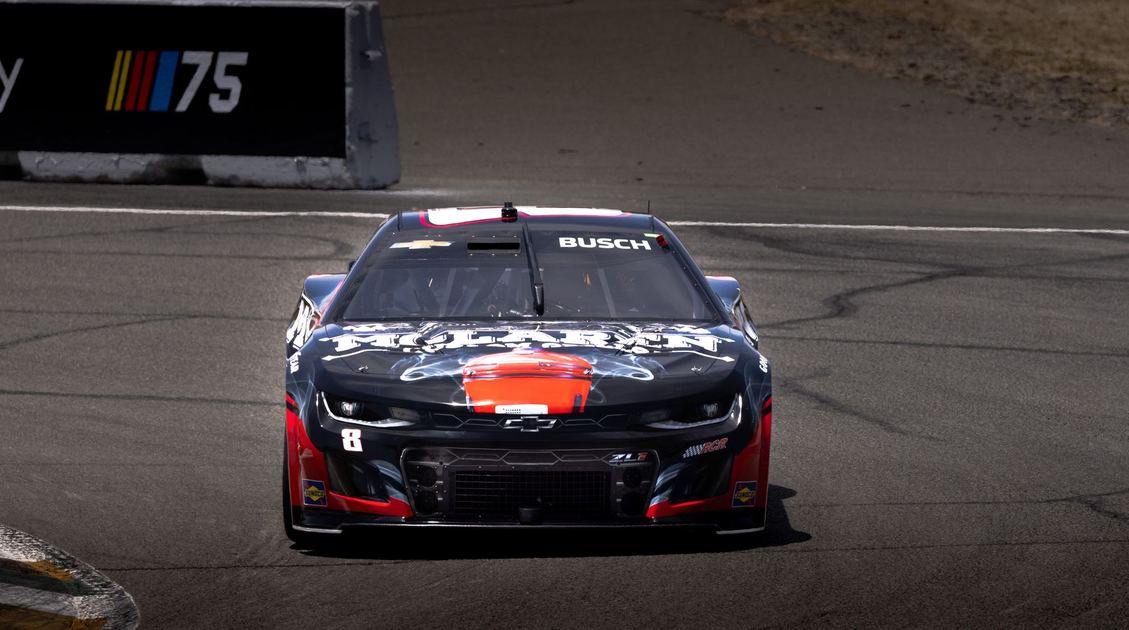
While Shane van Gisbergen dominated the Qualcomm Circuit at Naval Base Coronado on Saturday, clinching pole position for NASCAR’s historic inaugural Cup Series race with an average speed of 90.8 mph, the real buzz off the track revolved around a far less powerful, two-wheeled phenomenon: scooters. In an unexpected twist at one of NASCAR’s most ambitious events, these humble vehicles have become the preferred mode of transport for many Cup Series drivers and their teams, creating a viral moment and a new, unofficial ‘Scooter Society.’
The shift from high-octane race cars to electric and foot-powered scooters stems from the unique logistical challenges of racing on an active military base. Unlike typical NASCAR weekends where teams rely on golf carts for navigating sprawling infields, Naval Base Coronado prohibited these usual conveyances. This restriction, coupled with the spread-out nature of the temporary 3.4-mile street course and drivers staying off-base at locations like the Hotel Del Coronado, necessitated an alternative for covering long distances quickly.
Blaney and Elliott’s Viral Scooter Commute
The scooter trend exploded into public consciousness on Friday morning, thanks to a widely shared video posted by Katelyn Larson, wife of defending Cup Series champion Kyle Larson, on her Instagram page. The clip captured an amusing scene: star drivers Ryan Blaney and Chase Elliott precariously sharing a single scooter as they commuted from their hotel to the base gates.
Elliott, clinging to Blaney’s shoulders for support, later recounted the impromptu ride. “When I left the house this week, I don’t think I had me on the back of another man’s scooter on my Bingo card, but there we were,’ he quipped, adding, ‘I was gonna walk, but my man offered a ride, and off we went.” Blaney, for his part, humorously compared their tandem journey to the iconic duo from the movie ‘Dumb and Dumber,’ stating, “We looked like Harry and Lloyd out there.”
Fortunately for Elliott, the two-person scooter ride was a one-time affair. Blaney had a second scooter at the track, originally intended for his wife, which he lent to Elliott for the return trip. By Friday night, Hendrick Motorsports had proactively addressed the transportation dilemma, purchasing a half-dozen electric scooters for its drivers and public relations personnel after discovering them on sale at a local big-box retailer.
Teams Embrace Two-Wheeled Efficiency
The adoption of scooters quickly spread beyond individual drivers. Hendrick driver William Byron expressed his satisfaction with the new mobility solution. “It’s nice to get some breeze on the face,” Byron grinned, highlighting the practical benefits. “I like to be efficient through traffic, so I like to be able to get around quick.”
This rapid embrace underscores the adaptability required of Top 10 Highest-Paid Athletes in a sport constantly evolving its venues and demands. The Athletic’s informal count revealed at least 18 drivers had been spotted on scooters by Saturday. While most opted for scooters, a few outliers emerged: Denny Hamlin and Carson Hocevar were seen on bicycles, and Noah Gragson was observed zipping around on a miniature motorbike, even popping wheelies.
Teams and drivers actively showcased their participation in the new trend. Brad Keselowski posted a video of himself scooting around on Saturday morning, while others proudly posed for pictures with their new two-wheeled companions. Even Frankie Muniz, the actor-turned-NASCAR Truck Series driver, brought his scooter to the track, demonstrating the widespread appeal.
Veteran Drivers and the San Diego Scooter Society
While the San Diego race sparked a sudden scooter craze for many, some drivers were already ahead of the curve. Tyler Reddick and his 23XI Racing team, for instance, have long been known as the ‘Scooter Gang’ during pre-race reconnaissance track walks at oval courses. Their foresight highlights a strategic approach to understanding race conditions, a form of Athletes Train Their Minds to gain an edge.
RFK Racing driver Ryan Preece is another early adopter, having shipped his scooter on the team’s transporter from North Carolina ‘just in case.’ Preece explained his preference, stating, “I mean, let’s be honest: I’m not much of a walker.” He elaborated on the tactical advantage, noting, “I feel like I can visualize more when I’m rolling at 15 mph on a scooter (during the track walk) rather than trying to try and walk to the end of the straightaway to see my braking points.” Preece’s smirk suggested he was pleased to avoid the 300 dollars or so many other teams had to spend on last-minute purchases.
The Qualcomm Circuit’s Unique Demands
The inaugural San Diego race at Naval Base Coronado is a landmark event for NASCAR, marking the first time a points-paying national series race has been held on an active U.S. military installation. The Qualcomm Circuit, a temporary 3.4-mile course with 16 turns, presents a challenging mix of high-speed sections and technical corners. Drivers are navigating concrete walls, rough pavement, and even railroad crossings, making precision paramount.
This unique venue, part of NASCAR’s strategy to expand into major metropolitan markets and celebrate the Navy’s 250th anniversary, has created an environment where adaptability extends beyond the cockpit. The physical demands of road course racing are significant, requiring constant braking, shifting, and cornering over 75 laps and 255 miles. Ensuring drivers are well-prepared and can Prevent Sports Injuries is crucial, even in their off-track movements.
The logistical hurdles, from the lack of golf carts to the spread-out nature of the base, inadvertently fostered a new culture of mobility. This situation mirrors how other sports adapt to unique conditions, such as the Hydration Breaks Explained Why they are implemented in extreme heat during the FIFA World Cup. The scooter phenomenon at San Diego is a proof to the resourcefulness of NASCAR teams and drivers when faced with unprecedented circumstances.
Frequently Asked Questions
Why are NASCAR drivers using scooters at Naval Base Coronado?
NASCAR drivers are using scooters because their usual mode of transport, golf carts, were not permitted on the active military base. The Naval Base Coronado street course is spread out, requiring drivers and teams to cover long distances between their accommodations, the track, and other facilities, making scooters an efficient alternative.
Which drivers were seen using scooters or other alternative transport?
At least 18 drivers were spotted on scooters, including Ryan Blaney, Chase Elliott, William Byron, Brad Keselowski, Frankie Muniz, Tyler Reddick, and Ryan Preece. Denny Hamlin and Carson Hocevar were seen on bicycles, while Noah Gragson opted for a miniature motorbike.
What is the significance of the NASCAR San Diego race?
The NASCAR San Diego race is historic as it marks the first time a points-paying Cup Series event is held on an active U.S. military installation. The event on the Qualcomm Circuit at Naval Base Coronado is part of NASCAR’s strategy to expand into new markets and coincides with the Navy’s 250th anniversary celebration, offering a unique venue and backdrop for the sport.
A New Chapter for NASCAR Mobility
The San Diego race weekend has proven to be an extraordinary blend of high-stakes competition and unexpected logistical adaptations. While Shane van Gisbergen’s pole-winning performance set the competitive tone, the widespread adoption of scooters has become an indelible part of the event’s narrative. This quirky trend not only provided viral entertainment but also highlighted the ingenuity and camaraderie within the NASCAR garage when faced with novel challenges.
As NASCAR continues to explore new venues and formats, the San Diego experience offers valuable insights into the operational flexibility required for such ambitious undertakings. The scooter phenomenon, born out of necessity, has added a unique, lighthearted chapter to the sport’s history, proving that even the fastest drivers in the world appreciate a convenient, two-wheeled ride when the four-wheeled ones are off-limits. The Anduril 250 on Sunday promises to be a race unlike any other, both on and off the track.

Trust Post Desk
A journalist and editor at TrustPost.org covering world and national news, technology updates and human-interest stories. They check every fact, interview sources in person or online, and aim to deliver clear, accurate reporting. Their work ranges from breaking news to in-depth features and daily newsletters. Outside the newsroom, they follow emerging trends and engage with readers on social media.