Claude vs Perplexity AI: Which Is Better for Research in 2026?

Claude and Perplexity AI both claim to be the best research tool of 2026, but they work in fundamentally different ways.
Perplexity is a search-first answer engine that retrieves real-time web sources and cites them inline with every answer.
Claude is a reasoning-first AI that excels at deep analysis, long document synthesis, and complex multi-step research questions.
Claude vs Perplexity AI Research Comparison: Core Differences

The most important structural difference: Perplexity always searches the web first, while Claude reasons before deciding to search.
Perplexity was built to replace Google for factual queries, showing source citations next to every claim in its answers.
Claude was built to replace a research assistant, synthesizing complex information and producing structured analytical outputs.
For a question like ‘What happened in AI this week?’, Perplexity is better because it pulls live news from the current web.
For a question like ‘Analyze the strategic implications of Anthropic’s funding for the AI market’, Claude is dramatically better.
Neither tool is universally better: the choice depends entirely on whether your research needs currency or depth as its primary value.
Power researchers in 2026 typically use Perplexity for fact retrieval and Claude for synthesis, analysis, and written output.
At the $20 per month price point, both Pro tiers are identically priced, making the decision purely about use case fit.
Real-Time Web Search: Perplexity vs Claude Web Search Capabilities

Perplexity is built around real-time web search as its core function, querying the live web for every single response by default.
Every Perplexity answer includes numbered citations linking to specific source pages, making every claim instantly verifiable.
Claude’s web search is optional and requires enabling, and it does not search by default on every query like Perplexity does.
Claude with web search enabled can retrieve current information but typically lists sources at the end rather than inline per claim.
For news monitoring, market tracking, and competitive intelligence requiring today’s data, Perplexity is the more reliable tool.
Perplexity’s search index includes academic databases, news sites, product pages, forums, and social platforms in near real time.
Claude’s web search is powered by a general index that is strong for most topics but does not match Perplexity’s retrieval depth.
For fast fact verification tasks, Perplexity’s instant search-then-cite workflow is faster and more convenient than Claude’s approach.
Per AI Productivity testing, Perplexity retrieves more sources per query and cites them more precisely than Claude with web search enabled.
Citation Quality: Why Perplexity Leads Claude on Source Attribution

Perplexity’s citation model is purpose-built: every factual claim is tagged with a bracketed number linking to the specific source page.
This makes Perplexity answers directly auditable: you can click any citation number and verify the exact source within seconds.
Claude typically lists sources at the end of a response rather than tagging each specific claim, making verification more manual work.
For academic work, journalism, and professional research requiring full source attribution, Perplexity’s format is more rigorous.
Claude’s approach prioritizes narrative flow over citation density, producing more readable but less directly verifiable outputs.
Perplexity Pro’s Deep Research mode, capped at 20 per month, produces report-style outputs with dense citation coverage per claim.
Claude’s Research mode produces similarly structured reports but uses broader synthesis and analysis rather than maximizing source count.
For students writing papers who need to cite every factual claim, Perplexity’s inline numbering system saves significant manual time.
For business professionals producing internal reports, Claude’s synthesized narrative with end-listed sources often reads more professionally.
Reasoning Depth: Where Claude Beats Perplexity for Research Analysis

Claude’s most significant research advantage is reasoning depth: its ability to analyze implications, spot contradictions, and argue positions.
When asked to evaluate competing theories, weigh evidence quality, or predict outcomes from data, Claude consistently outperforms Perplexity.
Perplexity retrieves what sources say; Claude synthesizes what the sources mean and what the evidence implies beyond what is explicitly stated.
For research tasks involving judgment calls, such as evaluating whether a study’s methodology is sound, Claude is the superior tool.
Perplexity tends to aggregate and summarize source content without challenging it, making it weaker for critical evaluation tasks.
Claude can be prompted to argue a counterposition, identify logical flaws in an argument, or evaluate the strength of evidence critically.
For literature reviews requiring synthesis across dozens of conflicting studies, Claude’s reasoning layer adds value Perplexity cannot match.
Claude’s extended thinking mode enables even deeper analytical reasoning, spending more computation on complex research problems.
As Nobel Prize winner John Jumper joining Anthropic indicates, the company is investing in Claude’s scientific reasoning capabilities specifically.
Claude vs Perplexity for Academic and Scientific Research

For academic research, both tools have distinct strengths that serve different stages of the literature review process.
Perplexity’s Deep Research mode excels at the discovery phase, quickly surfacing relevant papers, datasets, and primary sources.
Claude excels at the analysis phase, helping synthesize findings, draft literature review sections, and identify research gaps.
Perplexity can search arXiv, PubMed, and Semantic Scholar for recent papers, giving it a strong advantage for finding current research.
Claude lacks direct academic database integration, meaning researchers must paste relevant papers into Claude’s context manually.
Once papers are in context, however, Claude’s analysis of them is more nuanced and theoretically grounded than Perplexity’s summaries.
For scientists writing grant proposals or literature review sections, Claude’s long-form writing quality is significantly more polished.
Perplexity is useful for answering specific factual questions about a field: ‘What was the sample size in the 2025 Smith et al. study?’
Claude is better for analytical questions: ‘What are the methodological weaknesses common across these five studies I pasted?’
Long Document Analysis: Claude vs Perplexity AI Differences
Claude’s 200K context window is one of its most powerful research advantages, allowing it to process up to 500 pages in one session.
You can paste an entire book, a company’s SEC filings, a full legal contract, or a lengthy research report and ask Claude anything about it.
Perplexity does not offer a comparable document upload and analysis mode for lengthy files at the same scale Claude handles.
Perplexity excels at finding information on the web; it is not designed as a tool for deep analysis of documents you already have.
For enterprise due diligence, contract review, or academic paper analysis involving large uploaded files, Claude has no competitor.
Claude can also cross-reference multiple documents: compare two company annual reports, or identify contradictions across three studies.
Perplexity’s research strength is retrieval from the web; Claude’s research strength is analysis of information you bring to it.
This complementary nature explains why many serious researchers use both tools at different stages of the same project.
For more on how Claude handles large context windows, see our article on Claude plan features by tier and what each plan includes.
Claude vs Perplexity Pricing: $20 vs $200 at the Max Tier

At the standard tier, Claude Pro and Perplexity Pro are identically priced at $20 per month, offering similar value propositions.
The pricing gap becomes stark at the premium tier: Claude Max costs $100 per month versus Perplexity Max at $200 per month.
Perplexity Max at $200 per month includes unlimited Deep Research reports, expanded API access, and higher search limits.
Claude Max at $100 per month includes 5x higher usage limits on Claude’s full model range, including autonomous Claude Code workflows.
For most researchers, the $20 Pro tier of either tool is sufficient unless you are hitting usage limits multiple times per day.
Google AI Pro at $19.99 per month is a close third competitor offering Gemini Deep Research with Google’s index depth at near-parity price.
Perplexity Pro’s Deep Research cap of 20 reports per month may be limiting for journalists or analysts running multiple daily projects.
Claude Pro has no equivalent hard cap on research tasks, making it more flexible for researchers with unpredictable daily volumes.
Per AI subscription pricing analysis, Perplexity Max at $200 is the most expensive major AI consumer tier available in 2026.
Claude vs Perplexity for Business Intelligence and Market Research
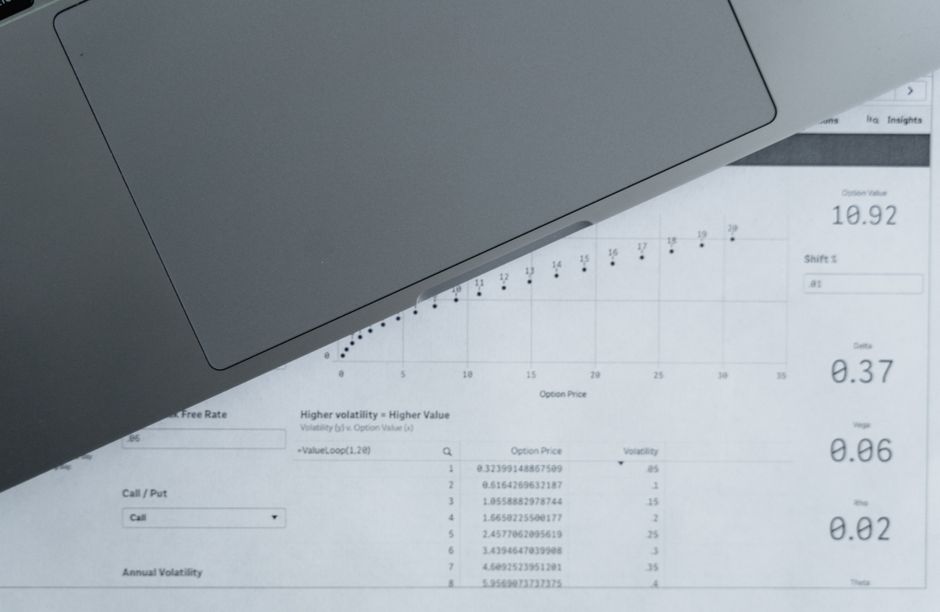
For business intelligence tasks requiring current market data, Perplexity’s real-time web access gives it an advantage over Claude.
Tracking competitor pricing changes, monitoring press releases, and surfacing regulatory news are tasks where Perplexity excels.
Claude excels at the synthesis layer: taking those data points and writing coherent strategic memos, SWOT analyses, and executive briefs.
Many strategy teams use Perplexity to assemble current data and then pass it to Claude for structured analysis and polished output.
For financial research, Perplexity can surface recent earnings results, analyst ratings, and news, but lacks Claude’s analytical depth.
Claude’s ability to maintain complex context across a long conversation enables iterative research workflows that Perplexity’s Q&A format limits.
For competitive intelligence reports distributed to senior leadership, Claude’s writing quality is the clearer choice for final output.
For real-time market monitoring dashboards and alerts, Perplexity’s API integration with live search is the better technical foundation.
Coverage of AI industry spending in 2026 includes how both Anthropic and Perplexity are competing for enterprise research customers.
Combining Claude and Perplexity for Maximum Research Effectiveness

The most effective research workflow in 2026 is not a either-or choice between Claude and Perplexity but using both together.
Phase 1: Use Perplexity to find current sources, discover recent papers, and build a rapid factual foundation for your topic.
Phase 2: Bring the best sources and data into Claude for deep analysis, synthesis, critical evaluation, and final written output.
This workflow combines Perplexity’s retrieval speed and citation accuracy with Claude’s reasoning depth and writing quality.
For journalists, the Perplexity-then-Claude workflow enables fast source discovery followed by high-quality, nuanced article drafting.
For management consultants, Perplexity handles current market data collection while Claude produces structured strategic frameworks.
For academics, Perplexity finds papers while Claude helps draft literature reviews, methodology sections, and discussion analysis.
At $40 per month combined for both Pro tiers, this dual-tool approach delivers substantially more value than either tool alone.
The combined investment is less than a single meal in most cities and covers the vast majority of professional research workflows.
Claude or Perplexity AI: Which Research Tool Should You Use in 2026?
Choose Perplexity as your primary tool if your research is primarily about finding current facts, news, and verifiable sourced information.
Choose Claude as your primary tool if your research involves analysis, writing, synthesis, and complex document-level reasoning.
Students writing essays or papers need both: Perplexity for source discovery, Claude for the analytical writing and argumentation.
Journalists working on breaking news need Perplexity first; journalists doing investigative deep dives need Claude for long-form output.
Data analysts and scientists processing experimental results need Claude’s document analysis and structured output capabilities.
For casual research and quick factual questions that used to go to Google, Perplexity is a faster and more reliable replacement.
For complex, multi-hour research sessions requiring nuanced judgment and long-form writing, Claude has no peer at the $20 tier.
For context on how AI tools are changing how businesses gather intelligence, see our article on AI chatbot privacy and data concerns in 2026.
Per Ixieverse research tool comparison, most serious researchers who adopt both tools report significantly higher output quality and speed.