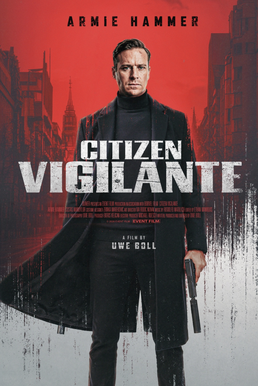
Citizen Vigilante is a 2026 action thriller written, produced, and directed by Uwe Boll, the filmmaker long known for polarizing low-budget genre projects. Released in select theaters and digitally on June 19, 2026, the film marks Armie Hammer’s return to a leading role and has drawn intense controversy over its subject matter, an effective ban in Germany, and scathing reviews from critics.
The movie has become a talking point less for its filmmaking than for the debate surrounding it. Its premise, inspiration, and reception have placed it at the center of arguments about exploitation cinema and the limits of provocative storytelling, a recurring theme in our coverage of action movies.

Armie Hammer’s First Lead Role Since His Cancellation
Citizen Vigilante represents Armie Hammer’s first leading-man role since his public fall from prominence five years ago. As JoBlo reported, the trailer presents the project as a comeback vehicle for the actor, who plays a man pushed to violence by what he sees as a collapse of law and order.
The casting drew attention on its own, given Hammer’s long absence from major roles. Whether the film helps or harms his attempted return has become one of the central questions surrounding its release.
The Plot: A Vigilante Targeting Criminals and Officials
Hammer stars as Michael Sanders, a vigilante enraged by what the film frames as a breakdown of public safety. He takes justice into his own hands, hunting down criminals and corrupt officials. Costas Mandylor co-stars as an Interpol officer pursuing him, alongside a supporting cast that includes Dora Dimic Rakar and Vjekoslav Katusin.
The narrative follows a familiar vigilante-thriller structure, but its specific framing of its targets has been the source of much of the criticism leveled at the production.
The Real Case That Inspired the Film
According to Wikipedia, Boll has said the film was inspired by a 2016 Hamburg case in which a teenage girl was assaulted and the perpetrators received suspended sentences. Boll used that real-world anger as the emotional engine for his protagonist’s descent into vigilantism.
Drawing on a genuine crime gave the film a charged real-world hook, but it also tied the project directly to sensitive debates about crime, justice, and immigration that fueled the backlash.
Why Germany Effectively Banned the Movie
The film did not receive an age rating in Germany, a decision that effectively bans it from commercial release there. Boll has said the refusal stemmed from concerns that the movie could incite violence against immigrants, given how it portrays its antagonists.
That outcome turned the film into a free-speech and censorship flashpoint. Supporters framed it as suppression of provocative art, while critics argued the concerns about real-world harm were legitimate given the film’s framing.
Critics Pan It While Audiences Split
Critical reception has been overwhelmingly negative. Todd Gilchrist of Variety described the film as astonishingly bad and a violent, incoherent, morally bankrupt slice of exploitation, suggesting it could only damage Hammer’s intended comeback. Audience reactions, by contrast, have been more divided, with some viewers responding positively.
That split between critics and parts of the audience is common for Boll’s work, which has always provoked strong reactions. For readers tracking the latest releases, our roundup of new movies and shows this month covers what else arrived alongside it.
Related Articles
Best Action Movies of All Time

Trust Post Desk
A journalist and editor at TrustPost.org covering world and national news, technology updates and human-interest stories. They check every fact, interview sources in person or online, and aim to deliver clear, accurate reporting. Their work ranges from breaking news to in-depth features and daily newsletters. Outside the newsroom, they follow emerging trends and engage with readers on social media.