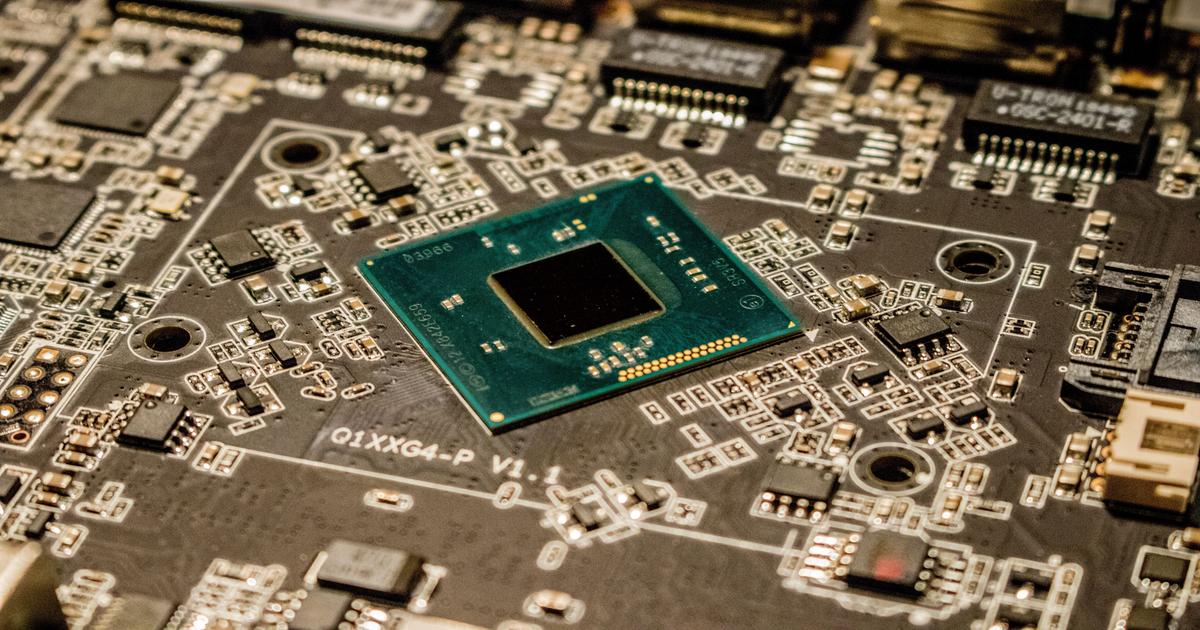
President Trump announced on June 18, 2026 that Apple has agreed to partner with Intel to design and manufacture chips in the United States, a deal that sent Intel shares up approximately 6.5 percent in premarket trading. The partnership represents a significant shift for Apple, which has relied almost entirely on Taiwan Semiconductor Manufacturing Company (TSMC) for its advanced chip production. It also marks a commercial endorsement of Intel’s recovery after years of manufacturing setbacks — a recovery backstopped in part by the US government taking a 10 percent equity stake in Intel, which has seen its valuation surge from roughly $100 billion to $600 billion. The broader tech sector has been absorbing rapid change: Meta’s 6,500-person AI unit has faced internal revolt, and $130 billion in US data center projects have been blocked by community protests, making domestic chip supply a strategic priority.
Apple currently relies heavily on TSMC, whose advanced production lines are in high demand from AI chipmakers such as Nvidia and AMD. The Wall Street Journal had reported a preliminary deal between Intel and Apple after more than a year of discussions. Trump’s announcement on Truth Social on June 18 confirmed it publicly. The deal fits the administration’s broader push to bring semiconductor manufacturing back to US soil — a goal that has reshaped how workers experience AI in the workplace as chip availability drives AI product deployment.
Why Apple Is Partnering With Intel
Apple has been seeking to diversify its chip manufacturing supply chain since the COVID pandemic exposed the risks of geographic concentration. TSMC’s fabs in Taiwan are a geopolitical vulnerability: a Taiwan Strait conflict or natural disaster could cut off Apple’s chip supply entirely. Intel’s domestic fabs, located in Arizona, Ohio, and Oregon, offer a US-based alternative.
Intel has spent the past three years rebuilding its manufacturing capabilities under the CHIPS Act framework, receiving over $8 billion in federal grants and $11 billion in federal loans. The US government’s 10 percent equity stake aligns the government’s financial interest with Intel’s success. Apple agreeing to design and build chips with Intel validates that investment and could accelerate Intel’s foundry business far beyond what government contracts alone would achieve.
Intel’s Remarkable Valuation Recovery
Intel’s valuation rising from approximately $100 billion to $600 billion reflects a near complete reversal of the company’s fortunes over the past two years. At its low point in late 2024, Intel was trading at multi-decade lows amid manufacturing delays, market share losses to TSMC and AMD, and a failed merger attempt with Qualcomm. The CHIPS Act funding, US government equity stake, and a series of large customer wins have dramatically changed the narrative.
The 6.5 percent share price jump on June 18 on the Apple partnership announcement extended what Intel’s own filings describe as a “roughly threefold gain so far this year,” reflecting a broader investor rerating of the company’s prospects. This is happening alongside an AI spending boom: OpenAI alone spent $34 billion in 2025 building the infrastructure that runs on chips Intel now hopes to manufacture.
What Apple Gets From the Deal
For Apple, the primary benefit is supply chain resilience. By establishing a manufacturing relationship with an Intel domestic foundry, Apple reduces the concentration of its chip sourcing in Taiwan. The deal likely begins with specific chip categories — possibly Apple Silicon variants for Macs or specialized chips for Apple’s device lineup — rather than a wholesale shift away from TSMC for the most advanced nodes.
Apple also benefits politically. In the current environment, where the Trump administration has been scrutinizing US technology companies for their overseas manufacturing footprints, publicly partnering with an American chip manufacturer reduces the political risk of the kind of tariff or regulatory pressure Apple faced when it announced $500 billion in US investment earlier in 2026.
Frequently Asked Questions
Did Apple and Intel announce a chip deal?
Yes. President Trump announced on June 18, 2026 via Truth Social that Apple has agreed to work with Intel to design and manufacture chips in the United States. Intel shares rose approximately 6.5 percent on the news. The deal helps Apple diversify away from its near-total dependence on TSMC for chip production and builds on Intel’s recovery as a US-based foundry supported by CHIPS Act grants and a US government 10 percent equity stake.
Why does Apple want to work with Intel instead of TSMC?
Apple’s primary motivation is supply chain diversification. TSMC’s advanced fabs are concentrated in Taiwan, creating geopolitical and disaster risk. Intel’s domestic US fabs in Arizona, Ohio, and Oregon offer a US-based alternative. Apple also benefits politically from partnering with an American manufacturer at a time when the Trump administration has been pushing US technology companies to bring manufacturing home.
How much is Intel worth in 2026?
Intel’s valuation has risen to approximately $600 billion in 2026, up from roughly $100 billion at the company’s recent low point. The recovery reflects CHIPS Act funding totaling over $19 billion in grants and loans, a 10 percent US government equity stake, and a series of new customer wins including the Apple partnership announced June 18. Intel shares had already gained approximately three times their value year-to-date before the Apple announcement.
Related Articles

Trust Post Desk
A journalist and editor at TrustPost.org covering world and national news, technology updates and human-interest stories. They check every fact, interview sources in person or online, and aim to deliver clear, accurate reporting. Their work ranges from breaking news to in-depth features and daily newsletters. Outside the newsroom, they follow emerging trends and engage with readers on social media.