The history of video games starts in 1952 when British scientist A.S. Douglas created OXO, a graphical tic-tac-toe game, for his PhD thesis at Cambridge.
The first commercially successful arcade game was Computer Space in 1971, created by Nolan Bushnell and Ted Dabney who later founded Atari.
The History of Video Games Begins in a Physics Lab
Pong arrived in 1972 and changed everything. Its simple table tennis gameplay was immediately accessible in bars, laundromats, and anywhere adults gathered.
Per Udonis gaming history, the video game industry grew from Pong’s single circuit board to a $200 billion global industry serving 3 billion players.
The Home Console Revolution: 1977 to 1983
The Atari 2600 launched in 1977 at $199 and brought interchangeable game cartridges to the living room, transforming gaming into a home activity.
Space Invaders in 1978 became a cultural phenomenon and drove Atari 2600 sales past 30 million units, proving games were mainstream entertainment.
The 1983 Video Game Crash nearly killed the industry. A flood of low-quality games and consumer oversaturation caused the US market to collapse by 97%.
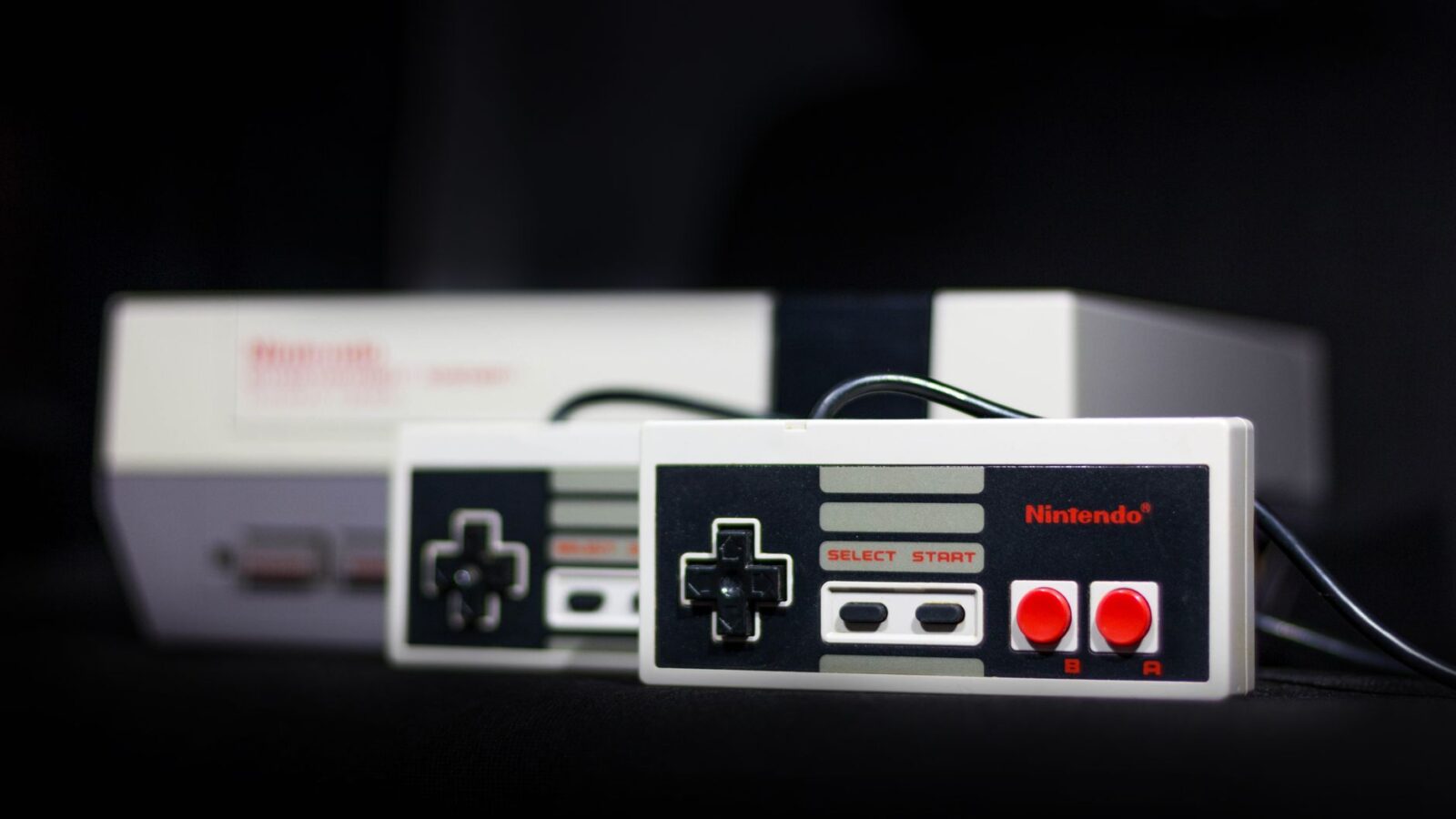
Nintendo’s NES revived everything in 1985, introducing quality control licensing and games like Super Mario Bros. that redefined what video games could be.
The Console Wars Era: Sega, Nintendo, and Sony
- Sega Genesis launched in 1989 with Sonic the Hedgehog, directly challenging Nintendo and capturing older teen audiences with a faster, edgier identity
- The Super Nintendo in 1990 countered with Mode 7 graphics and legendary titles like The Legend of Zelda: A Link to the Past and Super Metroid
- Sony’s PlayStation in 1994 changed the industry by moving from cartridges to CD-ROMs, enabling cinematic story-driven games at lower production cost
- Nintendo 64 in 1996 introduced analog stick control and 3D gameplay with Super Mario 64, setting the standard for 3D movement used in games today
- The PlayStation 2 in 2000 became the best-selling console of all time at 155 million units, with DVD playback making it also a household media center
The Online and High-Definition Era: 2000s to 2010s
Xbox Live in 2002 created the first major online multiplayer infrastructure for consoles, fundamentally changing how players competed and socialized.
The Wii in 2006 used motion controls to reach non-gamers, selling 102 million units and proving the market extended far beyond core gaming audiences.
Steam launched in 2003 and grew into the dominant PC gaming platform, eventually hosting over 50,000 games and 130 million active accounts globally.
Per Interesting Engineering consoles, the PS4 and Xbox One era brought 4K graphics, social integration, and streaming as core platform features from 2013 to 2020.
Video Games in the 2020s: Streaming and What Comes Next
The PS5 and Xbox Series X launched in November 2020 during a global semiconductor shortage, making them impossible to find at retail for two years.
Game Pass and PlayStation Plus subscription models transformed how players access games, similar to how Netflix changed film and TV consumption.
Mobile gaming surpassed console and PC combined in global revenue in 2023, driven by free-to-play monetization and smartphones as the default device.
The next console generation is already defined. PlayStation 6 details covers what the PlayStation 6 is expected to deliver and when it will reach consumers.
AI is reshaping game development. AI game development explains how studios now use artificial intelligence to build larger worlds faster than before.
Related Articles

Trust Post Desk
A journalist and editor at TrustPost.org covering world and national news, technology updates and human-interest stories. They check every fact, interview sources in person or online, and aim to deliver clear, accurate reporting. Their work ranges from breaking news to in-depth features and daily newsletters. Outside the newsroom, they follow emerging trends and engage with readers on social media.