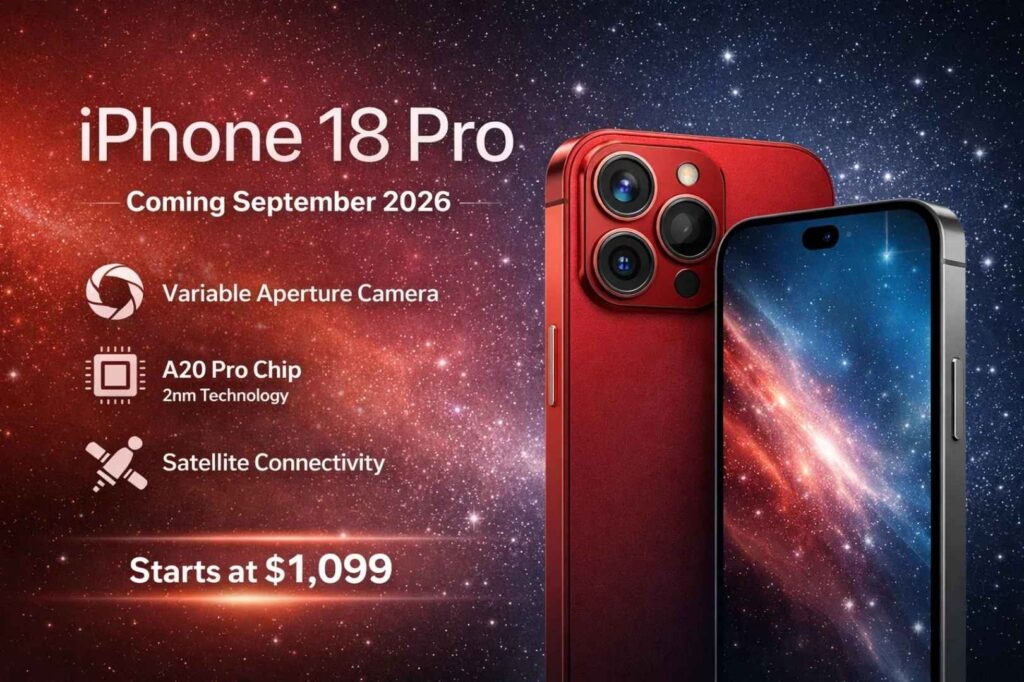
The iPhone 18 Pro is Apple’s flagship smartphone for 2026, expected to launch in September alongside the iPhone 18 Pro Max and Apple’s long-awaited first foldable iPhone. Unlike previous years, Apple is splitting its launch window — the Pro models arrive in fall 2026, while the standard iPhone 18 and iPhone 18e are being pushed to spring 2027. This makes the iPhone 18 Pro the only non-foldable option for anyone wanting a new iPhone in the fall upgrade cycle.
The device continues the Pro line’s titanium-framed design philosophy, introduces a generational chipset upgrade, and finally delivers the mechanical camera innovation photographers have wanted from Apple for years.
Expected pricing: The iPhone 18 Pro is expected to start at approximately $1,099 USD for the 6.3-inch model, with the Pro Max beginning near $1,199 — consistent with iPhone 17 Pro pricing, according to analyst estimates from Ming-Chi Kuo.
Release Date and Expected Price
Apple is widely expected to announce the iPhone 18 Pro and Pro Max at its annual September event in 2026, likely landing on shelves between September 14–21. Pre-orders would open shortly before, with shipping commencing in late September or early October — mirroring the timeline of the iPhone 17 launch.
Pricing looks set to hold steady. Apple has shown a strong pattern of maintaining its Pro entry price year-over-year, and nothing in the current rumor landscape suggests a change. Storage configurations are expected to start at 256GB, with 512GB and 1TB options likely to follow.
| Detail | Expected |
|---|---|
| Launch window | September 2026 |
| Starting price (Pro) | ~$1,099 |
| Starting price (Pro Max) | ~$1,199 |
| Base storage | 256 GB |
Design and Display Upgrades
Apple is not reinventing the physical form factor of the iPhone 18 Pro. The overall silhouette stays consistent with the iPhone 17 Pro, keeping the signature three-camera plateau on the back and the titanium frame that debuted with the iPhone 15 Pro. That said, meaningful refinements are expected throughout.
A noticeably smaller Dynamic Island
The most visible change on the front of the device is likely to be a considerably smaller Dynamic Island. Multiple reliable sources — including leakers ShrimpApplePro and Ross Young of DSCC — indicate that Apple is moving the flood illuminator component of Face ID under the display. This partial under-display Face ID implementation eliminates one of the two pill cutouts currently visible in the Dynamic Island, shrinking it by an estimated 35%. The front camera itself stays in a centrally positioned hole-punch cutout, and the full infrared-based Face ID system will remain fully functional.
Display sizes and brightness
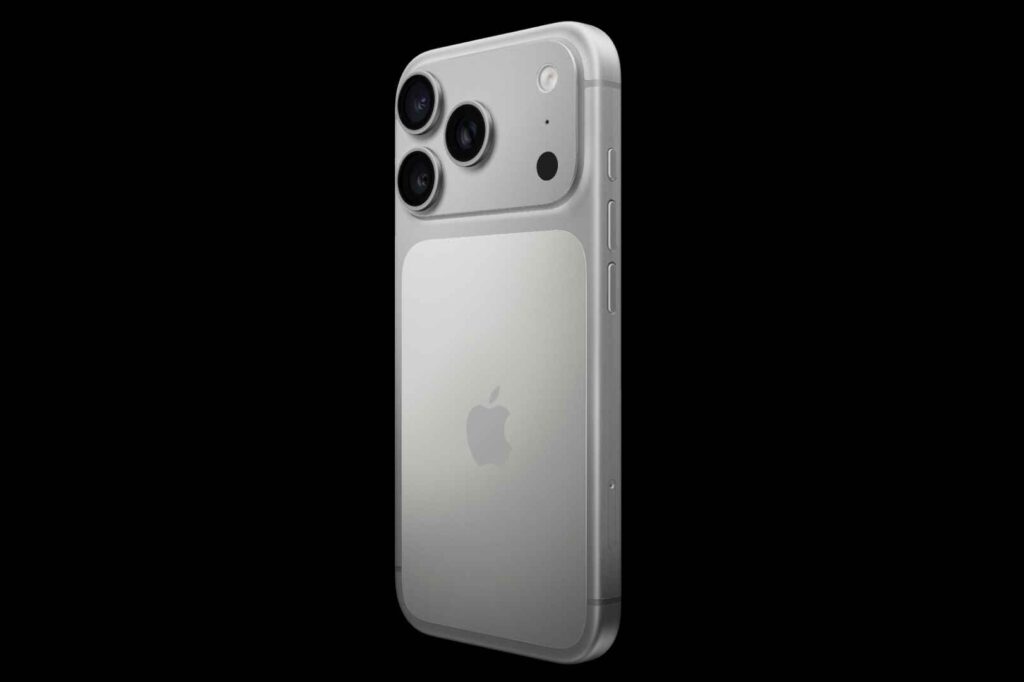
Screen sizes stay at 6.3 inches for the standard Pro and 6.9 inches for the Pro Max — both unchanged from the iPhone 17 Pro lineup. The displays remain LTPO OLED panels with ProMotion at up to 120Hz, capable of dropping as low as 1Hz during static content to conserve battery. Reports suggest Apple has set unusually high brightness requirements for its panel suppliers, hinting at a significant jump in peak HDR brightness beyond the current 3,000 nits ceiling.
New colors — and no black, again
According to Bloomberg’s Mark Gurman and Weibo leaker Instant Digital, Apple is preparing a “deep red” finish for the iPhone 18 Pro — reportedly the first time a true red has been offered on a Pro model. Additional rumored color options include a coffee-toned shade and potentially a burgundy or purple-toned variant. Black, however, will reportedly not return for the second year running. A subtle tweak to the Ceramic Shield section behind the MagSafe charging area may give the back a slightly frosted or semi-transparent appearance, though specifics remain unclear.
Slightly thicker Pro Max
The iPhone 18 Pro Max is expected to be marginally thicker than its predecessor — a deliberate choice to accommodate the larger battery inside. Leaker IceUniverse corroborated this, noting the device may also push past 240 grams, making it the heaviest iPhone ever. The standard iPhone 18 Pro is expected to maintain its current proportions.
A20 Pro Chip — The 2nm Leap
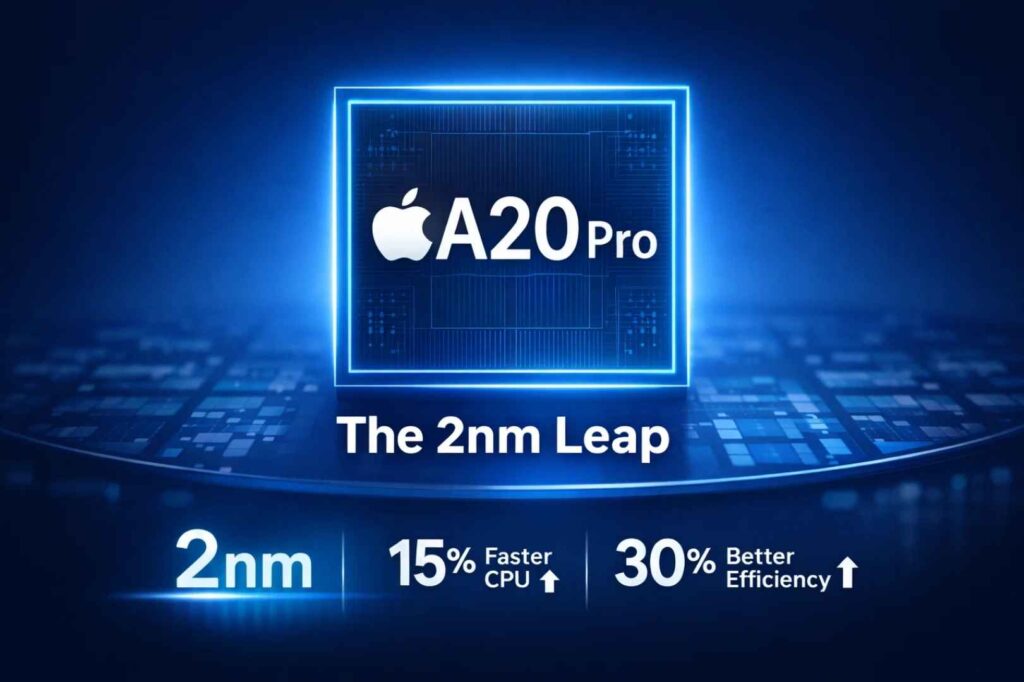
Every year, Apple’s silicon team delivers an upgrade. But the shift from 3-nanometer to 2-nanometer fabrication is one of the more meaningful ones in recent memory. The A20 Pro chip — codenamed “Borneo Ultra” in supply chain reports — will be built on TSMC’s first-generation 2nm process and is expected to deliver around 15% faster CPU performance and approximately 30% better power efficiency compared to the A19 Pro.
| Metric | A19 Pro | A20 Pro |
|---|---|---|
| Process node | 3nm | 2nm |
| CPU speed | Baseline | ~15% faster |
| Power efficiency | Baseline | ~30% better |
| RAM | 8 GB | 12 GB LPDDR5 |
| RAM integration | Separate die | WMCM (on-wafer) |
What makes the A20 Pro particularly interesting beyond raw speed is its new packaging technology. Apple is adopting TSMC’s Wafer-Level Multi-Chip Module (WMCM) design, which integrates the 12GB of LPDDR5 RAM directly onto the same silicon wafer as the CPU, GPU, and Neural Engine. This is a notable departure from the current design where RAM sits adjacent to, but separate from, the main die. The result is faster data access with lower latency — the kind of improvement that benefits AI-driven workloads, camera processing, and real-time computational photography more than raw synthetic benchmarks reveal.
All iPhone 18 Pro models will run iOS 27, which introduces a significantly rebuilt version of Siri. The A20 Pro’s enhanced Neural Engine is the hardware foundation that makes deeper, on-device AI processing possible without the constant cloud dependency that has historically slowed Apple’s AI efforts relative to competitors.
Camera System — Variable Aperture and Beyond
Apple’s camera engineering team has been working toward mechanical variable aperture for years. With the iPhone 18 Pro, it finally arrives — and it changes the fundamental physics of how iPhone photography works.
What variable aperture actually means for you
Every iPhone camera before the 18 Pro has used a fixed aperture. The lens opening never changes, so the camera relies almost entirely on software — computational HDR, tone mapping, Night mode stacking — to compensate for varying lighting conditions. Variable aperture breaks that constraint. Apple’s 48MP main Fusion camera will now feature a mechanical iris, similar to those found in professional DSLR and mirrorless lenses, that can physically narrow or widen the lens opening.
In practical terms, this means three things. In bright sunlight, the aperture can narrow down to reduce overexposure and keep the entire scene crisp without software tricks. In low light, it can open wider to capture significantly more photons, reducing the need for the grainy ISO boosts that Night Mode relies on. The third benefit is optical depth of field — a wider aperture produces a naturally shallower depth of field, creating background blur that is genuinely optical rather than the AI-estimated version used in Portrait Mode today.
Analyst Ming-Chi Kuo confirmed this feature: “The iPhone 18 Pro’s wide camera will upgrade to variable aperture in 2026. BESI is the supplier of assembly equipment for aperture blades, a critical component of this upgrade.”
Three-layer stacked image sensor
Reports from reliable leakers indicate that at least one of the iPhone 18 Pro models will feature a new three-layer stacked image sensor developed by Samsung. Current sensors use two-layer stacking. The third layer adds dedicated memory directly to the sensor stack, which makes read speeds significantly faster. For photographers, this translates to reduced motion blur, faster burst speeds, and less rolling shutter distortion in video.
Telephoto lens improvements
The telephoto system — still a 4x periscope lens in most reports — is getting a larger maximum aperture. A wider opening on a zoom lens means faster shutter speeds become possible even at high magnification levels, which is critical for photographing anything that moves. There are also reports of a teleconverter system being tested internally by Apple, potentially giving the Pro Max an extended optical focal length. Whether that makes it to the final product remains unconfirmed.
Front camera upgrade
All iPhone 18 models — including the Pro — are expected to receive an upgraded 24MP front-facing camera, up from 18MP on the iPhone 17 Pro. Selfie photography and video calls should both see a noticeable quality improvement.
Video capabilities
Reports point to 8K video recording capability at 60 frames per second, along with continued support for ProRes Log recording. The A20 Pro’s processing headroom and the C2 modem’s upload speeds mean that sharing and offloading high-resolution footage will be meaningfully faster than on previous models.
Connectivity — C2 Modem and Satellite Internet
Apple’s in-house modem journey began with the C1 chip in the iPhone 16e. The C1X followed in the iPhone Air. The iPhone 18 Pro will debut the third generation: the C2, and it is the first Apple modem to support mmWave 5G — the high-frequency band that delivers extremely fast speeds in dense urban environments and stadiums but was previously unavailable on Apple’s first-party modems.
The more transformative feature, however, is satellite connectivity. The C2 modem is expected to support NR-NTN — New Radio Non-Terrestrial Networks — a standard that treats satellites effectively like very distant cell towers. This goes well beyond Emergency SOS via Satellite. According to reports, full internet browsing via satellite could be possible on the iPhone 18 Pro, with Apple also planning to allow third-party apps to access the satellite connection. Apple Maps and the Photos app are specifically mentioned as candidates.
Supply chain leaker Fixed Focus Digital noted: “Apple’s C2 baseband will support NR-NTN. Direct-to-satellite connectivity for mobile phones is a major highlight this year… 2026 appears to be the pivotal launch point for satellite connectivity across various smartphone manufacturers.”
The C2 also introduces Wi-Fi 7 and Bluetooth 6 support through Apple’s companion N2 wireless chip, delivering faster local networking speeds and more reliable wireless peripheral connections.
Battery Life Improvements
The iPhone 18 Pro Max is expected to push battery capacity into the 5,100–5,200 mAh range, according to prototype measurements. That’s a meaningful increase over the iPhone 17 Pro Max’s 5,088 mAh (eSIM model) and the first time the Pro Max has crossed the 5,100 mAh threshold.
For the standard iPhone 18 Pro, specific capacity figures haven’t leaked reliably — but the efficiency gains from the 2nm A20 Pro chip are expected to extend real-world battery life regardless. A chip that is 30% more power-efficient means every AI-driven task, camera computation, and background process consumes less energy. Combined with the LTPO+ display’s ability to drop to 1Hz for static content, all-day battery life should be a reliable baseline rather than a conditional one.
iOS 27 and Apple Intelligence
The iPhone 18 Pro will launch with iOS 27, which Apple is expected to preview at WWDC 2026 in June. The headline feature is a comprehensively rebuilt version of Siri. Unlike the incremental improvements that characterized earlier Apple Intelligence updates, the iOS 27 version of Siri is being rebuilt from the ground up with large language model (LLM) technology at its core.
Leaked details suggest Siri may receive a standalone app with a chat-like interface, supporting multi-turn conversations where users can revisit and continue previous interactions — behavior familiar to anyone who has used modern AI chatbots. Voice and text input modes are expected to be interchangeable within the same session. Siri will also reportedly gain the ability to take actions inside third-party apps, and Apple is exploring an “extensions” model that would allow users to install integrations connecting Siri directly to external AI models, including ChatGPT and Gemini.
This is where the A20 Pro’s Neural Engine becomes especially relevant. The 2nm architecture gives Apple the headroom to run meaningfully more sophisticated AI workloads locally — preserving the privacy-first positioning Apple has built while competing with cloud-dependent AI experiences from rivals.
iPhone 18 Pro vs iPhone 17 Pro — Is It Worth Upgrading?
| Feature | iPhone 17 Pro | iPhone 18 Pro |
|---|---|---|
| Chip | A19 Pro (3nm) | A20 Pro (2nm) |
| Main camera | Fixed aperture 48MP | Variable aperture 48MP |
| Front camera | 18MP | 24MP |
| Modem | C1X | C2 (mmWave + satellite internet) |
| Dynamic Island | Standard | ~35% smaller |
| RAM | 8 GB | 12 GB LPDDR5 |
| Siri / AI | Apple Intelligence v1 | iOS 27 rebuilt Siri + LLM |
| Battery (Pro Max) | ~5,088 mAh | ~5,100–5,200 mAh |
| Satellite | Emergency SOS only | Full satellite internet |
| Starting price | $999+ | ~$1,099+ (estimated) |
If you’re on an iPhone 15 Pro or older, the answer is almost certainly yes. The cumulative jump across the chip, camera mechanics, connectivity, and RAM represents two full generational leaps. iPhone 16 Pro owners will find the variable aperture camera and satellite internet compelling but niche enough to consider waiting. iPhone 17 Pro owners are in the most interesting position: the camera and connectivity improvements are genuinely new capabilities — not just performance bumps — which makes the 18 Pro an unusually compelling mid-cycle upgrade.
Conclusion
The iPhone 18 Pro isn’t a revolutionary redesign — it’s a surgical upgrade. The variable aperture camera alone is the kind of hardware shift that doesn’t come around every year. Combined with the 2nm chip, satellite internet, and a rebuilt Siri, it earns its price for power users and photographers. For casual iPhone owners on a recent model, waiting another cycle is entirely reasonable.
Frequently Asked Questions
Apple is expected to announce the iPhone 18 Pro and Pro Max at its fall 2026 event, with a likely release window of September 14–21, 2026. Pre-orders are expected to open in mid-September, with shipping starting in late September or early October.
The variable aperture camera is the standout new capability. It allows the main 48MP lens to mechanically open and close its iris, giving photographers genuine hardware control over depth of field and light intake — a feature not previously available on any iPhone.
Yes. Apple is expected to shrink the Dynamic Island by approximately 35% by moving some Face ID sensor components under the display glass. The selfie camera remains visible, but the overall cutout is significantly less intrusive.
The iPhone 18 Pro will use the A20 Pro chip, built on TSMC’s 2-nanometer process. It is expected to be around 15% faster and 30% more power-efficient than the A19 Pro, with 12GB of LPDDR5 RAM integrated using a new WMCM packaging design.
Yes. The new C2 modem is expected to support NR-NTN (satellite-based cellular standards), enabling full internet connectivity via satellite — not just emergency SOS. Third-party apps may also be able to access this connection.
The most-leaked new color is a deep red finish, with possible additions including a coffee-toned and a burgundy or purple-toned option. Black is not expected to return for the second consecutive year.
No. Apple is breaking from its usual four-model fall launch. The standard iPhone 18 and iPhone 18e are expected to arrive in spring 2027. Only the Pro, Pro Max, and foldable iPhone are planned for September 2026.
Based on analyst estimates and Apple’s historical pricing patterns, the iPhone 18 Pro is expected to start at approximately $1,099 for the 6.3-inch model and $1,199 for the 6.9-inch Pro Max. Final pricing has not been confirmed by Apple.
Also read:
- Best iPhone 17e Cases to Buy Now
- iPhone Not Making Calls? Here’s How You Can Fix It
- Apple Shuts Down Payments in Russia, Users Cut Off from App Store Purchases