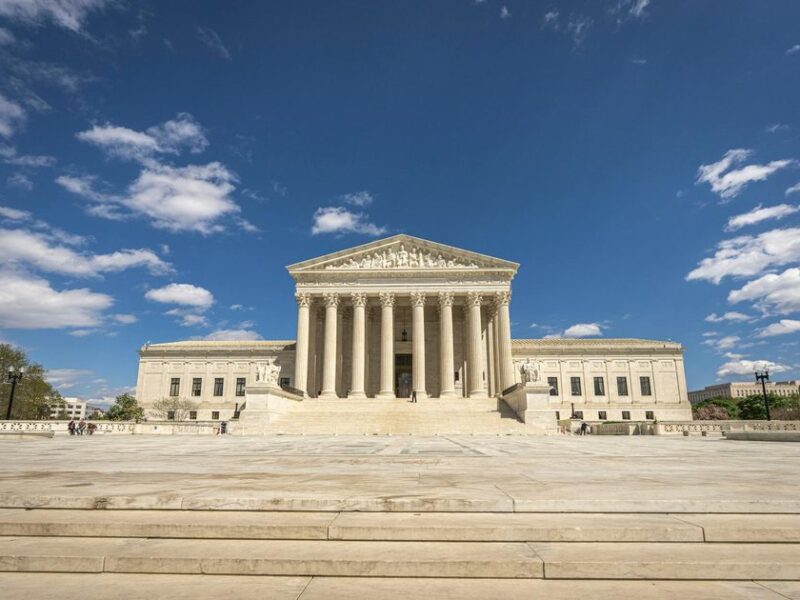
A Collin County jury found Karmelo Anthony guilty of murder on Tuesday afternoon and sentenced the 19-year-old to 35 years in prison for fatally stabbing 17-year-old Austin Metcalf at a high school track meet in Frisco, Texas, in April 2025. The verdict was delivered at the Collin County Courthouse in McKinney, Texas, after three hours of deliberation that began midday on June 9, 2026.
In This Article
- Jury Deliberations and Verdict at Collin County Courthouse
- 35-Year Sentence After Sudden Passion Claim Rejected
- Witness Testimony and Evidence Presented Over Four Days
- Emotional Victim Impact Statements from Metcalf Family
- Public Reaction and District Attorney Statement
- Frequently Asked Questions
- Conclusion
The case drew national attention from its inception, compounded by a wave of misinformation and racially charged commentary on social media. Anthony is Black, and Metcalf was white. State District Judge John Roach Jr. imposed a gag order restricting public statements by those involved and barred electronics from the courtroom throughout the trial.
Prosecutors called the stabbing senseless and argued that Anthony provoked the confrontation. The defense countered that Anthony acted in self-defense after being pushed by Metcalf under a team tent during a rainy track meet at a Frisco Independent School District stadium on April 2, 2025.
Jury Deliberations and Verdict at Collin County Courthouse
The 12-person jury began deliberating late Tuesday morning following closing arguments from both sides. Judge Roach instructed jurors that they could also consider a lesser charge of manslaughter, which carries a maximum sentence of 20 years in prison.
After approximately two hours and 20 minutes of deliberation, the jury returned a guilty verdict on the murder charge. The same jury then moved immediately to the punishment phase to determine Anthony’s sentence.
Collin County First Assistant District Attorney Bill Wirskye told jurors during closing arguments that the stabbing was unjustified murder, not self-defense. Wirskye argued that Anthony provoked Metcalf, questioned why the defendant did not simply walk away, and described the stabbing as disproportionate.
“You don’t get to meet a shove with a stab, especially if you provoke the shove,” Wirskye said, according to ABC News reporting from the courtroom.
Defense attorney Mike Howard maintained that Anthony went to the Memorial High School tent to get out of the rain when Metcalf confronted him and told him to leave. Howard argued that Anthony acted in fear and chaos after Metcalf pushed him and that the stabbing was self-defense. Howard told jurors that Metcalf had no legal right to use force on Anthony.
35-Year Sentence After Sudden Passion Claim Rejected
The murder charge carried a sentencing range of five years to life in prison. The state agreed to allow jurors to consider sudden passion, a legal designation that, if proven, would have limited the sentence to between two and 20 years.
The sudden passion claim required the defense to prove that Anthony was overwhelmed by a strong emotion and acted before having time to calm down. The jury rejected this argument.
After several more hours of deliberation on Tuesday, the jury sentenced Anthony to 35 years in prison. He will be eligible for parole after serving half of that time, approximately 17 and a half years.
Anthony’s mother was the only person to testify during the punishment phase. She asked jurors to show her son mercy and stated that he was sorry for what he did, according to ABC Dallas affiliate WFAA. Judge Roach confirmed that Anthony waived his right to testify during the punishment phase.
Anthony could be seen crying when he returned to the courtroom for the punishment phase after being remanded to the custody of the sheriff’s office. Similar instances of emotional courtroom moments have occurred in other high-profile cases, such as when a defendant was convicted on nine counts in a Chattanooga crash earlier this year.
Witness Testimony and Evidence Presented Over Four Days
Jurors heard testimony over four days of trial. Anthony did not take the stand in his own defense. Multiple students who attended the track meet testified about the altercation, though their accounts varied on key details.
Some witnesses described Metcalf pushing Anthony with two hands, like a lineman move. Others characterized it as a one-handed small shove. One witness testified that Anthony was asked to leave the tent approximately 15 times.
Several witnesses recalled Anthony saying, ‘Touch me and see what happens,’ during the altercation, which lasted about four to six minutes. Another witness quoted Metcalf as telling Anthony, ‘I’m not going to fight you.’
Surveillance footage from the track meet played in court did not capture the stabbing itself. Some witnesses were asked to demonstrate the incident for the jury.
After the stabbing, witnesses said Anthony jogged away from the tent. A coach who spoke to him on the track testified that Anthony said, ‘He put his hands on me. I stabbed him.’
A pocket knife used in the stabbing was found on the bleachers. Collin County Medical Examiner Dr. Elizabeth Ventura testified that Metcalf was stabbed on the left side of his chest and that the knife perforated his right ventricle.
Several people testified about efforts to save Metcalf’s life. A football coach helping at the track meet said he applied pressure to the stab wound. Memorial High School’s athletic trainer performed CPR until paramedics arrived. Memorial High School head track coach Robert Starr gave emotional testimony, saying, “Everybody was praying. I just knew Austin was gone.”
Metcalf was transported to an area hospital, where he was pronounced dead. Like other cases involving serious violent crimes that resulted in convictions, the prosecution relied heavily on witness testimony and physical evidence to secure a guilty verdict.
Emotional Victim Impact Statements from Metcalf Family
After the jury was escorted from the courtroom, members of Austin Metcalf’s family delivered victim impact statements directly addressing Anthony. Meghan Metcalf, Austin’s mother, described a once-happy home filled with laughter that has grown quiet since her son’s death.
She recalled hugging him on the morning of the track meet, unaware it would be the last time she would see him. “We will never know what our future could have been,’ she said. ‘For journalists, activists, this is a story. For our family, this is our reality.”
Meghan Metcalf told Anthony he should feel lucky to have received 35 years because she had been sentenced to a lifetime without her son. Anthony kept his head low for much of her remarks, appearing not to look toward her.
Jeff Metcalf, Austin’s father, spoke next as a slideshow of photos from the twins’ childhood played in the courtroom, featuring birthday parties, fishing trips, and football games. He described how his son’s death destroyed the person he used to be.
“People think grief is sadness. It’s not. It’s rage. Pure, unfiltered rage,” he said, slamming his fist on the witness stand with enough force that some people in the courtroom jumped. “It’s trauma. It’s replaying every detail until you feel physically sick.”
Jeff Metcalf also revealed that he and his wife had been targeted by swatting calls, fake 911 reports meant to draw a large police response. He said he had been targeted six times and his wife twice.
“With a gag order, I can’t defend myself when people want to tear down my son’s memory. That time is over,’ he said. ‘I said from Day 1 this was never about race. It’s about right and wrong. We are all humans. We all bleed the same color. You will face those consequences starting today.”
Hunter Metcalf, Austin’s twin brother, asked Anthony to look him in the eye and said he would really respect that. He said he has been trying to learn how to forgive and has chosen faith while trying to understand why his brother and best friend was taken from the world.
‘Now I want everything taken from you,’ he told Anthony. “You took everything from me. I wake up every morning and his door is still shut.”
Austin Metcalf’s aunt was also among those who addressed Anthony, saying April 2, 2025, is a day she will never forget. ‘The impact of his death is permanent,’ she said.
Public Reaction and District Attorney Statement
A crowd gathered outside the Collin County Courthouse ahead of the verdict being read on June 9, 2026. Tense moments occurred between people with differing opinions about the case, with some shouting in the faces of others. One group carried signs reading ‘Justice 4 Austin.’
Police and deputies were positioned at barricades in front of the courthouse to maintain order. Authorities later used vehicles to create further distance between the crowd and the building.
Collin County District Attorney Greg Willis held a press conference following the sentencing. “Today, justice was served. A year ago, when this senseless murder unfolded, I said that it had struck a deep nerve in Collin County and far beyond,’ Willis said. ‘I asked our community to ignore all the noise and instead be levelheaded and patient as the process worked. And today, the process delivered accountability.”
Willis added that the verdict sends a clear message. “Violence like this won’t be tolerated in our Collin County community. And we remain committed to protecting our school and standing with victims and their families.”
Frisco Independent School District released a statement reacting to the verdict. “We respect the judicial process and will continue to support our students with compassion and care,’ the statement read. ‘We know this trial has brought strong emotions and deep grief, and we ask that our community continue to support each other with respect, sensitivity and understanding.”
The case bears similarities to other high-profile criminal trials that have generated significant public attention, including instances where prosecutors sought immediate prison sentences following convictions.
Frequently Asked Questions
What was Karmelo Anthony convicted of in the Frisco track meet stabbing case?
Karmelo Anthony was convicted of murder by a Collin County jury on June 9, 2026, for the fatal stabbing of 17-year-old Austin Metcalf at a Frisco Independent School District track meet on April 2, 2025. The jury deliberated for approximately three hours before returning the guilty verdict. Anthony, who was 17 at the time of the incident but is now 19, was sentenced to 35 years in prison and will be eligible for parole after serving half of that sentence.
Why did the defense claim self-defense in the Karmelo Anthony trial?
Defense attorney Mike Howard argued that Anthony acted in self-defense after Austin Metcalf confronted him and pushed him while he was seated on bleachers under a team tent during a rainy track meet. Howard claimed Anthony went to the Memorial High School tent to get out of the rain, and that Metcalf had no legal right to use force on him. The defense maintained that Anthony acted out of fear and chaos in a split second. However, prosecutors argued that Anthony provoked the confrontation and used disproportionate force by stabbing an unarmed victim.
What happens to Karmelo Anthony after his 35-year sentence?
Karmelo Anthony will remain in the custody of the Collin County Sheriff’s Office until he is transferred to the Texas Department of Corrections to begin serving his 35-year prison sentence. Under Texas law, he will be eligible for parole consideration after serving half of his sentence, which would be approximately 17 and a half years. The murder charge carried a sentencing range of five years to life in prison, but the jury rejected the sudden passion claim that could have reduced his maximum sentence to 20 years.
Conclusion
The conviction and 35-year sentence handed down to Karmelo Anthony marks the conclusion of a case that gripped Collin County and drew national scrutiny. The jury’s rejection of both the self-defense argument and the sudden passion claim reflects its determination that Anthony’s actions on April 2, 2025, constituted unjustified murder.
The victim impact statements from the Metcalf family underscored the permanent devastation caused by the loss of Austin Metcalf, an 11th grader with his entire future ahead of him. While Anthony will have the possibility of parole after serving half his sentence, the Metcalf family faces a lifetime without their son and brother, a reality they made clear in their emotional courtroom testimony.

Trust Post Desk
A journalist and editor at TrustPost.org covering world and national news, technology updates and human-interest stories. They check every fact, interview sources in person or online, and aim to deliver clear, accurate reporting. Their work ranges from breaking news to in-depth features and daily newsletters. Outside the newsroom, they follow emerging trends and engage with readers on social media.