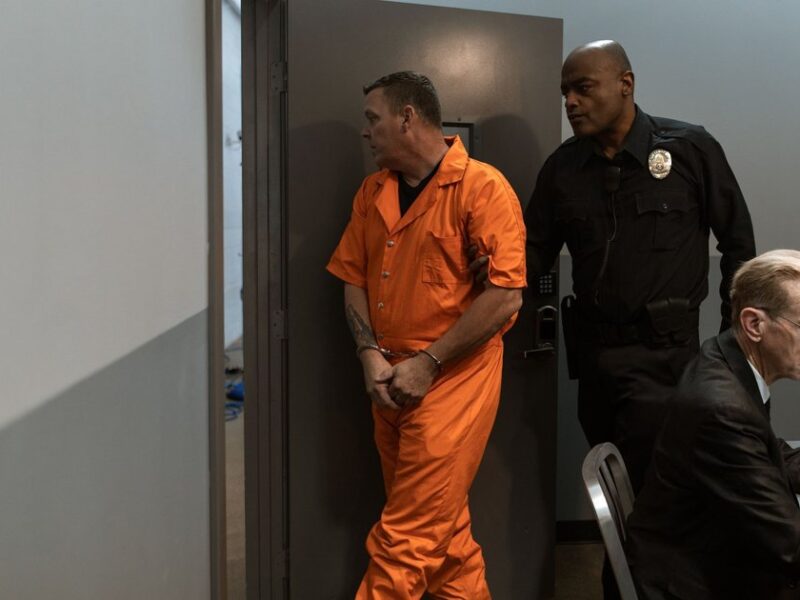
The intricate framework governing supervised release and probation revocation in the federal justice system is meticulously outlined in Federal Rule of Criminal Procedure 32.1. This rule establishes the procedural safeguards and evidentiary standards that dictate how courts address alleged violations of release conditions, ultimately determining whether an individual’s liberty will be curtailed.
Understanding these procedures is crucial for anyone navigating the complexities of criminal law, as they balance the government’s interest in enforcing court-ordered conditions with an individual’s fundamental due process rights. The rule, shaped by landmark Supreme Court decisions such as *Morrissey v. Brewer* and *Gagnon v. Scarpelli*, ensures that individuals facing potential revocation are afforded specific protections, even when the traditional rules of evidence are relaxed.
This article examines the specific stages of a supervised release revocation proceeding, from the initial appearance to the final sentencing decision. It examines how factual evidence is presented and evaluated, and the rights afforded to individuals throughout this critical legal process, which can profoundly impact their freedom.
Initial Appearance and Preliminary Hearing Procedures
When an individual is taken into custody for an alleged violation of probation or supervised release, Federal Rule of Criminal Procedure 32.1(a) mandates that they be brought before a magistrate judge without unnecessary delay. This initial appearance serves to inform the person of the alleged violation, their right to retain counsel or have one appointed, and their right to a preliminary hearing if they remain in custody.
The preliminary hearing, governed by Rule 32.1(b)(1), is a prompt proceeding designed to determine if there is probable cause to believe a violation has occurred. During this hearing, the individual receives notice of its purpose and the specific alleged violation. They are afforded an opportunity to appear, present evidence, and, upon request, question any adverse witnesses, unless the judge determines that the interest of justice does not require the witness to appear.
If the magistrate judge finds probable cause, the case proceeds to a revocation hearing. If no probable cause is found, the proceedings are dismissed. The individual bears the burden of establishing by clear and convincing evidence that they will not flee or pose a danger to others or the community if released pending further proceedings, as specified in Rule 32.1(a)(6).
The Revocation Hearing and Evidentiary Standards
Following a finding of probable cause or a waiver of the preliminary hearing, the court must hold a revocation hearing within a reasonable time in the district with jurisdiction, as outlined in Federal Rule of Criminal Procedure 32.1(b)(2). This hearing is the definitive stage where the court determines whether a violation of supervised release or probation conditions actually occurred and whether revocation is warranted.
At this crucial juncture, the individual is entitled to several key rights. These include written notice of the alleged violation, disclosure of all evidence against them, an opportunity to appear and present their own evidence, and the right to question adverse witnesses unless the court finds a compelling reason to limit this. They also have the right to counsel and an opportunity to make a statement and present any information in mitigation of the alleged violation.
A significant aspect of revocation hearings is the relaxed evidentiary standard. Unlike a criminal trial where guilt must be proven beyond a reasonable doubt using strict rules of evidence, Rule 32.1 permits the court to consider evidence that would not typically be admissible in an adversarial criminal trial. This can include letters, affidavits, and other materials, reflecting the hearing’s purpose as an administrative proceeding rather than a new criminal prosecution. The court’s focus is on whether a violation occurred and if it warrants revocation, not on establishing guilt beyond a reasonable doubt for a new offense. This approach underscores the importance of all available facts, even those not meeting formal trial standards, in informing the court’s decision.
Furthermore, Rule 32.1(e) incorporates Federal Rule of Criminal Procedure 26.2, which requires the production of witness statements if a witness testifies. Failure to comply with an order to produce such a statement means the court must not consider that witness’s testimony, ensuring a degree of fairness in assessing credibility. This procedural safeguard is vital for individuals facing potential revocation, as it allows for a more robust challenge to adverse testimony. For instance, in cases involving allegations of new criminal activity, the ability to review prior statements can be critical, similar to how defense attorneys might approach a John Boltons expected guilty plea scenario, where evidentiary details are paramount.
Determining Revocation and Sentencing
The court’s ultimate disposition of a supervised release or probation revocation case is governed by specific statutes: 18 U.S.C. §§3563 and 3565 for probation, and 18 U.S.C. §3583 for supervised release. These statutes provide the legal framework for the court to decide whether to revoke supervision and, if so, what sentence to impose. The decision to revoke is not automatic upon a finding of a violation; rather, the court must determine if the violation warrants such a severe consequence.
When considering revocation and subsequent imprisonment, the court evaluates the facts of the original offense and the individual’s intervening conduct while on supervision. The court may find revocation and imprisonment appropriate if it determines that confinement is necessary to protect the public from further criminal activity, if the individual requires correctional treatment best provided through confinement, or if not revoking supervision would unduly diminish the seriousness of the violation. These considerations highlight how the court uses a comprehensive review of an individual’s history and current behavior to inform its sentencing decision.
If supervised release is revoked, the court has the authority to impose a new term of imprisonment, which may include the sentence originally imposed or any lesser sentence. This flexibility allows the court to tailor the consequences to the specific facts and circumstances of the violation, as well as the individual’s overall conduct. The legal processes involved in these decisions underscore the importance of due process, a principle also central to the operations of the International Criminal Court in addressing serious global offenses.
Due Process Protections and Liberty Interests
The procedural requirements enshrined in Federal Rule of Criminal Procedure 32.1 are not mere formalities; they represent a fundamental commitment to due process in proceedings that directly threaten an individual’s liberty. The Supreme Court’s decisions in *Morrissey v. Brewer*, 408 U.S. 471 (1972), and *Gagnon v. Scarpelli*, 411 U.S. 778 (1973), established that individuals on parole or probation are entitled to certain constitutional protections before their conditional liberty can be revoked. These rulings rejected the notion that probation or supervised release is solely an act of grace, affirming that individuals possess a protected liberty interest.
The rule’s provisions for notice, the right to counsel, the opportunity to present evidence, and the ability to confront adverse witnesses are direct outgrowths of these constitutional mandates. These safeguards are particularly vital given the relaxed evidentiary standards in revocation hearings, where evidence not admissible in a criminal trial can be considered. The balance struck by Rule 32.1 aims to ensure that while the court can efficiently address violations, it does so with fairness and respect for individual rights.

Trust Post Desk
A journalist and editor at TrustPost.org covering world and national news, technology updates and human-interest stories. They check every fact, interview sources in person or online, and aim to deliver clear, accurate reporting. Their work ranges from breaking news to in-depth features and daily newsletters. Outside the newsroom, they follow emerging trends and engage with readers on social media.