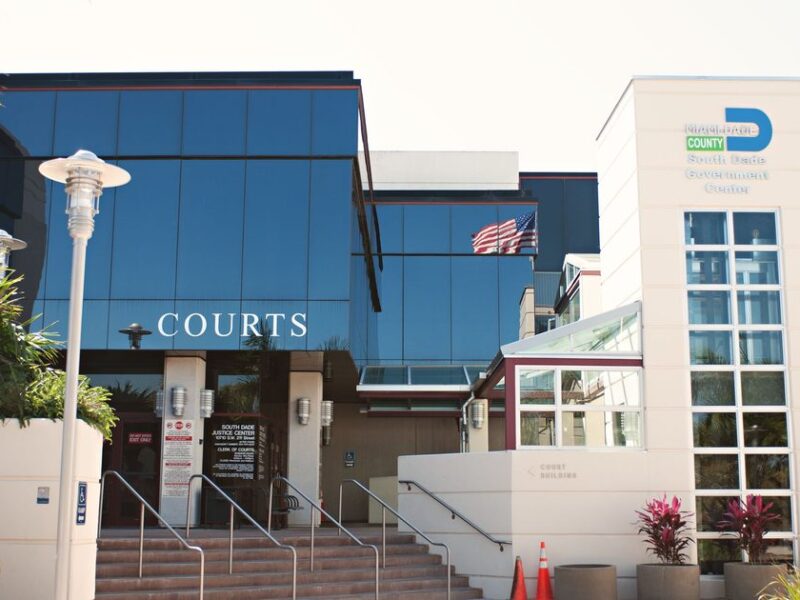
Im Woo-jae, a former adviser to Samsung Electro-Mechanics, was released from custody after the Seoul High Court issued a suspended sentence in his appeal for involvement in the confinement and assault of an elderly woman. The decision, handed down on Tuesday, June 23, 2026, by the Seoul High Court’s Criminal Division 13, presided over by Judge Kim Moo-shin, overturned a lower court’s ruling that had previously sentenced him to one year in prison and led to his immediate detention.
The appeals court sentenced Im to one year in prison, suspended for two years, on charges including aggravated special confinement resulting in injury. This outcome marks a significant shift from the first trial’s finding of co-principal liability, reclassifying his role to that of an aider in the complex scheme.
Seoul High Court Reclassifies Im Woo-jae’s Role
The Seoul High Court’s Criminal Division 13, under Presiding Judge Kim Moo-shin, delivered its pivotal ruling on Tuesday, June 23, 2026. This decision fundamentally altered the legal assessment of Im Woo-jae’s involvement in the case, moving from a finding of co-principal liability to that of an aider.
In legal terms, a ‘co-principal’ is someone who jointly carries out a crime with others, sharing the intent and responsibility for the entire offense. An ‘aider,’ by contrast, is an individual who facilitates or assists the principal perpetrator in committing a crime, often without the same level of direct intent or full knowledge of the entire scheme. The court explicitly stated, “Based solely on the evidence submitted by the prosecutor, it is difficult to conclude that it was proven beyond reasonable doubt that he had the intent to jointly carry out the crime with the main perpetrator.”
This reclassification was central to the appeals court’s decision to issue a suspended sentence. While acknowledging that Im “appears to have recognized, at least conditionally, that the missing-person report was false,” the court found it more appropriate to recognize him as an aider, considering his role in facilitating the principal’s crime without direct participation in the false report itself or gaining any personal benefit.
Background of the Confinement and False Report Case
The charges against Im Woo-jae stemmed from an incident that occurred in Yeoncheon County, Gyeonggi Province, in April last year. The case involved the unlawful confinement and assault of a woman in her 80s, orchestrated by a person identified as ‘A’, a shaman who was reportedly Im’s romantic partner.
According to prosecutors, ‘A’ initiated the scheme due to a conflict with the victim’s son, identified as ‘B’. ‘A’ exerted psychological influence over the victim’s grandson, leading to the elderly woman’s confinement and assault. As part of the broader plot to obstruct official duties and avoid punishment after the victim escaped and reported the incident, ‘A’ used ‘B’s granddaughter to file a false missing-person report and fabricate a suicide note.
Im Woo-jae’s specific involvement, as determined by the courts, was transporting the granddaughter by vehicle during the staging of the false missing-person report. The first trial in December last year found him guilty, recognizing his co-principal liability for this involvement, leading to a one-year prison sentence and immediate detention in court. The Seoul High Court’s decision follows a trend of detailed judicial review in complex cases, similar to how the Hampshire Supreme Court Ruling Triggers Retrial for Adam Montgomery in a high-profile death case.
Legal Arguments and Appeals Court Rationale
During the appeals hearing held last month, prosecutors had advocated for upholding the initial one-year prison sentence, arguing for the dismissal of the defense’s appeal on charges of special aggravated confinement causing injury. They sought to maintain the first-instance ruling, which had found Im to be a co-principal in the false missing-person report and the fake suicide drama.
Im’s defense counsel, however, vehemently denied the charges of co-principal liability and requested an acquittal. They argued that the first-instance ruling’s reasons for finding conspiracy from the beginning were difficult to accept, citing a misapplication of law and an unjust sentencing. The defense emphasized that Im’s involvement was limited to “getting into the car and handing over [the granddaughter],” asserting that this alone was insufficient to establish conspiracy or co-principal liability. This reevaluation of criminal liability highlights the nuanced approach courts take, much like the US Supreme Court Unanimously Votes in complex corporate disputes.
The appeals court, in its explanation for the suspended sentence, acknowledged that “even if recognized as an aider, the degree of involvement is not light.’ However, it critically noted that Im ‘did not act with full knowledge of the entire scheme, nor did he directly participate in the false missing-person report itself. He also gained no benefit from the crime.” This careful distinction between direct participation and facilitation, coupled with the lack of full knowledge or personal gain, was pivotal in the court’s decision to reduce the severity of the sentence and suspend its execution. The defense’s arguments against co-principal liability underscore the importance of proving direct intent, a principle often debated in various jurisdictions, including in cases where the Police Body Camera Footage Must Be Reconsidered for public release to establish facts.
Implications of the Appellate Ruling
The Seoul High Court’s decision to reclassify Im Woo-jae’s role from a co-principal to an aider carries significant legal implications. This distinction is crucial in criminal law, as it directly impacts the level of culpability and, consequently, the sentencing. The court’s detailed reasoning underscores the judiciary’s commitment to meticulously assessing the extent of an individual’s involvement in a crime, particularly when multiple parties are implicated in a complex scheme. It highlights that mere facilitation, without full knowledge or direct intent to execute the core offense, can lead to a different legal outcome than direct, intentional participation.
This ruling serves as a reminder of the rigorous evidentiary standards required to prove criminal intent and joint liability beyond a reasonable doubt in South Korean courts. The appellate process provides a vital mechanism for reviewing initial findings and ensuring that sentences accurately reflect the proven degree of involvement. The legal proceedings in Seoul demonstrate the meticulous process of appeals, which can lead to significant changes from initial verdicts, as seen in other jurisdictions where Alexandria Court Issues Preliminary Death Sentence in serious cases, which often undergo multiple levels of review.

Trust Post Desk
A journalist and editor at TrustPost.org covering world and national news, technology updates and human-interest stories. They check every fact, interview sources in person or online, and aim to deliver clear, accurate reporting. Their work ranges from breaking news to in-depth features and daily newsletters. Outside the newsroom, they follow emerging trends and engage with readers on social media.