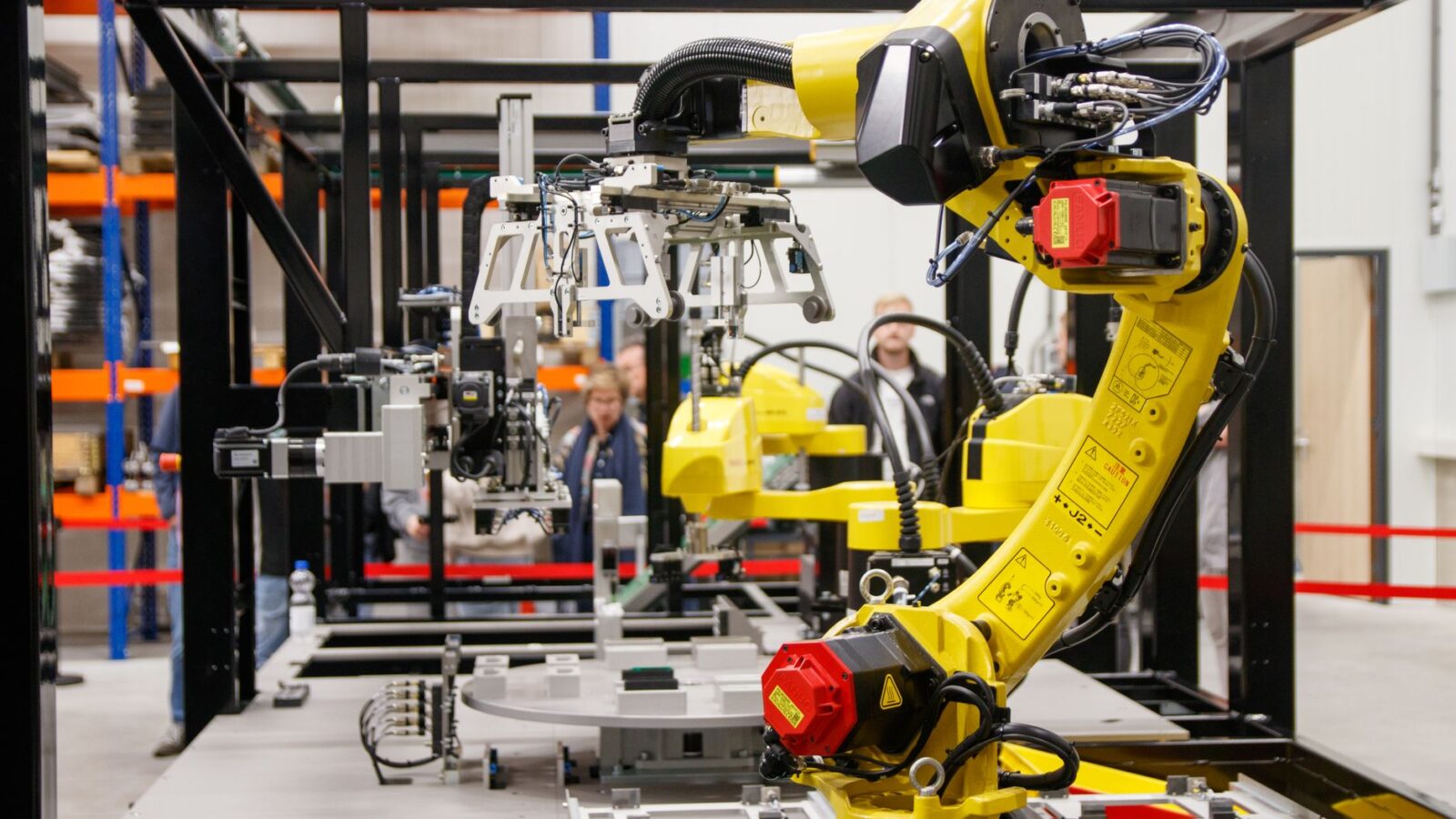
NVIDIA launched Cosmos 3 on June 1, 2026, introducing an open world foundation model that brings together vision reasoning and physical AI in one system.
Cosmos 3 is the world’s first fully open omnimodel capable of natively generating text, images, video, ambient sound, and physical action predictions.
What NVIDIA Cosmos 3 Does for Physical AI
Cosmos 3 is designed to train and evaluate physical AI systems such as robots and autonomous vehicles without months of real-world data collection.
The model reduces physical AI training cycles from months to days by generating synthetic environments that accurately simulate real-world physics.
Per NVIDIA’s press release, Cosmos 3 uses a breakthrough mixture-of-transformers architecture combining vision reasoning, world generation, and action prediction.
The Mixture-of-Transformers Architecture Explained
Mixture-of-Transformers routes different input types to specialized expert sub-networks, allowing one model to handle vision, language, and action together.
This approach is more efficient than running separate models for each modality, reducing compute costs for robotics and AV developers significantly.
As HPCwire’s coverage reported, the architecture delivers leading physics accuracy, meaning simulated training environments reflect how objects actually behave in the real world.
NVIDIA Cosmos Coalition and Industry Partners
NVIDIA launched the Cosmos Coalition alongside the model, a global collaboration advancing next-generation world models for physical AI applications.
Founding coalition partners include Agile Robots, Black Forest Labs, Generalist, LTX, Runway, and Skild AI working on diverse use cases.
The coalition model mirrors how NVIDIA built its CUDA ecosystem, creating a network of partners that deepen reliance on NVIDIA infrastructure.
Real-World Applications: Robots and Autonomous Vehicles
Robotics companies can now generate vast synthetic training datasets using Cosmos 3 instead of spending months collecting real-world sensor data.
Autonomous vehicle developers benefit from simulated edge cases, rare accidents, and adverse weather conditions generated at scale by the model.
This connects directly to our Uber Madrid robotaxi coverage, where realistic synthetic training is essential for urban robotaxi deployments in new cities.
Cosmos 3 vs Other Foundation Models for Robotics
Unlike language models, Cosmos 3 outputs actions that can be executed directly by robotic systems, bridging simulation and physical deployment.
Google DeepMind’s RT-2 and Boston Dynamics’s ongoing projects are the nearest competitors, but neither offers a fully open omnimodal approach.
The open release strategy differentiates Cosmos 3 from proprietary robotics AI, much like the open AI approach explored in our AI agents replacing jobs coverage.
What Cosmos 3 Means for AI Development Timelines
Developers who previously needed 12-18 months of hardware testing and data collection can now compress early development cycles to weeks.
According to Axios’s breakdown, NVIDIA sees Cosmos 3 as foundational infrastructure, not just a tool, positioning it as the PyTorch of physical AI.
This timeline compression is expected to accelerate humanoid robot commercialization significantly, with first deployments moving from 2027 to 2026.
NVIDIA is expected to add agricultural robotics and medical device firms to the Cosmos Coalition throughout the remainder of 2026.

Trust Post Desk
A journalist and editor at TrustPost.org covering world and national news, technology updates and human-interest stories. They check every fact, interview sources in person or online, and aim to deliver clear, accurate reporting. Their work ranges from breaking news to in-depth features and daily newsletters. Outside the newsroom, they follow emerging trends and engage with readers on social media.