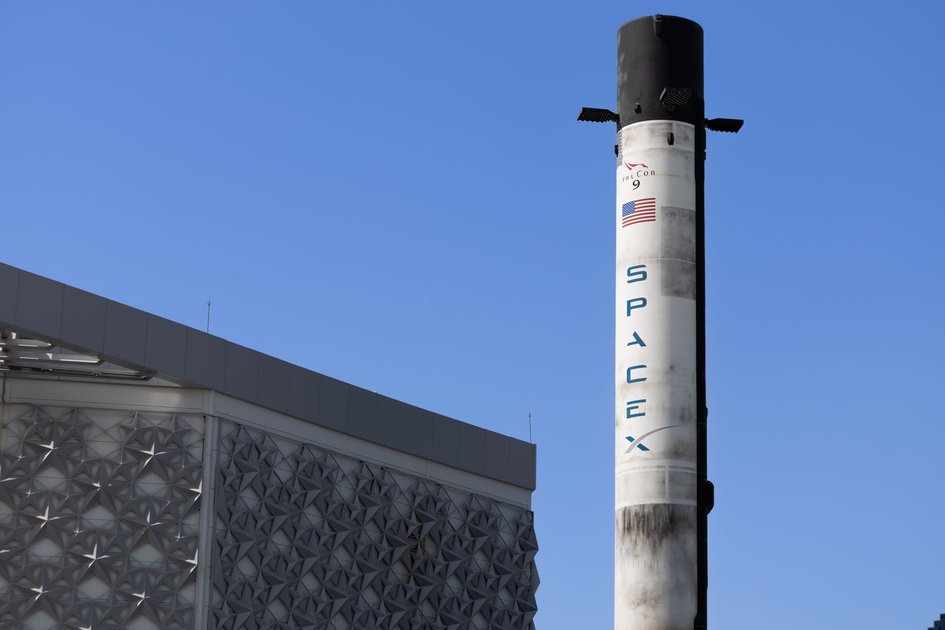
In a historic moment for both the technology industry and the global financial markets, SpaceX made its long-awaited public debut on the Nasdaq stock exchange on June 13, 2026, instantly propelling Elon Musk past a threshold no individual has ever crossed – a net worth exceeding one trillion dollars. The company’s shares surged 19% on opening day, valuing SpaceX at approximately $2.1 trillion and cementing its position as one of the most valuable publicly traded companies on earth. The IPO has been one of the most anticipated market events of the decade, with institutional investors oversubscribing the offering several times over and retail investors competing furiously for allocations through brokerage platforms.
SpaceX’s journey to this moment has been one of the defining business stories of the past two decades. Founded in 2002 by Elon Musk with the explicit long-term goal of making humanity a multi-planetary species, the company spent years burning through capital on failed rocket tests before the Falcon 1 became the first privately developed liquid-fueled rocket to reach orbit in 2008. Since then, the company has achieved what most industry observers once considered impossible: it has made orbital rocketry routine, dramatically reduced launch costs, and built the world’s largest satellite internet constellation – all while maintaining a culture of relentless technical ambition that distinguishes it from every other aerospace company on the planet.
What SpaceX’s $2 Trillion Valuation Actually Represents
To understand how SpaceX commands a $2 trillion valuation, you need to look at the full scope of its revenue-generating operations. The company is not one business but three deeply intertwined ones: a launch services provider that has become the world’s dominant commercial rocket company, a satellite internet service provider (Starlink) with millions of paying subscribers worldwide, and a rocket manufacturer that builds the most advanced reusable orbital rockets in history. Taken together, these businesses generate billions in annual revenue and are positioned to grow substantially over the coming decade as both launch demand and satellite internet penetration continue to increase globally.
Starlink alone is the sleeper valuation driver that most casual observers underestimate. The satellite internet constellation now has over four million subscribers in more than 100 countries, generating recurring subscription revenue that provides the financial foundation for SpaceX’s ongoing capital investments in Starship and next-generation manufacturing. In markets where terrestrial internet infrastructure is unreliable or absent – rural America, developing world regions, maritime and aviation applications – Starlink has become an infrastructure utility rather than a consumer luxury, and infrastructure utilities command premium valuations.
- Launch services: SpaceX’s Falcon 9 rocket completed more orbital launches in 2025 than all other launch providers in the world combined, serving commercial satellite operators, NASA, the US Department of Defense, and its own Starlink constellation deployments.
- Starlink revenue: Subscription revenue from residential, maritime, aviation, and enterprise Starlink customers is estimated at several billion dollars annually, growing as coverage expands and new market segments are developed.
- Starship program: The fully reusable Starship mega-rocket, which has now completed multiple successful orbital test flights, represents the company’s bet on dramatically reducing launch costs further and enabling missions to the Moon and Mars that no other vehicle can currently perform.
- Government contracts: NASA has contracted SpaceX for Crew Dragon astronaut transport, the Human Landing System lunar lander variant of Starship, and multiple cargo resupply missions – a portfolio of government revenue that provides stability alongside the commercial business.
Elon Musk Becomes the World’s First Trillionaire
For Musk, whose net worth is spread across SpaceX, Tesla, xAI, X (formerly Twitter), and The Boring Company, the SpaceX IPO closing price puts his total estimated wealth above $1 trillion for the first time. The milestone is both extraordinary and somewhat arbitrary – net worth calculations for individuals with concentrated positions in illiquid or thinly-traded securities are imprecise, and Musk’s actual liquid wealth is a fraction of the headline figure. Nevertheless, the symbolic significance of the threshold is real: no individual human being has ever commanded this level of paper wealth, and the achievement reflects both the extraordinary value creation of the companies Musk has built and the broader inflation of technology asset valuations over the past decade.
The wealth concentration implications have already attracted commentary from economists, politicians, and public intellectuals across the political spectrum. Progressive critics argue that a single individual controlling this level of economic resources represents a democratic problem regardless of how that wealth was accumulated. Libertarian-leaning commentators counter that Musk’s wealth reflects genuine value creation – the companies he has built have produced real technology, real jobs, and real improvements in quality of life – and that taxing or redistributing that wealth would reduce the incentive structures that produced it.
What the IPO Means for Retail Investors
For ordinary investors who want exposure to SpaceX, the Nasdaq listing is a genuine opportunity to participate in a company they previously could only access through private market vehicles at significant premiums. The IPO pricing and the opening day surge mean that early retail buyers are already sitting on gains, but the more important question is whether the long-term investment case for SpaceX at this valuation is compelling.
Bulls point to the Starlink growth trajectory, the dominance of launch services, the potential for Starship to open entirely new markets (point-to-point Earth travel, lunar logistics, Mars missions), and Musk’s track record of delivering on long-term technical visions that analysts routinely dismissed. Bears point to the concentration of key-person risk in Musk, the regulatory complexity of operating in highly regulated aerospace and satellite industries, competition from Amazon’s Project Kuiper in the satellite internet market, and the question of whether a $2 trillion valuation already prices in decades of optimistic execution.
- SpaceX’s shares are trading on Nasdaq under the ticker symbol SPX (not to be confused with the S&P 500 index designation in options markets, which uses the same shorthand).
- The company’s float at IPO is a fraction of total shares outstanding, meaning Musk and early investors retain the overwhelming majority of equity and the public market price is set by a relatively small portion of the total capitalization.
- Index fund inclusion – which would require SpaceX to be added to major indices like the S&P 500 – would force passive funds to buy shares and could provide further price support in the months following the IPO.
The Competitive Landscape SpaceX Now Faces as a Public Company
Being a public company changes SpaceX’s competitive dynamics in ways that could be both beneficial and constraining. The access to public capital markets allows the company to raise money at scale for future programs, but the quarterly earnings reporting requirement and analyst coverage create pressure to demonstrate near-term profitability and growth metrics that may not always align with the long-horizon bets that have defined SpaceX’s culture. How Musk navigates the tension between public market expectations and his characteristic willingness to prioritize a 20-year mission over a quarterly earnings beat will be one of the defining management questions of the post-IPO era.

Trust Post Desk
A journalist and editor at TrustPost.org covering world and national news, technology updates and human-interest stories. They check every fact, interview sources in person or online, and aim to deliver clear, accurate reporting. Their work ranges from breaking news to in-depth features and daily newsletters. Outside the newsroom, they follow emerging trends and engage with readers on social media.