Neura Robotics, the German humanoid robot company founded by CEO David Reger, has closed a $1.4 billion funding round with participation from NVIDIA, Amazon, and a group of strategic and financial investors that collectively represent a who’s who of the technology industry’s bet on the physical AI revolution. The round values Neura Robotics at approximately $10 billion and provides the capital runway to scale manufacturing, accelerate software development, and deploy humanoid robots in industrial settings where the company has already completed successful pilot programs.
The investment represents a coming-of-age moment for the humanoid robot sector. For most of the 2010s and early 2020s, humanoid robots were a curiosity – impressive engineering demonstrations that struggled to perform useful work reliably enough to justify commercial deployment. The sector has been transformed by the convergence of advanced AI reasoning models that can plan complex physical tasks, improved actuator and sensor technology that has closed the mechanical dexterity gap, and a growing recognition from major manufacturers that the labor supply constraints they face are structural rather than cyclical.
Why NVIDIA and Amazon Are Investing in Physical Robots
NVIDIA’s investment in Neura Robotics extends its strategy of positioning NVIDIA’s computing platforms as the AI processing backbone for the robotics industry. NVIDIA CEO Jensen Huang has repeatedly described physical AI – artificial intelligence that interacts with and operates in the physical world – as one of the most important frontier areas of the coming decade, and NVIDIA has been methodically building the hardware, software, and developer ecosystem to capture the compute market that physical AI will create. The Neura investment follows NVIDIA’s similar strategic investments in Figure AI, Agility Robotics, and Boston Dynamics’ parent company, building a portfolio across the sector.
Amazon’s participation reflects its direct operational interest in humanoid robot capability. The company already operates hundreds of thousands of wheeled robots in its fulfillment centers through Amazon Robotics, and has been running trials with humanoid robots from multiple vendors in its warehouses to assess which tasks they can reliably perform. A strategic investment in Neura Robotics gives Amazon both financial upside if the company succeeds and preferred customer access to the robot units and software that Neura produces – a vendor relationship secured at the investment stage rather than after the market has matured and negotiating leverage has shifted.
- NVIDIA’s Isaac robotics platform – the development environment that robotics companies use to train and simulate robot behaviors using NVIDIA GPU infrastructure – is the most widely adopted in the industry, giving NVIDIA significant insight into which robotics companies are making the most technical progress.
- Amazon’s fulfillment center network, with over 1,000 facilities globally, represents one of the largest potential deployment markets for humanoid robots. The tasks these facilities need performed – picking irregular items, moving goods between stations, and handling the long tail of SKUs that wheeled robots cannot efficiently address – are precisely the use cases humanoid form factors are designed for.
- Other investors in the round include several major automotive manufacturers who see humanoid robots as a solution to assembly line labor shortages, and logistics companies exploring deployment in distribution center environments.
What Neura Robotics’ MAiRA Platform Can Actually Do
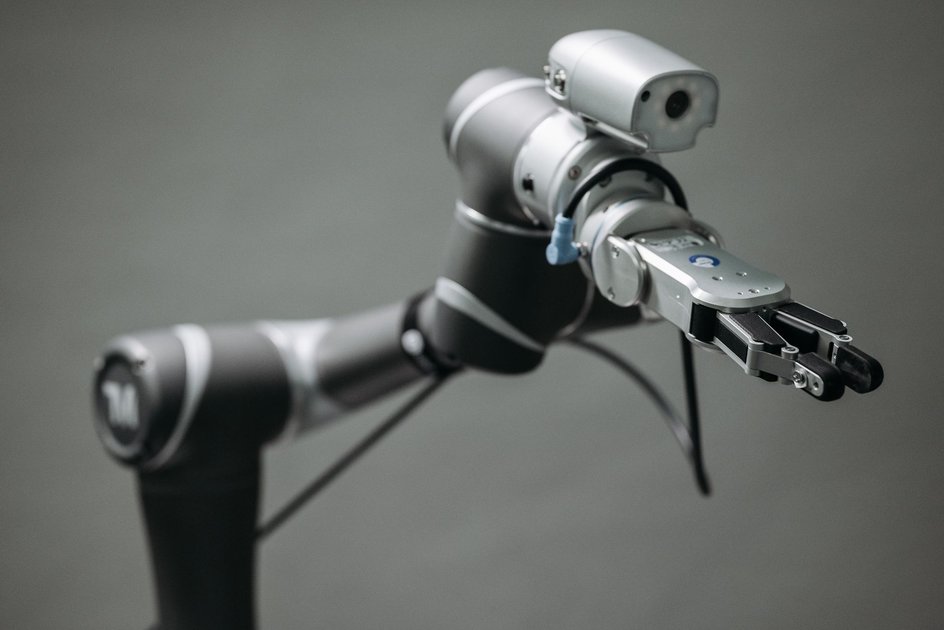
Neura Robotics’ primary product is the MAiRA cognitive humanoid robot, which the company has been developing since its founding in 2019. The current generation MAiRA stands approximately 160 centimeters tall, weighs around 60 kilograms, and can carry payloads of up to 10 kilograms while performing bimanual tasks that require coordinated use of both hands. Its sensory system includes 3D depth cameras, force-torque sensors in both hands, and a distributed IMU network that provides proprioceptive awareness of its own body position.
What distinguishes MAiRA from earlier humanoid platforms is the onboard AI system – a neural network architecture that runs on NVIDIA Jetson computing modules embedded in the robot chassis – that allows the robot to interpret complex verbal instructions, understand its physical environment in three dimensions, and execute task sequences that require adaptive responses to unexpected obstacles or changes. The software stack that runs on MAiRA can be updated over-the-air, meaning robots already deployed in customer facilities receive capability improvements as Neura’s AI team advances the model.
The Competitive Field
Neura Robotics is not alone in the race to deploy humanoid robots commercially. Figure AI (backed by OpenAI, Microsoft, and Jeff Bezos personally), Agility Robotics (backed by Amazon directly), Boston Dynamics (owned by Hyundai), Tesla (whose Optimus robot is in limited production), and Chinese company Unitree are all pursuing variations of the same vision. The competitive landscape is evolving rapidly, with multiple companies claiming technical breakthroughs on a near-weekly basis.
- The key differentiators that will determine which companies succeed commercially include not just the hardware performance of the robots but the quality of the task-learning software, the ease of deployment and integration with customer facility management systems, and the total cost of robot operation versus the labor it replaces.
- Labor costs vary enormously by geography, which means humanoid robot economics will be compelling in high-labor-cost markets (US, Germany, Japan, South Korea) before they work in lower-labor-cost manufacturing locations.
- The regulatory environment for humanoid robots in commercial workplaces is still developing, and safety certification requirements will vary by industry and geography in ways that could affect deployment timelines for specific customer segments.

Trust Post Desk
A journalist and editor at TrustPost.org covering world and national news, technology updates and human-interest stories. They check every fact, interview sources in person or online, and aim to deliver clear, accurate reporting. Their work ranges from breaking news to in-depth features and daily newsletters. Outside the newsroom, they follow emerging trends and engage with readers on social media.