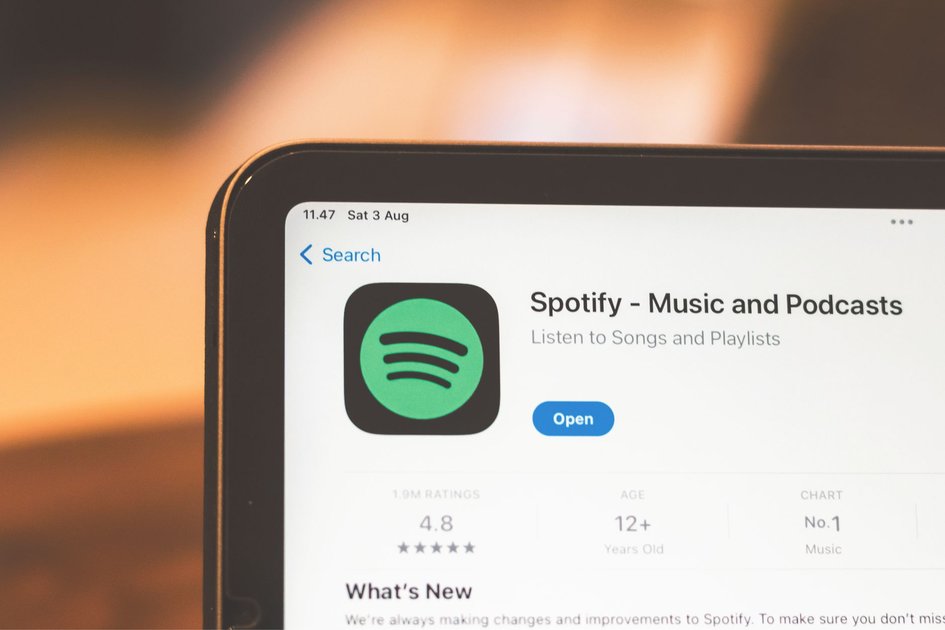
Spotify announced a significant expansion of its AI DJ feature on Friday, rolling out new capabilities that transform the feature from a clever novelty into what the company is positioning as the most personalised music listening experience available on any streaming platform. The upgraded AI DJ, which launched in beta form in early 2023 and has been steadily refined since, now incorporates real-time awareness of the listener’s current context and mood, the ability to have a genuine back-and-forth conversation with the AI host about music preferences and discovery, and a dramatically expanded repertoire that draws on Spotify’s full library of 100 million tracks rather than the more limited selection the original feature worked from. The update is rolling out to Spotify Premium subscribers globally over the next two weeks and is included as part of the existing subscription at no additional cost.
The original AI DJ feature worked by generating a curated playlist with an AI-generated voice host that provided contextual commentary between tracks – explaining why a particular song was selected, sharing information about the artist, and occasionally asking the listener whether they wanted to stick with the current vibe or shift direction. User response to the original feature was positive but mixed: the music curation was praised, but the conversational interaction was limited and the AI voice lacked the naturalness that would make extended listening feel genuinely engaging rather than occasionally awkward. The 2026 update addresses these limitations with a significantly more capable conversational AI layer that can understand and respond to natural language requests with a fluency and personality that beta testers have described as genuinely surprising.
New Features in the 2026 AI DJ Update
- Contextual Awareness: The AI DJ now accesses calendar, location and time-of-day data (with user permission) to tailor its selections to the listener’s likely activity – commute music, workout tracks, dinner party ambiance, late-night wind-down – without requiring explicit instruction from the listener each session.
- Conversational Discovery: Users can now engage in genuine multi-turn conversations with the AI DJ about music they want to discover – “Play something like the mood of early Radiohead but with a more modern production style’ or ‘I want to explore 1970s Brazilian music but start with something accessible” will produce contextually intelligent responses and playlist adjustments.
- Mood and Energy Matching: The feature uses audio analysis of recently played tracks alongside user feedback to build a model of the listener’s current mood preference and match energy levels across the session in ways that previous versions could only approximate.
- Cross-Language Operation: The AI DJ now operates fully in 12 languages, with the conversational interface and commentary both available in the listener’s preferred language.
- Artist Deep Dives: A new mode allows listeners to request extended exploration of a specific artist’s catalogue, with the AI DJ providing biographical context, connecting an artist’s different periods and explaining the musical influences that shaped their work.
The Competitive Context: Apple Music, Amazon and YouTube
Spotify’s AI DJ expansion arrives in a streaming market where the company’s competitive position has been challenged by Apple Music’s deeper integration with the Apple ecosystem, Amazon Music Unlimited’s bundling with Prime membership and YouTube Music‘s advantages from Google’s search and recommendation infrastructure. In terms of audio quality, neither Spotify (which offers up to 320kbps Ogg Vorbis streaming) nor its principal competitors have yet converged on a standard for lossless audio that satisfies audiophile subscribers – a gap that has limited streaming’s penetration among the music quality enthusiast market that continues to buy CDs and high-resolution downloads.
The AI DJ feature represents a different competitive strategy: rather than competing on audio quality or catalogue size (all major streamers now have comparable libraries of 80-100 million tracks), Spotify is betting that superior personalisation and discovery create the kind of differentiated user experience that justifies a sustained price premium. The strategy is consistent with Spotify’s longer-term positioning as a ‘discovery engine’ rather than a simple music catalogue. The company’s investment in podcasting, audiobooks and now AI-powered personalisation all reflect a view that the competitive advantage in audio streaming will ultimately go to the platform that is best at connecting listeners with content they love – including content they didn’t know they would love – rather than the one with the largest catalogue or the highest audio fidelity.
Privacy and Data Considerations
The AI DJ’s new contextual awareness features – particularly its ability to access calendar and location data to infer the listener’s current activity – have raised questions from privacy advocates about the data collection implications of a music streaming service having access to this breadth of personal information. Spotify has responded to these concerns by making the contextual features opt-in rather than default and by publishing a clear data use policy that specifies how calendar and location data is used exclusively for the DJ feature and not incorporated into the company’s advertising data infrastructure.
The privacy architecture Spotify has described for the contextual features processes the relevant data on-device where possible, with the AI model inference running in the app rather than transmitting raw calendar and location data to Spotify’s servers. This approach – increasingly common among consumer AI features following Apple’s high-profile promotion of on-device AI processing – provides better privacy protection than cloud-side processing while accepting some limitations on what the AI can do with the data. For users who are comfortable providing the access and trust Spotify’s data use commitments, the contextual awareness features represent a meaningful improvement in the listening experience. For those who prefer to keep their location and calendar information away from their music streaming service, the features can be entirely disabled while preserving all other aspects of the AI DJ experience. Whether it’s the right trade-off is a personal decision – but the fact that Spotify is making it a genuine choice rather than a buried default is itself worth noting.

Trust Post Desk
A journalist and editor at TrustPost.org covering world and national news, technology updates and human-interest stories. They check every fact, interview sources in person or online, and aim to deliver clear, accurate reporting. Their work ranges from breaking news to in-depth features and daily newsletters. Outside the newsroom, they follow emerging trends and engage with readers on social media.