
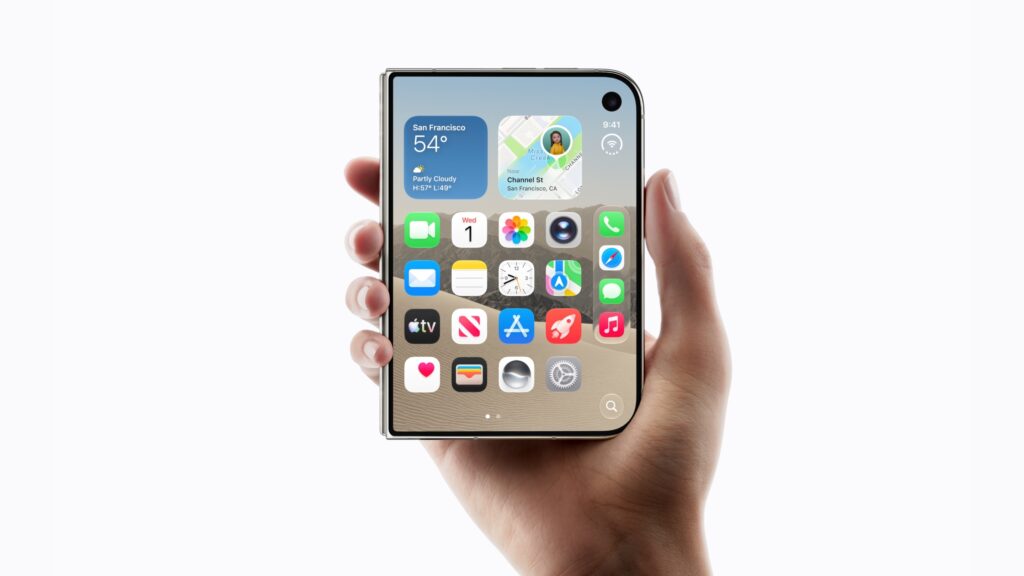
The iPhone Duo and the Samsung Galaxy Z Fold 8 both fold open to a 7.6-inch screen, and both peak at 3,000 nits.
From there they separate. Samsung is 53 grams lighter and $100 cheaper. Apple is dust-tight and hides its inner camera.
Every number below comes from Apple’s and Samsung’s own published specifications, not from launch-week impressions.
iPhone Duo vs Galaxy Z Fold 8 Specs Compared
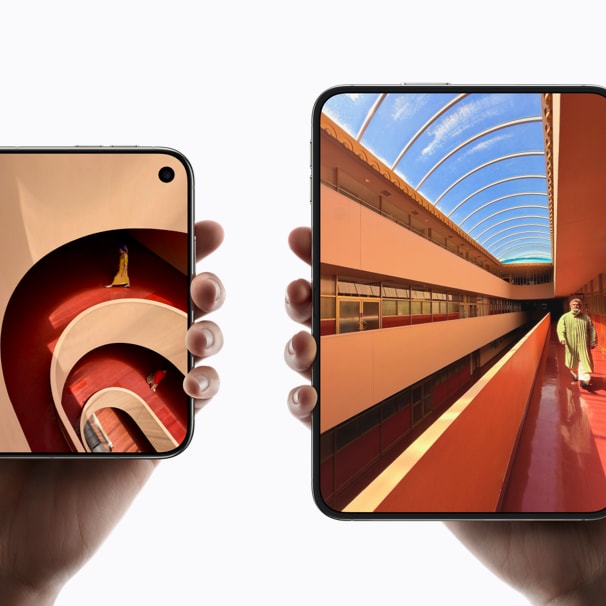
The table puts both foldables side by side. Where a row is blank for Apple, the company has not published that figure.
| Specification | Apple iPhone Duo | Samsung Galaxy Z Fold 8 |
|---|---|---|
| Inner display | 7.6-inch OLED | 7.6-inch OLED |
| Inner resolution | 1878 by 2670 at 430 ppi | 2448 by 1848 at 404 ppi |
| Outer display | 5.4-inch OLED | 5.5-inch OLED |
| Outer resolution | 1398 by 2034 at 460 ppi | 1248 by 1972 at 428 ppi |
| Refresh rate | ProMotion up to 120Hz | 120Hz |
| Peak brightness | 3,000 nits outdoor | 3,000 nits |
| Chip | A20 Pro, 2-nanometer | Snapdragon 8 Elite Gen 5, 3-nanometer |
| CPU and GPU | 6-core CPU, 7-core GPU | Not disclosed by core count |
| RAM | Not published | 12GB, or 16GB on the 1TB model |
| Storage | 256GB, 512GB, 1TB, 2TB | 256GB, 512GB, 1TB |
| Main camera | 48MP, 26mm, f/1.6 | 50MP, 23mm, f/1.8 |
| Ultra wide | 48MP, 13mm, f/2.2 | 50MP, f/1.9, 120 degrees |
| Outer selfie camera | 12MP Center Stage, f/2.2 | 10MP, f/2.2 |
| Inner selfie camera | Under-display FaceTime, f/1.8 | 10MP, f/2.2 |
| Video | 4K Dolby Vision up to 120 fps | Not directly comparable |
| Battery | 31 hours inner, 44 hours outer video | 4,800mAh, up to 26 hours playback |
| Wired charging | 50 percent in about 20 minutes, 60W | 45W |
| Wireless charging | 50 percent in about 30 minutes, MagSafe | 20W |
| Folded size | 84.1 by 117.8 by 11.3 mm | 81.9 by 123.9 by 9.7 mm |
| Unfolded size | 164.6 by 117.8 by 5.2 mm | 161.4 by 123.9 by 4.5 mm |
| Weight | 254 grams | 201 grams |
| Front glass | Ceramic Shield 2 | Gorilla Glass Victus Ceramic 3 |
| Frame | Titanium | Not published as titanium |
| Durability | IP68, 6m for 30 minutes | IP48 |
| Biometrics | Fingerprint in the side button | Side-mounted fingerprint |
| Wireless | Wi-Fi 7, Bluetooth 6 | Not directly comparable |
| SIM | Dual eSIM | Varies by market |
| Software | iOS 27.1 | Android 17 with One UI 9 |
| Update commitment | Not published as a number | Up to 7 major OS updates |
| Starting price | $1,999 | $1,899 |
| On sale | October 23, 2026 | August 7, 2026 |
Two entries deserve a flag straight away. The durability gap and the weight gap are the largest real differences here.
Screens: Same 7.6 Inches, Different Shapes
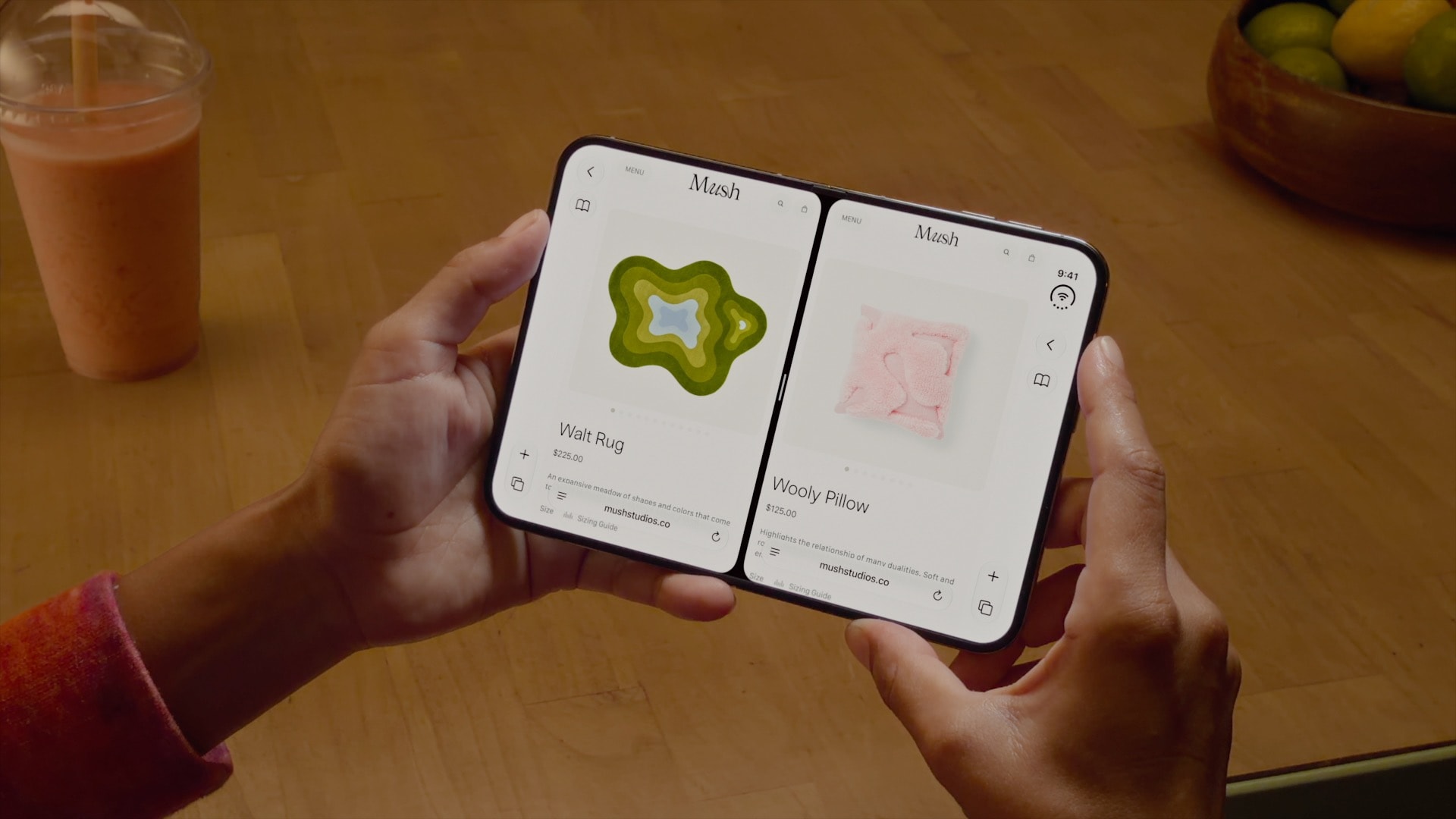
Both inner panels measure 7.6 inches diagonally, but they are not the same shape. The pixel counts make that clear.
Samsung uses a 4:3 inner display at 2448 by 1848. Apple’s inner panel runs 1878 by 2670 at 430 pixels per inch.
Apple’s device is wider and shorter when open, at 164.6mm by 117.8mm. Samsung’s is narrower and taller, at 161.4mm by 123.9mm.
In practice that means Samsung gives you more height for reading, while Apple gives more width for side-by-side apps.
The cover screens are close. Apple’s is 5.4 inches at 460 ppi and Samsung’s is 5.5 inches at 428 ppi.
Apple shares an aspect ratio between its two panels, so apps scale between folded and open without awkward reflows.
Both run at 120Hz and both claim 3,000 nits at peak. On the display spec sheet these two are close to a draw.
Apple adds a nano-texture finish on the inner panel, which is intended to reduce glare and disguise the crease.
Size and Weight: Samsung Is 53 Grams Lighter
This is where Samsung wins clearly. The Galaxy Z Fold 8 weighs 201 grams and the iPhone Duo weighs 254 grams.
Fifty-three grams is roughly a quarter of the Samsung’s total weight. You notice that in a shirt pocket.
- Folded thickness: 9.7mm for Samsung against 11.3mm for Apple
- Unfolded thickness: 4.5mm for Samsung against 5.2mm for Apple
- Weight: 201g for Samsung against 254g for Apple
Samsung is thinner in both states and lighter overall. Apple’s first foldable is the heavier of the two by a wide margin.
Some of Apple’s extra mass is the titanium frame, and some is the dual-battery layout that produces its longer runtime figures.
That is a genuine trade rather than a flaw. You are choosing between a lighter phone and a longer-lasting one.
Durability: IP68 Against IP48
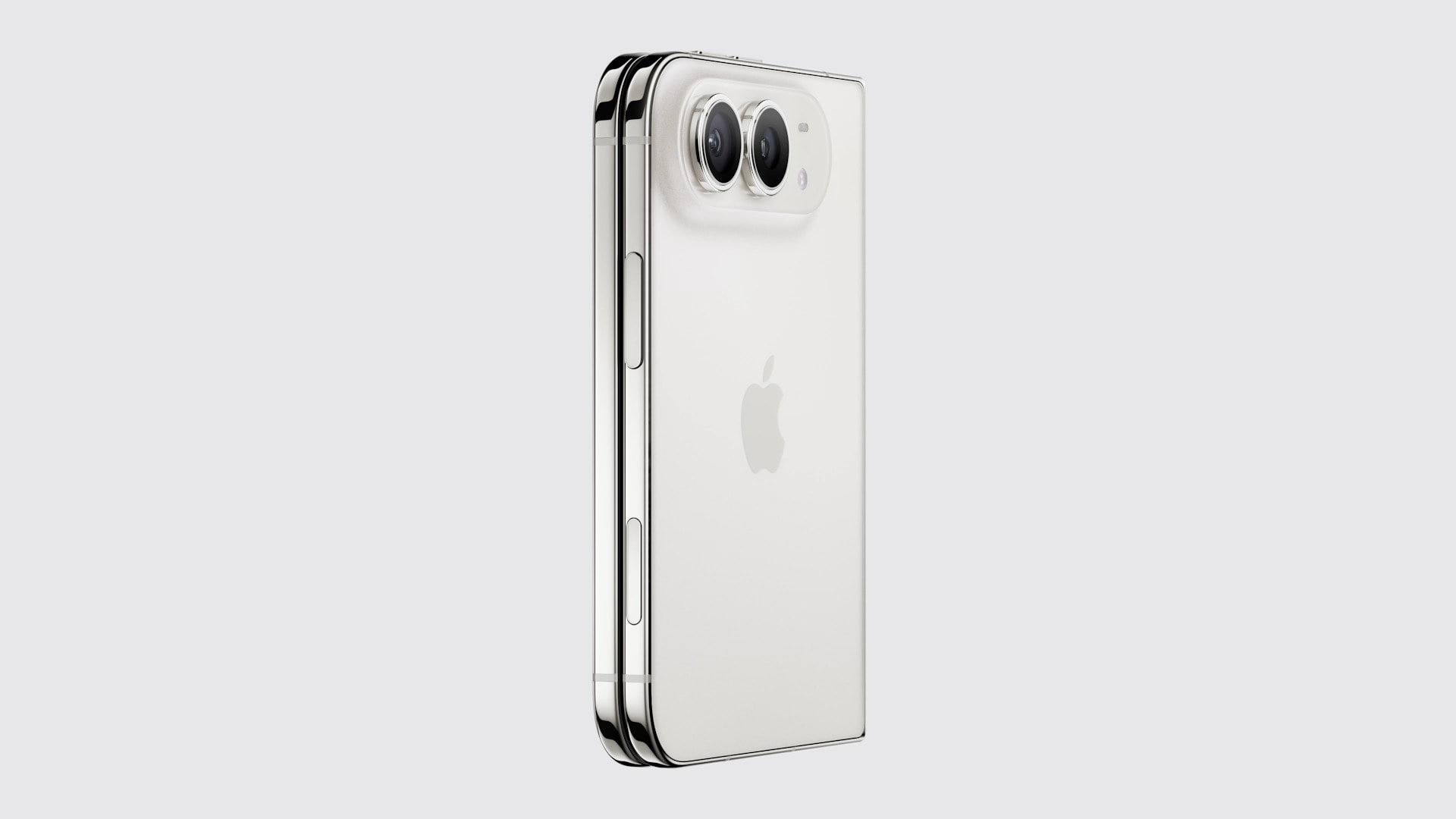
This is the specification most buyers skim past, and it is where the two devices differ most on paper.
The iPhone Duo is rated IP68, tested to six meters for 30 minutes. The Galaxy Z Fold 8 is rated IP48.
The second digit is the same, so both survive immersion. The first digit is what separates them.
A 6 means the device is dust-tight. A 4 only means it resists solid objects larger than one millimeter.
Fine dust and sand are the historic enemy of folding hinges, which is exactly what a 4 rating does not exclude.
Apple covers the front in Ceramic Shield 2 and the back in Ceramic Shield. Samsung uses Gorilla Glass Victus Ceramic 3.
Neither company publishes a hinge cycle rating in its consumer specifications, so long-term durability still needs real-world testing.
Cameras: 48MP Against 50MP, and the Hidden Selfie Lens

Neither foldable carries a dedicated telephoto lens. Both use a two-camera rear system with a main and an ultra wide.
Samsung’s main sensor is 50MP at 23mm and f/1.8. Apple’s is 48MP at 26mm and f/1.6, so Apple has the wider aperture.
Megapixel counts are close enough to be noise. The aperture and focal length differences matter more in practice.
Ultra wide is 50MP at f/1.9 on Samsung and 48MP at 13mm and f/2.2 on Apple. Samsung is brighter on paper here.
Both crop the main sensor for what each company calls optical-quality 2x zoom rather than using a third lens.
The front cameras are where the designs diverge sharply, and this is Apple’s clearest hardware advantage.
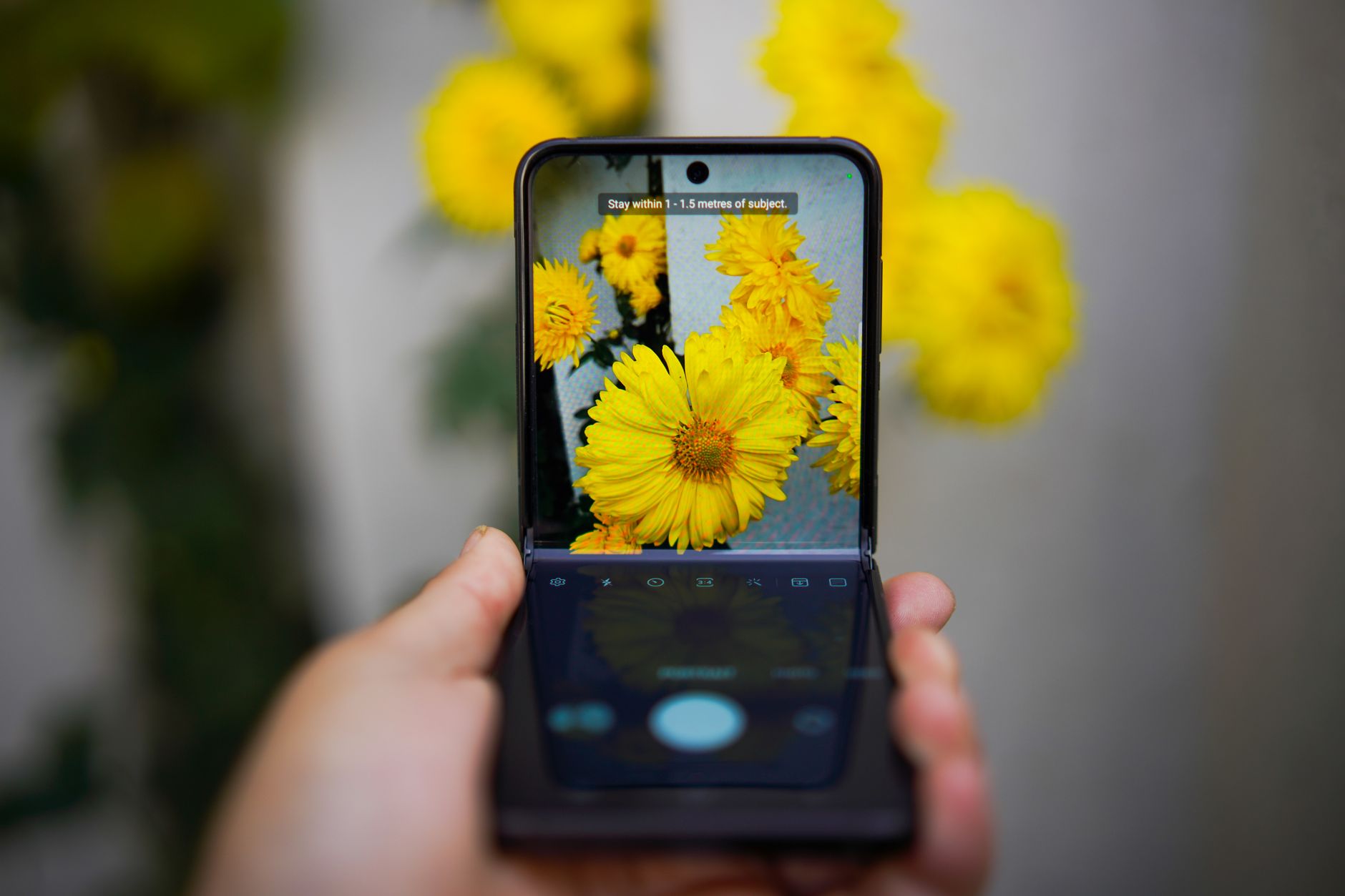
Samsung uses a conventional 10MP selfie camera on each screen. Apple puts a 12MP Center Stage camera on the outside.
On the inner panel Apple hides the FaceTime camera under the display at f/1.8. It only appears when it is in use.
That gives an uninterrupted inner screen with no cutout. Under-display cameras have historically traded image quality for that.
Whether Apple avoided that trade is the single most interesting question in reviews of this device.
Battery and Charging Claims Are Not Comparable
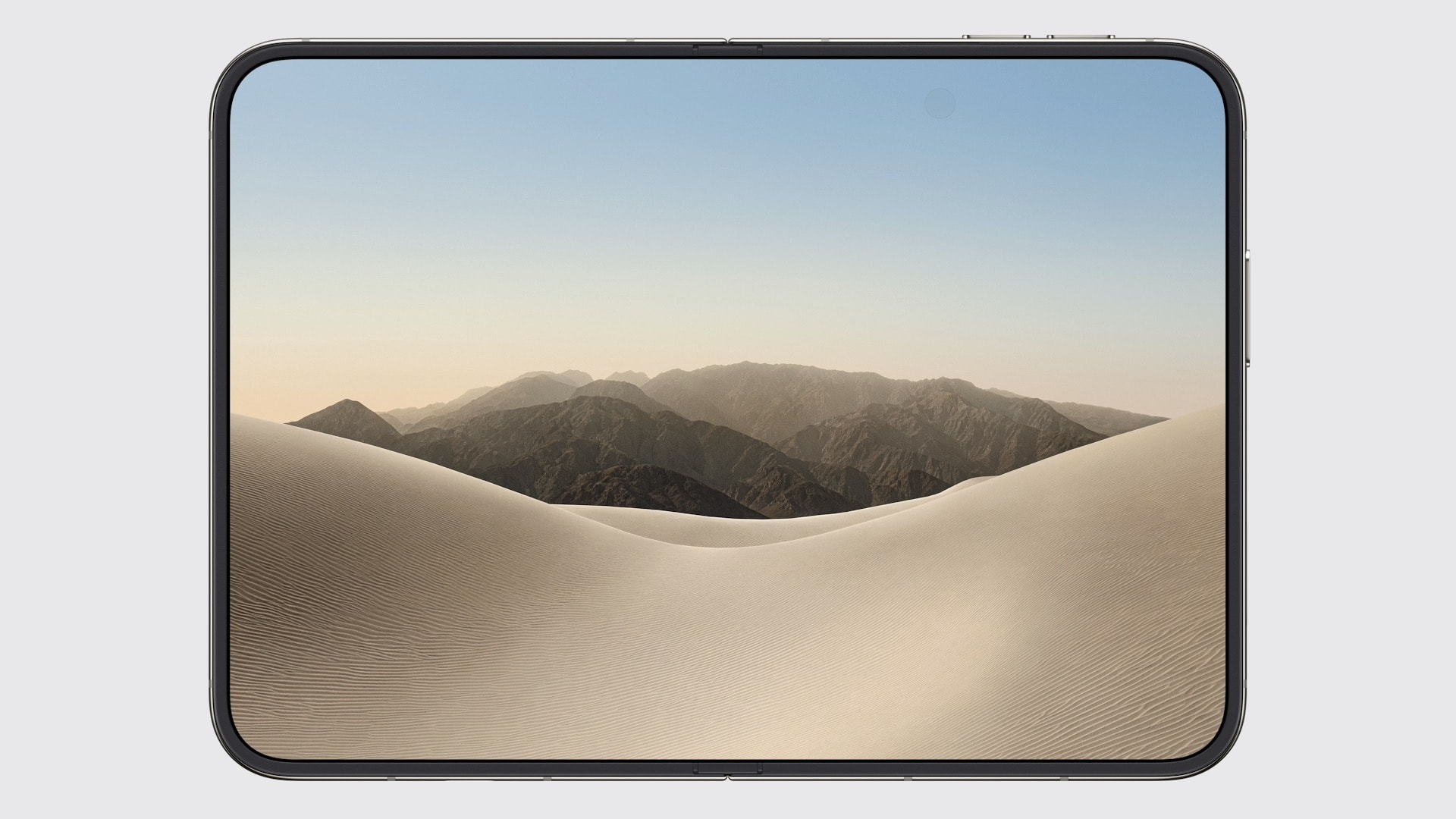
Apple and Samsung publish battery numbers in different units, so a direct comparison is not actually possible.
Samsung quotes 4,800mAh and up to 26 hours of continuous playback. Apple never publishes capacity in mAh.
Apple instead quotes up to 31 hours of video on the inner display and up to 44 hours on the outer one.
Those figures come from different test methodologies, so treat the gap as indicative rather than precise.
Apple’s dual-battery layout, with one cell in each half, is part of why its quoted runtime is high.
Charging is easier to compare. Samsung supports 45W wired and 20W wireless, both quoted as raw wattage.
Apple quotes 50 percent in around 20 minutes with a 60W adapter, or 30 minutes on a MagSafe charger.
Neither company includes a power adapter in the box, so hitting either figure means buying a charger separately.
Chips, Storage and Software Support
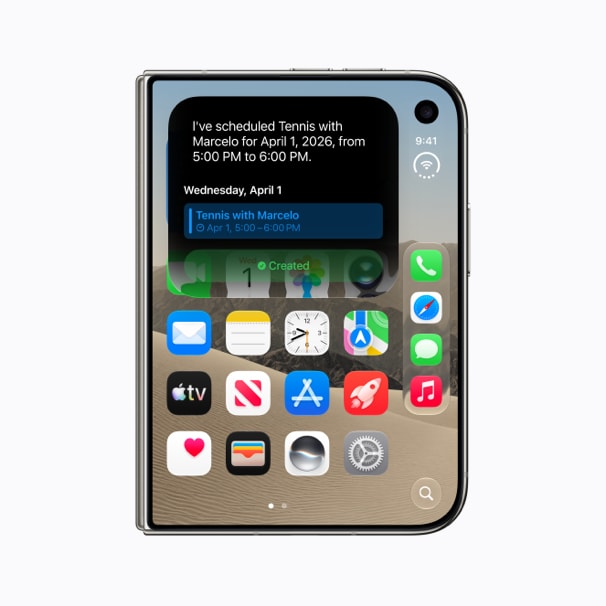
Apple uses the A20 Pro on a 2-nanometer process, with a 6-core CPU and a 7-core GPU.
Samsung uses the Snapdragon 8 Elite Gen 5 for Galaxy, built on a 3-nanometer process.
Cross-platform chip comparisons rarely mean much, since the software stacks differ more than the silicon does.
Memory is one area where Samsung is more transparent. It lists 12GB of RAM, or 16GB on the 1TB model.
Apple does not publish RAM figures for iPhone at all, so there is no like-for-like number to compare.
Storage favors Apple at the top end. The Duo reaches 2TB while the Fold 8 stops at 1TB.
Software support is where Samsung makes a firm commitment: up to seven major Android OS updates.
Apple does not publish a support figure, though iPhones have historically received updates for a comparable period.
The Duo ships with iOS 27.1, and the Fold 8 ships with Android 17 under One UI 9.
Apple’s foldable is eSIM only worldwide, which is worth checking against your carrier before ordering.
Price, Availability and Which One to Buy
The Galaxy Z Fold 8 starts at $1,899 and the iPhone Duo starts at $1,999, a gap of $100 at the entry point.
Apple’s range runs higher, reaching $3,199 for 2TB. Samsung tops out at 1TB, so its ceiling is lower.
Timing matters too. Samsung has been on sale since August, so retail discounting has already begun on that model.
The iPhone Duo goes on sale October 23, and new Apple hardware rarely sees meaningful discounts early.
- Choose the Galaxy Z Fold 8 if: weight matters most, at 53 grams lighter
- Choose the Galaxy Z Fold 8 if: you want a stated seven-year update commitment
- Choose the iPhone Duo if: you want a dust-tight IP68 rating on a folding hinge
- Choose the iPhone Duo if: you want an uninterrupted inner screen with no camera cutout
- Choose the iPhone Duo if: you are already in the Apple ecosystem or need 2TB
Neither is a safe recommendation for everyone. Both cost about twice a conventional flagship phone.
Full detail on Apple’s side sits in Apple’s iPhone Duo announcement and on Samsung’s Galaxy Z Fold 8 page.
A neutral specification summary for the Samsung is maintained on its Wikipedia entry.
Our deeper breakdown of Apple’s foldable sits in the iPhone Duo specs guide.
If a conventional iPhone suits you better, see our iPhone 18 Pro Max comparison instead.
Frequently Asked Questions
Is the iPhone Duo heavier than the Galaxy Z Fold 8?
Yes. The iPhone Duo weighs 254 grams and the Galaxy Z Fold 8 weighs 201 grams, a difference of 53 grams.
Which foldable is better protected against dust?
The iPhone Duo. Its IP68 rating means dust-tight, while the Fold 8 carries IP48, which only blocks objects above one millimeter.
Does either foldable have a telephoto camera?
No. Both use a main and an ultra wide sensor, and both crop the main sensor for what each calls optical-quality 2x zoom.
Which one has better battery life?
The figures are not directly comparable. Apple quotes 31 to 44 hours of video, and Samsung quotes 4,800mAh and 26 hours playback.
How much do the iPhone Duo and Galaxy Z Fold 8 cost?
The Fold 8 starts at $1,899 and the iPhone Duo at $1,999. Apple’s range extends to $3,199 for the 2TB model.
Related Articles

Get the TrustPost briefing
The stories that matter, in your inbox. No spam, unsubscribe anytime.
Newsletter signup will be available soon.
Related stories

Linktree Alternatives: What 6 Tools Cost Over Three Years
Monthly pricing hides the real number. Six Linktree alternatives compared on three-year cost, with every rate read from the vendor’s own pricing page.

Best Graphic Design Software: Free and Paid Tools Compared
Compare the best graphic design software of 2026, from free tools like Affinity and GIMP to paid apps such as Photoshop, with current US prices.

Best Digital Signage Software: 8 Platforms Compared on Price and Features
Compare the best digital signage software in 2026. Verified per-screen pricing for Yodeck, OptiSigns, ScreenCloud, Rise Vision, Xibo and more.