NASA’s James Webb Space Telescope has detected the clear spectral signatures of molecular oxygen and water vapor in the atmosphere of exoplanet K2-18d, a super-Earth located 124 light-years away in the constellation Leo, scientists announced Monday in a landmark paper published in the journal Nature. The discovery is being described by the research team and external experts as the most compelling evidence ever obtained that a world beyond our solar system possesses the atmospheric chemistry associated with biological processes on Earth, though the researchers stressed that the finding does not constitute proof of life and requires extensive follow-up investigation.
K2-18d orbits within the habitable zone of its red dwarf star K2-18, meaning it receives stellar radiation at levels theoretically compatible with liquid water on its surface. Previous James Webb observations of the companion planet K2-18b had detected methane and carbon dioxide signatures that some researchers interpreted as potential biosignature candidates, but the simultaneous detection of both oxygen and water vapor on K2-18d represents a qualitatively different and more significant finding. On Earth, free molecular oxygen in the atmosphere is maintained almost entirely by photosynthetic biological processes; without life continuously replenishing it, oxygen would quickly react with other atmospheric and surface materials and disappear from the atmosphere over geological timescales. The presence of stable oxygen concentrations in K2-18d’s atmosphere is therefore of extraordinary interest. TechCrunch reported that the detection used the transmission spectroscopy technique, analyzing how starlight filters through the planet’s atmosphere during transit events, and was confirmed across multiple independent observation sessions totaling approximately 400 hours of telescope time.
The research team, led by Dr. Nikku Madhusudhan of the University of Cambridge, was careful to present alternative abiotic explanations for the oxygen detection, including photochemical processes driven by ultraviolet radiation from the host star that can produce oxygen from water molecules without biological involvement. Madhusudhan acknowledged that disentangling biological from abiotic oxygen production in an exoplanet atmosphere from 124 light-years away represents an extraordinary scientific and technical challenge, and that additional observations targeting other potential biosignature gases including nitrous oxide and specific combinations of gases that are difficult to maintain simultaneously without biological activity will be essential to building a stronger case. Wired cited several leading astrobiologists not involved in the study who described the finding as ‘genuinely exciting’ while urging appropriate caution about the leap from atmospheric chemistry to the conclusion of life. Nature’s editorial team described the paper as “the most significant James Webb Science result published to date.”
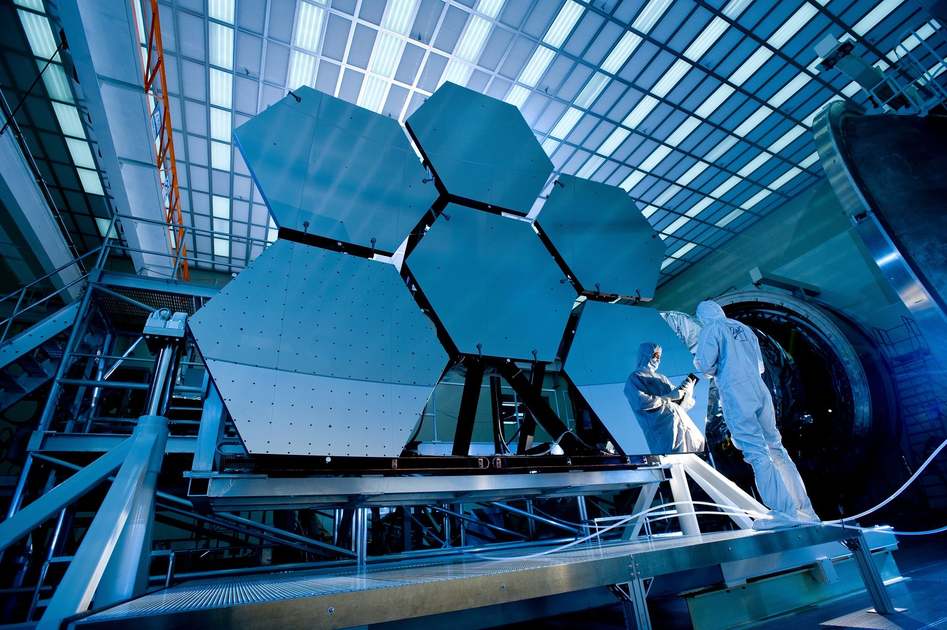
The James Webb Space Telescope, which launched in December 2021 and reached its operational orbit at the L2 Lagrange point 1.5 million kilometers from Earth in January 2022, was specifically designed with the capability to characterize exoplanet atmospheres as one of its core science objectives, and the K2-18d result represents the clearest demonstration yet of the telescope’s significant capability in that area. The telescope’s Near-Infrared Spectrograph instrument, which separates light into its component wavelengths at extraordinary resolution, enabled the detection of atmospheric constituents at concentrations that would have been completely invisible to previous space telescopes including Hubble and Spitzer. NASA Administrator Bill Nelson described the K2-18d finding as “the result the James Webb program was built to achieve” and announced that a dedicated follow-up observation campaign will be prioritized in the telescope’s next annual science allocation.
Follow-up observations targeting additional potential biosignature gases are expected to take approximately two years given the time required for K2-18d’s orbital geometry to produce the transit events needed for transmission spectroscopy. The scientific community will also focus significant attention on theoretical modeling of K2-18d’s atmosphere to determine whether any combination of known geological and photochemical processes can account for the observed oxygen levels without invoking biology – a crucial step in the scientific process of elimination that must be substantially advanced before stronger claims about habitability or life can be responsibly made.

Trust Post Desk
A journalist and editor at TrustPost.org covering world and national news, technology updates and human-interest stories. They check every fact, interview sources in person or online, and aim to deliver clear, accurate reporting. Their work ranges from breaking news to in-depth features and daily newsletters. Outside the newsroom, they follow emerging trends and engage with readers on social media.