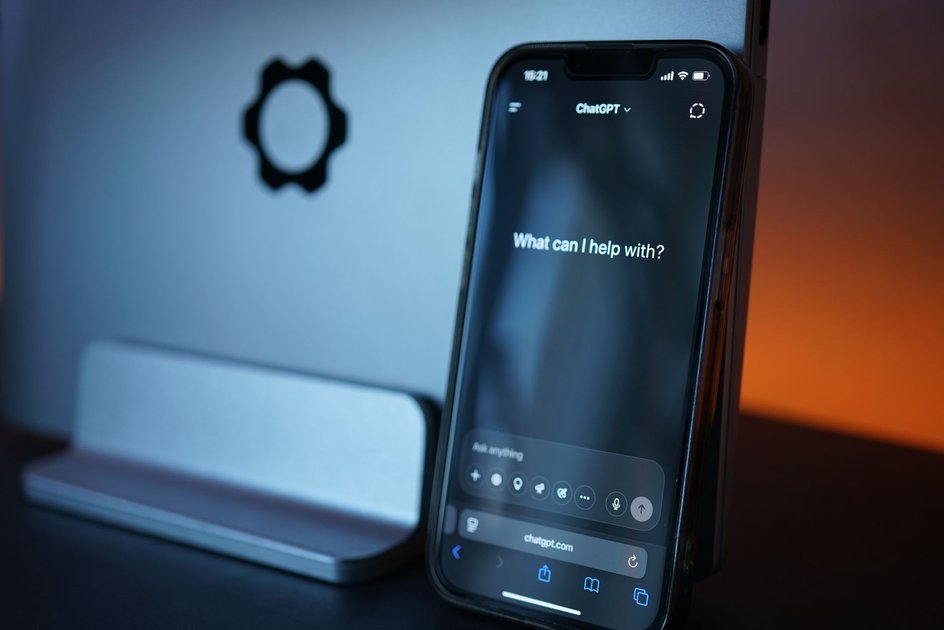
Apple used its WWDC 2026 keynote to draw one of the clearest lines it has ever drawn between itself and its competitors in the artificial intelligence space. Apple Intelligence 2.0, the next major version of the company’s on-device AI system, arrives this fall with capabilities that represent a genuine leap beyond what shipped with the original Apple Intelligence in iOS 18 last year. From a dramatically expanded Siri that can now handle complex, multi-step tasks involving third-party applications to an on-device image generation model that runs without an internet connection, the features Apple announced this week add up to an AI strategy that prioritises user trust and privacy as its primary differentiators in a market crowded with competitors offering raw capability at the cost of data collection.
The new Siri is the centerpiece of everything Apple is building in this space, and it is genuinely different from the assistant the company has shipped for the past 15 years. Apple has rebuilt the intelligence layer beneath Siri from the ground up, replacing the traditional intent-matching architecture with a large that has been specifically trained on tasks Apple’s users perform most frequently – managing calendars, composing communications, processing images, interacting with third-party apps, and navigating between different pieces of personal information stored across the Apple ecosystem. The result is an assistant that can understand context, remember the thread of a conversation, and act across multiple applications simultaneously without requiring the user to specify precisely what they want at each step.
Key Apple Intelligence 2.0 Features
- Cross-App Actions: Siri can now complete tasks that span multiple applications simultaneously – for example, finding a restaurant from an email, checking your calendar, and creating a reservation in a supported booking app, all from a single natural language request.
- On-Device Image Generation: Genmoji and Image Playground gain a new foundation model that runs entirely on device, removing the dependency on Apple’s private cloud compute for generation tasks. The model supports more photorealistic outputs while maintaining Apple’s existing restrictions on generating real people and inappropriate content.
- Personal Context Engine: Apple Intelligence can now draw on information from across the entire Apple ecosystem – emails, messages, calendar events, photos, documents, notes, and Safari browsing history – to provide responses that reflect your actual life rather than generic knowledge.
- Live Translation in FaceTime and Phone: Real-time spoken language translation during calls, supporting 12 languages at launch with a roadmap to expand. The translation runs on device and is never transmitted to Apple servers.
- Writing Tools 2.0: Expanded rewriting capabilities with tone controls, audience targeting options, and the ability to generate complete documents from brief prompts, drawing on context from your existing emails and documents to match your personal writing style.
- Visual Intelligence Expansion: The camera’s ability to identify and act on visual information has been significantly extended, with support for product lookup, text translation from images, mathematical problem solving from a photo, and deeper integration with third-party applications.
Privacy Architecture: What Apple Is and Isn’t Doing
The privacy architecture underpinning Apple Intelligence 2.0 is worth understanding in detail, because it represents Apple’s most sophisticated response yet to the tension between AI capability and user data protection. The majority of Apple Intelligence processing happens on the device itself, using Apple’s Neural Engine chips to run models locally without any data leaving the iPhone, iPad or Mac. When a task requires capabilities beyond what the on-device model can handle – typically more complex reasoning or knowledge that requires broader training data – Apple routes the request to its Private Cloud Compute infrastructure, which the company has designed with specific architectural guarantees: requests are processed on Apple Silicon servers, Apple cannot read the data being processed, independent security researchers can verify these claims through an attestation system Apple has published openly, and data is deleted immediately after processing.
What Apple is explicitly not doing is building the kind of data profile that companies like Google and Meta use to train their AI systems and target advertising. Apple’s business model – built primarily on hardware sales and services revenue – means the company has no commercial incentive to collect and monetise user data in the way that advertising-dependent companies do. Whether that structural advantage translates into genuine privacy protection over the long term is a question that security researchers will continue to probe, but Apple’s architectural commitments go significantly further than most competitors in the space have been willing to offer.
Compatibility and Rollout
Apple Intelligence 2.0 will be available this fall on iPhone 16 and later, iPad with M2 chip or later, and Mac with M2 chip or later. Some features requiring more intensive on-device processing – particularly the new image generation model and the Personal Context Engine – will be limited to iPhone 16 Pro and later and devices with M3 chips or above. The rollout will be staged, beginning with English in the United States and expanding to additional languages and regions over the months following the initial release.
The announcement has added to the pressure on Google, Samsung and Microsoft to demonstrate that their own AI implementations can compete both on capability and on the privacy assurances that Apple has now made a central part of its marketing positioning. The smartphone AI race in 2026 is being fought on multiple dimensions simultaneously, and Apple’s decision to frame privacy not as a limitation but as a competitive advantage could prove to be the most consequential strategic choice the company has made in this space. Whether consumers agree – and whether they prioritise privacy alongside capability when making purchasing decisions – will shape how the broader market evolves over the next several years.
For iPhone users who have found the original Apple Intelligence somewhat underwhelming in day-to-day use, the features announced this week represent a meaningful upgrade. The gap between what Siri could do in the fall of 2024 and what it will be able to do by the end of 2026 is substantial – and for the first time in years, Apple appears to be ahead of where most users expected it to be, rather than catching up to competitors.
Siri’s Transformation: From Voice Assistant to AI Agent
The most meaningful measure of how much Siri has changed in Apple Intelligence 2.0 is the category of tasks it can now reliably complete rather than the raw benchmark scores that Apple cited in its WWDC presentation. The fundamental shift is from Siri as a voice interface to specific commands – ‘set a timer,’ ‘play this song,’ ‘call this person’ – to Siri as an agent capable of pursuing a goal through a multi-step process that requires reasoning about available information, selecting appropriate tools, and adapting when intermediate steps don’t go as planned. This is the shift that large -powered AI systems have enabled across the industry, and Apple’s implementation is notable both for the depth of its integration with the Apple ecosystem and for the privacy architecture that keeps the most sensitive reasoning happening on device.
Practical demonstrations at WWDC showed Siri completing tasks that would have been impossible with any previous version: finding an email from a contractor, extracting the relevant invoice details, cross-referencing them against calendar entries to confirm when work was done, creating a Pages document summarising the information, and sending it to a specified contact – all from a single spoken instruction that took less than 20 seconds to give. The same demonstration would have required seven separate app interactions, dozens of taps and multiple minutes with any previous version of Siri or with any competing voice assistant. The accuracy and reliability of this kind of multi-step task completion will be the primary measure of whether Apple Intelligence 2.0 succeeds in daily use, because users who try these workflows and find them failing in subtle ways will quickly revert to doing things manually.
Third-Party App Integration: The Developer Opportunity
Apple announced at WWDC that Apple Intelligence 2.0 opens significant new APIs for third-party developers who want their applications to be accessible through Siri’s agent capabilities. The App Intents framework, which previously allowed apps to expose specific functions to Siri in a relatively limited way, has been substantially expanded to allow developers to define more complex workflows and to expose richer contextual information that Siri can use when reasoning about how to complete tasks involving their apps. Apps that implement the expanded APIs will appear in Siri’s reasoning as capable agents – entities with defined capabilities that Siri can call upon when they are the most appropriate tool for completing a requested task.
The developer opportunity here is substantial, and the competitive dynamic it creates is worth understanding. Apps that invest in implementing the expanded App Intents APIs will become part of Siri’s consideration set for relevant tasks, while apps that do not implement them will be invisible to Siri’s reasoning regardless of their quality or market position. This creates both an incentive for developers to invest in Apple platform integration and a potential barrier for apps that are not willing or able to build the APIs – a dynamic that regulatory observers in Europe have already flagged as potentially relevant to Digital Markets Act considerations about Apple’s platform gatekeeper status. How Apple navigates the tension between building a coherent AI ecosystem and avoiding conduct that competition authorities view as anti-competitive will be one of the company’s most complex regulatory challenges in the years ahead.
The Siri vs Google Assistant vs Alexa Comparison
With Apple Intelligence 2.0, the competitive positioning of the major voice and AI assistants has genuinely shifted for the first time in several years. Google Assistant’s deep integration with Google’s search and knowledge graph capabilities has traditionally given it advantages in information retrieval tasks, while Alexa’s strength has been in smart home control and its ecosystem of third-party skills. Apple Intelligence 2.0 is making a different bet: that deep integration with personal data – the emails, messages, calendar events and files that live on an individual’s Apple devices – is more valuable for the tasks that matter most in daily life than access to the broadest possible external knowledge base. Whether that bet is correct depends entirely on what tasks individual users most frequently ask their AI assistants to perform, and the diversity of those tasks means that no single assistant is likely to be the optimal choice for every user in every context. For iPhone users who are already deeply embedded in the Apple ecosystem, however, the case for Apple Intelligence 2.0 as the most personally useful AI assistant has become significantly stronger with this release.

Trust Post Desk
A journalist and editor at TrustPost.org covering world and national news, technology updates and human-interest stories. They check every fact, interview sources in person or online, and aim to deliver clear, accurate reporting. Their work ranges from breaking news to in-depth features and daily newsletters. Outside the newsroom, they follow emerging trends and engage with readers on social media.