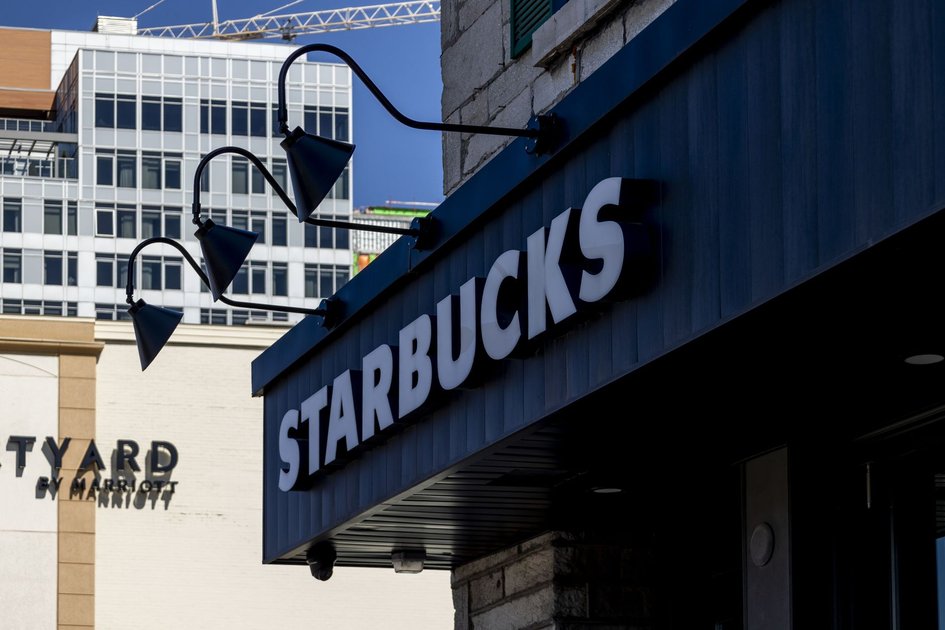
Brian Niccol, the CEO who turned around Chipotle Mexican Grill and was recruited to Starbucks in September 2024, has spent the past 18 months implementing a strategic overhaul at the company that is beginning to show measurable results in the most recent quarterly financial data. After four consecutive quarters of declining comparable sales following his arrival – a period that tested investor patience and required multiple revisions to the turnaround timeline – Starbucks reported its first positive comparable sales quarter under Niccol’s leadership in Q2 2026, with US comparable sales growing 2.1% and international comparable sales returning to modest growth after a particularly difficult period in the Chinese market. The results are preliminary and the recovery remains fragile, but the direction of travel has shifted in a way that provides the first concrete evidence that Niccol’s strategy is working.
The core of Niccol’s turnaround plan is a concept he calls ‘Back to Starbucks’ – a return to the company’s positioning as a premium coffee experience destination rather than the quick-service transactional environment that Starbucks had gradually evolved toward during the mobile ordering and drive-through expansion of the 2019-2023 period. The strategy involves physical changes to stores, service model changes that prioritise the in-store experience, menu simplification and a recalibration of pricing that acknowledges the company lost customers by raising prices in a way that damaged its perceived value proposition against both premium independent competitors and lower-priced quick-service alternatives.
What Niccol Is Changing
- Menu Simplification: Starbucks has eliminated more than 150 items from its global menu, reducing complexity that was slowing service times and increasing the error rate on mobile orders. The simplified menu focuses on the company’s highest-margin, highest-satisfaction items and is designed to allow baristas to produce consistent quality more quickly.
- Mobile Order Experience: The app experience has been redesigned to set realistic preparation time expectations, reduce the incentive for customers to arrive before their order is ready, and add friction to the ‘order and ignore’ behaviour that was contributing to long wait times and frustrated in-store customers.
- In-Store Environment: Pilot programmes in select markets have reintroduced comfortable seating, removed some of the signage clutter that had accumulated over years of promotional campaigns, and trained store staff on the kind of personalised interaction that Starbucks’ founding vision was built around.
- Barista Staffing: Starbucks has increased barista headcount in its highest-volume stores and simplified shift scheduling to reduce the reliance on understaffed peak periods that had been a consistent source of negative customer feedback.
- Price Strategy: Niccol has paused the annual price increases that Starbucks had implemented in recent years and has introduced value promotions through the Starbucks app that target lapsed customers rather than reducing prices across the board.
- China Strategy: Niccol has been explicit that China requires a different approach than the US market, and has engaged in negotiations with potential local partners that may result in a significant restructuring of the Chinese business model – potentially including a franchising arrangement or JV structure that reduces Starbucks’ direct exposure to the intense competition from domestic Chinese coffee chains.
What the Numbers Show
The Q2 2026 results that generated optimism represent a significant improvement from the comparable store sales declines of 6-8% that characterised some of Starbucks’ worst quarters in the past 18 months, but the recovery is still in early stages. Comparable store sales growth of 2.1% in the US is not a strong result for a company of Starbucks’ scale – it represents modest recovery from a low base rather than a return to the growth trajectory that made Starbucks one of the most admired consumer brands in the world during its peak years. Profitability is also still under pressure, with operating margins remaining below the levels Starbucks targeted before the downturn, partly due to the increased labour costs associated with higher barista headcounts and partly due to the continued investment in store renovations and technology upgrades that form part of the turnaround plan.
Investor reaction to the Q2 results was positive but measured – shares rose approximately 4% on the day of the earnings release and have continued to recover from their 2025 lows, but analysts remain divided about how quickly the full turnaround trajectory will materialise and how sustainable the improvement will prove once the initial benefits of menu simplification and staffing improvements have been absorbed. The consensus view appears to be that Niccol has the right diagnosis and the right set of initiatives, but that the timeline for a full recovery of Starbucks’ competitive position and profitability will extend through 2027 at minimum.
The Competitive Context
Starbucks’ recovery is happening in a competitive environment that has changed materially since the company’s peak years. The premium coffee market has fragmented significantly, with independent specialty coffee shops, regional chains and new-concept competitors all competing for the premium end of the market that Starbucks once dominated almost by default. At the value end, McDonald’s McCafe and Dunkin’ have both improved their coffee quality and expanded their premium offerings in ways that make them more credible alternatives for consumers who are less committed to the Starbucks brand specifically. In China, domestic chains including Luckin Coffee have grown to a scale and quality level that creates genuine competition in a market where Starbucks’ growth had been one of the primary drivers of the company’s international expansion story.
Niccol’s previous success at Chipotle demonstrated that turnarounds at large-scale consumer brands are achievable with the right combination of operational focus, customer experience investment and strategic clarity. Whether the same formula translates to Starbucks’ more complex global footprint, more premium positioning and more emotionally loaded brand identity will be one of the most closely watched business stories of the next two years.
Learning From the Chipotle Playbook
The turnaround Niccol executed at Chipotle between 2018 and 2024 is worth examining in detail because the transferable lessons – and their limits – shape how to evaluate his Starbucks strategy. When Niccol arrived at Chipotle, the chain was navigating the reputational fallout from a series of food safety incidents that had severely damaged customer trust, reduced traffic and caused a significant stock price decline. His response was not to launch elaborate new menu innovations or dramatic brand repositioning – it was to fix the fundamentals: improve food safety protocols, invest in digital ordering that made the purchase experience more convenient without sacrificing quality, and clarify the brand’s positioning as a fast-casual restaurant that offered better ingredients and higher customisation than traditional fast food at a price premium that customers could see was justified.
The Starbucks situation has different characteristics that complicate direct translation of the Chipotle playbook. Starbucks does not have a food safety crisis – it has an operational and brand positioning crisis. The chain became so focused on mobile order throughput and drive-through speed metrics that it lost sight of the experience premium that justified its pricing relative to alternatives. It expanded its menu so aggressively in pursuit of beverage innovation that the complexity overwhelmed the ability of store teams to produce consistent quality and reasonable wait times. And it raised prices in a period of broader consumer price sensitivity that pushed price-conscious customers to competitors while not sufficiently differentiating the experience for customers who were willing to pay the premium. These are fixable problems, but fixing them requires changes to operational culture and training that take longer to implement than the more straightforward food safety and digital experience improvements that Niccol led at Chipotle.
The Unionisation Challenge
One context variable that is distinctively different for Niccol at Starbucks compared to his Chipotle tenure is the significant and growing unionisation of Starbucks’ store workforce. Starbucks Workers United, which has organised more than 500 Starbucks locations since its first successful union election in late 2021, represents a meaningful proportion of the workforce and has been engaged in contract negotiations with Starbucks management that have proceeded slowly and contentiously. The relationship between Niccol’s turnaround strategy and the unionised workforce is complex: some of the operational changes he is implementing – increased barista headcount, simplified menu, improved scheduling – align with issues that unionised workers have raised in their contract campaigns, while other aspects of Niccol’s approach involve pace and manner of change that union representatives have argued should be subject to bargaining rather than unilateral implementation.
The labour relations dimension of the Starbucks story is not unique to the company – it reflects a broader shift in the relationship between large service sector employers and their workforces that has been building since the pandemic restructured workers’ sense of their own labour market power. How Niccol navigates the unionisation environment – whether by engaging constructively with union representatives as legitimate stakeholders in the turnaround or by managing around the union structure in ways that create ongoing conflict – will be one of the less-discussed but genuinely important factors in whether the Starbucks recovery is sustainable over the long term. A workforce that feels respected and fairly compensated is more likely to deliver the customer experience improvements that the ‘Back to Starbucks’ strategy requires than one that feels its concerns are being managed rather than heard.

Trust Post Desk
A journalist and editor at TrustPost.org covering world and national news, technology updates and human-interest stories. They check every fact, interview sources in person or online, and aim to deliver clear, accurate reporting. Their work ranges from breaking news to in-depth features and daily newsletters. Outside the newsroom, they follow emerging trends and engage with readers on social media.