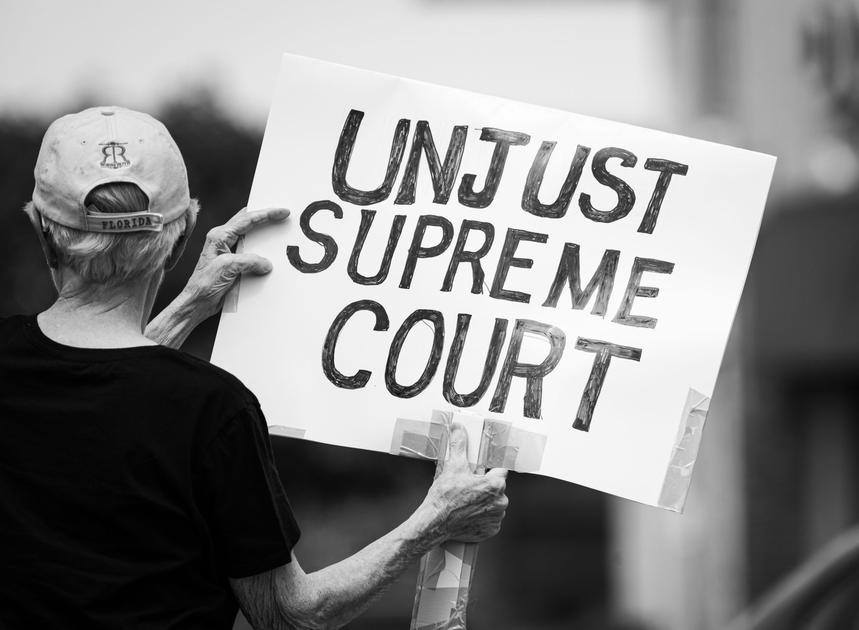
The United States Supreme Court issued an emergency order on June 2, 2026, clearing the way for Alabama to use a congressional map in the 2026 midterm elections that federal district courts had twice found to be intentionally racially discriminatory and unconstitutional under Section 2 of the Voting Rights Act. The unsigned four-page order, decided 6-3 along ideological lines, effectively overrides the factual findings of a three-judge district court panel that had concluded Alabama’s legislature drew the 2023 map with the deliberate intent of diluting the voting power of Black voters, who make up approximately 27 percent of the state’s population but would hold a majority in only one of the state’s seven congressional districts under the contested map.
Justice Sonia Sotomayor filed a dissent joined by Justices Elena Kagan and Ketanji Brown Jackson, arguing that the majority was allowing Alabama to benefit from a constitutionally defective map in the very election cycle for which the map was drawn, making any eventual legal remedy functionally meaningless for the voters most harmed by the discriminatory design. Sotomayor’s dissent characterized the majority’s order as part of a broader pattern of the Court making it increasingly difficult for plaintiffs to vindicate their rights under the Voting Rights Act, a law that Congress passed in 1965 to address systematic racial discrimination in voting access across the South.
The Alabama Map and the Voting Rights Act Section 2 Claim
The dispute centers on Alabama’s seventh congressional district, the only majority-Black district in the state’s seven-seat delegation. Civil rights groups argued that Alabama’s population distribution would support drawing two congressional districts in which Black voters held a decisive majority, and that the failure to do so constituted illegal vote dilution under Section 2 of the Voting Rights Act. The three-judge district court panel agreed after extensive evidentiary proceedings and ordered Alabama to draw a remedial map. Alabama’s legislature passed a new map in 2023 that civil rights litigants and the district court both concluded failed to meaningfully comply with the court’s order – an unusual direct defiance of a federal judicial remedy.
The Supreme Court granted Alabama’s emergency application to stay the lower court’s order and allow the existing map to be used for the 2026 elections. The majority’s brief reasoning pointed to the Court’s April 29, 2026 decision in Louisiana v. Callais, in which the justices made it harder for plaintiffs to prove Section 2 vote dilution claims by requiring courts to presume that legislatures acted in good faith in drawing district lines. The majority in the Alabama order wrote that the district court’s analysis had “departed from” that standard by not applying the good-faith presumption in assessing Alabama’s 2023 remedial map.
The Louisiana v. Callais Connection and What It Means for Voting Rights
The Louisiana v. Callais decision, issued just five weeks before the Alabama emergency order, had already significantly restructured the legal landscape for Section 2 litigation. By requiring courts to presume good faith from legislatures even in cases where prior maps had been found discriminatory, the April 29 ruling shifted the burden of proof in ways that civil rights attorneys said would make it nearly impossible to challenge racially discriminatory maps in states with Republican-controlled legislatures. The Alabama order accelerated the practical impact of that ruling by applying it to block enforcement of a lower court remedy that had already survived multiple rounds of litigation.
The political stakes are substantial. Alabama’s congressional delegation currently sends six Republicans and one Democrat to Washington. Civil rights advocates had argued that a properly drawn map could produce a delegation of five Republicans and two Democrats, with the second Democratic seat likely held by a Black representative from a newly drawn majority-minority district. Under the 6-3 order, the 2026 elections will proceed on the existing single majority-Black district map, meaning the composition of Alabama’s delegation is unlikely to change regardless of the outcome of individual races. The question of how courts apply regulatory frameworks to protect minority interests – whether in civil rights law or technology regulation – has become a defining tension in American jurisprudence in 2026.
The Broader Pattern: SCOTUS and the Voting Rights Act
The Alabama emergency order is the latest in a sequence of Supreme Court decisions that have steadily narrowed the practical scope of the Voting Rights Act since the Court’s 2013 ruling in Shelby County v. Holder, which gutted the preclearance requirement that had required states with a history of voting discrimination to obtain federal approval before changing their voting laws or district maps. Civil rights organizations have tracked a consistent pattern in which the Court’s conservative majority has found procedural or doctrinal grounds to limit the reach of Section 2 without formally overruling the provision, which remains on the books but is increasingly difficult to enforce against well-funded state governments willing to litigate aggressively.
Congressional Democrats have called for emergency legislation to restore the Voting Rights Act’s enforcement mechanisms, but such legislation faces near-certain defeat in the current Senate. Several civil rights organizations including the NAACP Legal Defense Fund and the American Civil Liberties Union announced plans to continue litigating the Alabama case, arguing that even if the 2026 elections proceed under the contested map, a final merits ruling against Alabama could lay the groundwork for a remedied map in 2028.
What Happens to Alabama’s Voters Now
For Black voters in Alabama, the practical effect of the Supreme Court’s order is that the 2026 congressional elections will proceed under a map that three federal judges concluded was the product of intentional racial discrimination. The constitutional injury identified by the lower courts will not be remedied before those elections occur. Whatever legal proceedings continue, the voters most directly affected by the discriminatory map design will cast ballots in November under districts drawn to limit their collective political power.
The Supreme Court’s term is expected to conclude by the end of June, with additional significant decisions pending on birthright citizenship, transgender athlete policies, and gun rights. Civil rights attorneys have described the current term as one of the most consequential for minority voting rights since the Shelby County decision thirteen years ago. How the remaining June decisions interact with the Alabama order will further clarify the extent to which the Voting Rights Act retains meaningful enforcement capacity in the hands of a federal judiciary that has shifted substantially to the right over the past decade. The political and economic environment heading into the 2026 midterms makes the composition of congressional districts more consequential than in a typical election cycle.

Trust Post Desk
A journalist and editor at TrustPost.org covering world and national news, technology updates and human-interest stories. They check every fact, interview sources in person or online, and aim to deliver clear, accurate reporting. Their work ranges from breaking news to in-depth features and daily newsletters. Outside the newsroom, they follow emerging trends and engage with readers on social media.