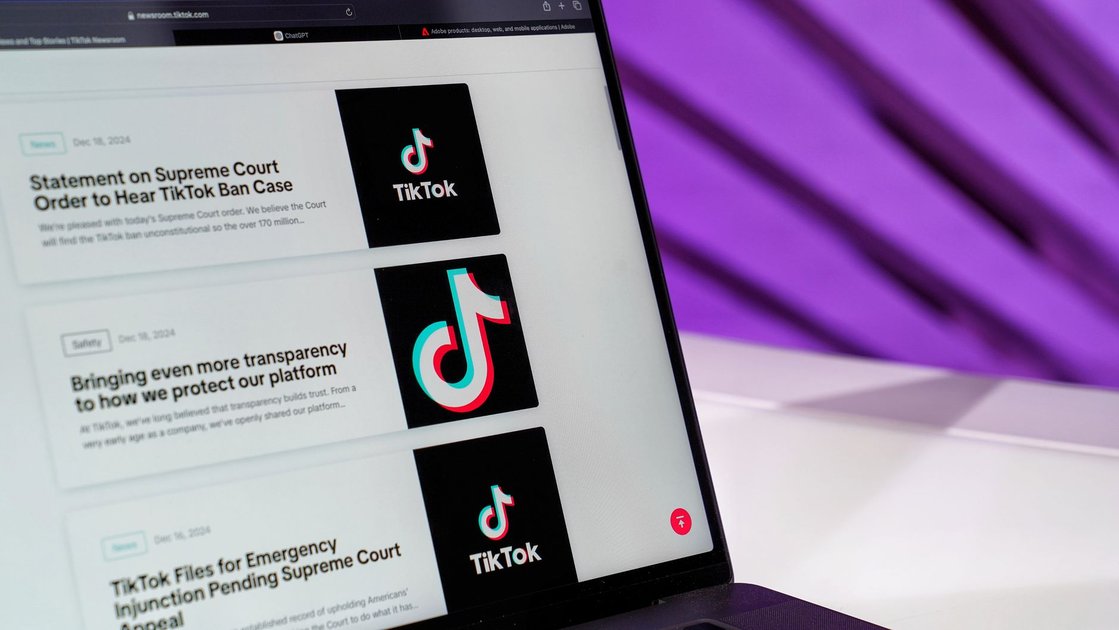
The Department of Justice filed a civil enforcement action against ByteDance, TikTok’s Chinese parent company, on Monday after the extended deadline for the company to divest its ownership of TikTok to a non-Chinese buyer passed without a completed sale agreement. The lawsuit, filed in the US District Court for the District of Columbia, seeks to compel compliance with the divestiture requirement enacted by Congress in the Protecting Americans from Foreign Adversary Controlled Applications Act and to impose daily financial penalties for each day the violation continues.
The divestiture deadline, which had been extended twice by executive order from its original January 2025 expiration date, passed at midnight Sunday without ByteDance announcing a completed transaction or a binding agreement with an approved buyer. ByteDance and TikTok confirmed that negotiations with multiple potential acquirers, including a consortium led by major US technology investors and a competing bid from a group involving Oracle Corporation, had failed to produce an agreement that satisfied both ByteDance’s valuation expectations and the government’s requirement that any acquirer have no ongoing operational or data-sharing relationship with ByteDance after the transaction closes.
The legal filing by the Justice Department initiates a process that could ultimately result in TikTok being blocked from operating in the United States if ByteDance fails to complete a divestiture that meets the statutory requirements. TikTok has approximately 170 million US monthly active users, making a shutdown or blockage an outcome with significant economic and political implications. Reuters Legal reported that the DOJ filing asks the court to issue an order requiring ByteDance to show cause why a TikTok operating ban should not be imposed and to impose civil penalties of up to $10,000 per day per violation under the enforcement mechanism established by the legislation.
TikTok filed its own response Monday afternoon, arguing that the divestiture requirement is technically infeasible within the timeframes imposed, that ByteDance has negotiated in good faith with potential buyers, and that the DOJ’s enforcement action should be stayed pending the resolution of ByteDance’s constitutional challenges to the legislation, which are currently before the US Court of Appeals for the District of Columbia Circuit. “We remain committed to finding a path forward that keeps TikTok available to its American users and that addresses the government’s stated security concerns,’ TikTok said in a statement. ‘We are not in a position to simply give away the technology that makes TikTok what it is, and no responsible seller would be.”
The political dimension of the TikTok situation has complicated the government’s enforcement posture. SCOTUSblog noted that the executive branch has been inconsistent in its stated position on TikTok enforcement, with the current administration having previously indicated openness to extension while also authorizing the DOJ filing. Legal analysts noted that the enforcement action reflects a decision at the executive level to proceed with statutory enforcement rather than continue to seek a negotiated resolution, which had been the approach of the previous extension periods. Law360 reported that the White House issued a statement Monday confirming that the administration supports full enforcement of the divestiture law and that no further extensions would be granted without a credible completed transaction.
The immediate practical effect of the DOJ filing is uncertain. Even if the court issues an enforcement order, the mechanisms for actually blocking TikTok access in the United States – requiring app stores, internet service providers, and content delivery networks to cease distributing or supporting the application – involve complex technical and constitutional questions that would likely be litigated extensively before implementation. Constitutional law scholars cited in Reuters Legal filings noted that the First Amendment implications of blocking a major communications platform used by 170 million people create significant legal obstacles to rapid enforcement, and that the courts may be reluctant to impose a de facto shutdown while the underlying constitutional challenges are pending.

Trust Post Desk
A journalist and editor at TrustPost.org covering world and national news, technology updates and human-interest stories. They check every fact, interview sources in person or online, and aim to deliver clear, accurate reporting. Their work ranges from breaking news to in-depth features and daily newsletters. Outside the newsroom, they follow emerging trends and engage with readers on social media.