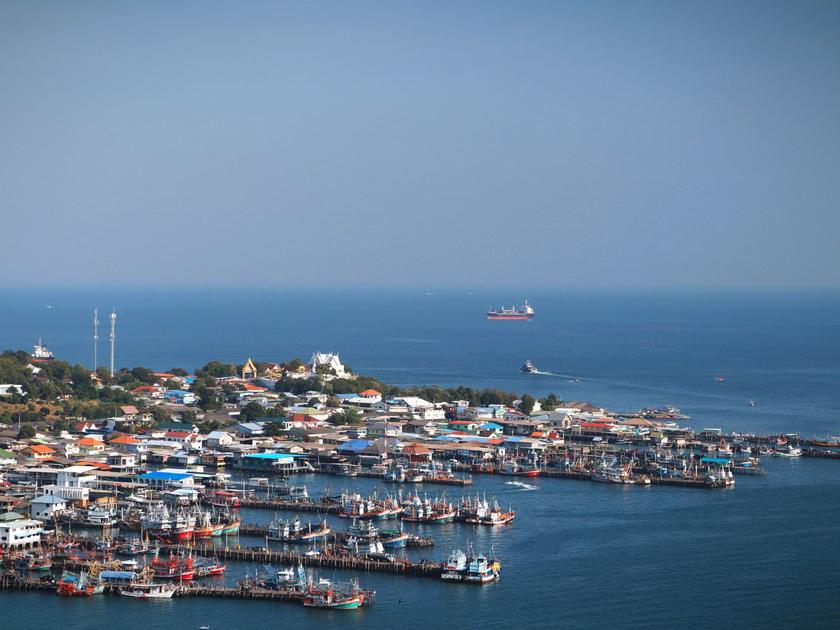
Cambodia and Thailand have taken the historic step of agreeing to submit their overlapping maritime boundary claims in the Gulf of Thailand to an international legal or conciliation process, according to agreements reached in 2026 – marking a potential breakthrough in one of Southeast Asia’s longest-running bilateral resource disputes. The disputed area known as the Overlapping Claims Area covers approximately 26,000 square kilometers in the Gulf of Thailand and is believed to contain substantial oil and natural gas reserves – with estimates ranging from 5 to 10 trillion cubic feet of natural gas and up to a billion barrels of oil – that have remained undeveloped for more than five decades because the two countries cannot agree on where to draw the maritime boundary between their respective exclusive economic zones. The dispute has its roots in the colonial-era delineation of land borders between French Indochina and the Kingdom of Thailand, leaving the maritime boundary legally ambiguous despite sustained diplomatic effort over decades.
The decision to submit the dispute to an international process represents a significant departure from ASEAN’s traditional preference for bilateral negotiation and its reluctance to involve external mechanisms in intra-regional disputes. The potential resolution would be economically transformative: oil and gas revenues from the Overlapping Claims Area, if developed under a joint development zone or following boundary delimitation, could fund decades of infrastructure investment and significantly reduce both countries’ dependence on energy imports. Thailand is a net energy importer whose economy has grown significantly more slowly than Vietnam and Indonesia in recent years, partly due to high energy costs, and development of Gulf of Thailand reserves would represent a structural improvement in its energy balance. For Cambodia, development revenues could fund governance improvements and reduce dependence on Chinese financing that carries debt sustainability risks. The Southeast Asian growth story that makes Vietnam and Indonesia standout performers could be extended to Cambodia and Thailand if the maritime dispute’s resolution unlocks the oil and gas development waiting for a legal framework since the 1970s.

Trust Post Desk
A journalist and editor at TrustPost.org covering world and national news, technology updates and human-interest stories. They check every fact, interview sources in person or online, and aim to deliver clear, accurate reporting. Their work ranges from breaking news to in-depth features and daily newsletters. Outside the newsroom, they follow emerging trends and engage with readers on social media.