Central Asia faces two simultaneous water crises in 2026. The Aral Sea has shrunk to about 10 percent of its 1960 volume. The glaciers feeding the region’s major rivers are retreating at accelerating rates.
Together, these crises threaten the water security of approximately 80 million people across Kazakhstan, Uzbekistan, Tajikistan, Kyrgyzstan, and Turkmenistan.
The Aral Sea Disaster
The Aral Sea’s collapse began in the 1960s when Soviet planners diverted the Amu Darya and Syr Darya rivers for large-scale cotton irrigation across Uzbekistan and Turkmenistan.
The reduced inflow triggered decades of shrinkage. The exposed seabed, now called the Aralkum Desert, is covered in salt, pesticides, and industrial pollutants from decades of cotton farming.
Toxic dust storms from the Aralkum blow across Uzbekistan and Kazakhstan. Communities downwind experience elevated rates of respiratory disease, eye conditions, anemia, and cancer.
Kazakhstan has had limited success in the north. The Kokaral Dam allowed the smaller northern Aral Sea to partially recover. Fish have returned, and the town of Aralsk has seen modest economic revival.
The larger southern portion, primarily in Uzbekistan, is considered beyond recovery with current technology and investment levels.
The Glacier Crisis
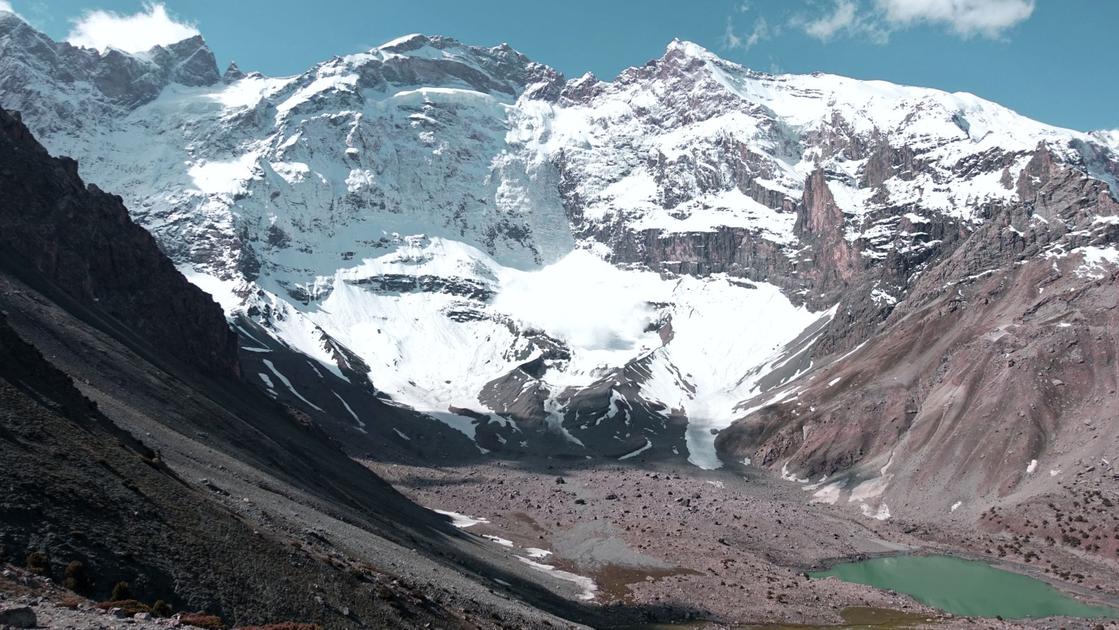
The Tian Shan and Pamir mountain glaciers supply the Syr Darya, Amu Darya, and other rivers that support Central Asian agriculture, cities, and industry.
These glaciers are retreating faster with each decade. Climate models project a 20 to 40 percent reduction in summer river flow in key Central Asian watersheds by 2050.
In the short term, glacial melt is actually increasing river flow as stored water releases. But as glaciers shrink, this meltwater contribution will decline, causing a ‘peak water’ transition.
The peak water scenario is particularly dangerous because it arrives precisely as population growth and economic development are increasing water demand across the region.
Water allocation is one of the core issues in the Uzbekistan-Tajikistan bilateral partnership signed in 2026, as both countries depend on shared river systems.
Regional Cooperation Challenges
Central Asia’s five countries share river systems but have historically struggled to cooperate on water management. Soviet-era infrastructure was designed for a single central authority, not five separate states.
Upstream countries like Tajikistan and Kyrgyzstan control the headwaters and use them for hydropower. Downstream countries like Uzbekistan and Kazakhstan need the same water for irrigation.
The Rogun Dam project in Tajikistan, the world’s tallest dam when complete, has been a source of tension with Uzbekistan for years. A diplomatic thaw in recent years has reduced but not resolved the dispute.
Tajikistan’s 8% GDP growth in Q1 2026 is partly driven by hydropower development and investment tied to the Rogun project and related infrastructure.
International Response
The World Bank, Asian Development Bank, and European Bank for Reconstruction and Development all have active programs addressing Central Asian water management and climate adaptation.
The United Nations Environment Programme has documented the Aral Sea crisis extensively and supports restoration projects in the Aral basin. UN Secretary-General Antonio Guterres has cited the Aral Sea as one of the world’s greatest environmental disasters.
China’s BRI investments in Central Asian infrastructure include some water-related projects but primarily focus on transport and energy. Western donors have pushed for greater environmental conditionality in regional infrastructure lending.
Frequently Asked Questions
Why did the Aral Sea shrink?
Soviet planners diverted the Amu Darya and Syr Darya rivers in the 1960s for large-scale cotton irrigation. The rivers stopped reaching the Aral Sea, which began a decades-long shrinkage. The sea now covers about 10 percent of its 1960 area.
How does glacial melt affect Central Asia’s water supply?
In the short term, warming increases glacial melt and river flow. But as glaciers shrink, they will eventually provide less water, causing a ‘peak water’ decline. Climate models project 20 to 40 percent reductions in summer river flow by 2050 in key watersheds.
Is the Aral Sea recoverable?
The northern small Aral Sea has partially recovered thanks to Kazakhstan’s Kokaral Dam. Fish have returned and some communities have revived. The larger southern Aral Sea, mostly in Uzbekistan, is considered beyond recovery with current technology.
Related Articles
- Uzbekistan-Tajikistan Sign $2 Billion Trade and Border Agreement in 2026
- Tajikistan GDP Grows 8% in Q1 2026, Fastest in Central Asia
- Kyrgyzstan and Chinese BRI Loans: Debt Sustainability Concerns in 2026
Sources: UNEP – Aral Sea Environmental Disaster | World Bank – Central Asia Water Security | NASA – Aral Sea Satellite Images

Trust Post Desk
A journalist and editor at TrustPost.org covering world and national news, technology updates and human-interest stories. They check every fact, interview sources in person or online, and aim to deliver clear, accurate reporting. Their work ranges from breaking news to in-depth features and daily newsletters. Outside the newsroom, they follow emerging trends and engage with readers on social media.